
Voice Typing for Debate and Speech Prep
Build the case, draft rebuttals, then rehearse at real speed
 Voiskey Team
Build the Case in Spoken Blocks
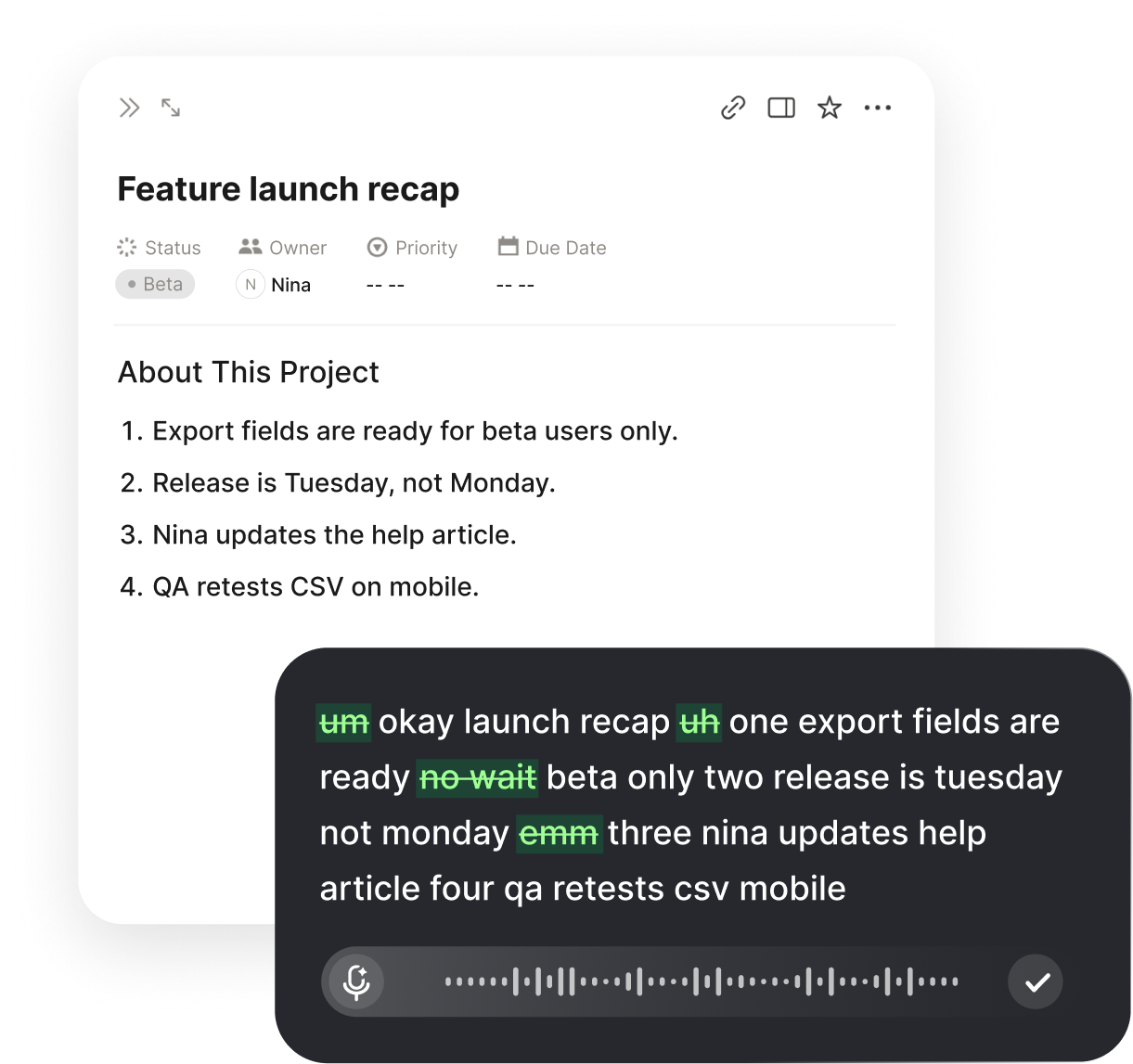
Voice Typing for Debate prep works best when you speak the case in blocks you can later rearrange. Start with the motion and your side, then speak the one-sentence stance, then three contentions, each with a claim, a warrant, and an impact. Keep each contention to its own block so you can move or drop one without rewriting the rest. Speaking forces you to hear whether a contention actually supports the stance or merely sounds relevant. Voiskey removes filler and false starts, so the block arrives close to the form you would use in a brief. Build the blocks before you write any introduction.
Write the definition and the burden before the contentions. Say what the motion means in this round, which actor makes the decision, and what your side must prove. If the definition is contested, speak two readings and choose one with a reason. The burden is the standard the judge should apply, so state it plainly and return to it when you weigh the round. A case without a burden leaves the judge to invent one, and the other side will supply a version that favors them. Keep the definition and the burden at the top of the page, above the contentions, so they stay visible while you speak.
Give each contention an evidence slot and a comparison slot. The evidence slot holds the source and the specific finding; the comparison slot says why that finding outweighs the other side's likely point. Speak the comparison in one sentence with a clear criterion, such as scale, reversibility, or time frame. A contention without a comparison is a description, not an argument. When you dictate the evidence, say the source name and the number slowly, and repeat the number once. Then read the block aloud and check that the comparison uses the same criterion as your other contentions, so the case weighs consistently.
Assign prep roles if you work with a partner. One person speaks the case blocks, one checks evidence and citations, and one prepares the first negative responses. Rotate the roles across practice rounds so each person can argue any part. Set a time limit for the case build and enforce it, because debate prep expands to fill whatever time is available. If you prepare alone, do the evidence check in a separate session from the build, since the same mind catches different problems when it is not defending its own phrasing. A role split and a time box keep the case honest and finished.
Draft Rebuttals Against Real Arguments
Draft rebuttals against arguments the other side will actually make, not against straw versions. Speak the likely case in its strongest form, then answer it at the level of the warrant. If the other side claims a policy improves a measure, answer with the mechanism and the comparison rather than with a slogan. Keep each response to a claim, a response, and an impact. A rebuttal file built this way is reusable across rounds, because strong cases repeat their core moves. Voiskey adapts tone and wording to the task, so a response spoken as a direct reply sounds different from a summary, and telling it which one you want keeps the file sharp.
Build a response for each contention, then build one for the likely framing. The framing response is often more important than the line-by-line answers, because a judge who accepts the other side's framing will weigh every contention in their favor. Speak the framing response as a short paragraph: what the other side assumes, why the assumption is wrong or costly, and what follows for the round. Keep it separate from the contention responses so you can deliver it first if needed. A file with three line-by-line answers and no framing answer tends to win small exchanges and lose the overall decision.
Practice the first thirty seconds of each rebuttal. The opening of a response sets whether the judge follows the rest, so speak the first sentence until it is short and direct. Say the other side's claim in one clause, then your answer in one clause, then the impact. If the first sentence runs long, the rest of the response will too. Record the practice in the rebuttal file and mark the version that felt clearest. Voiskey removes self-corrections, so a restart in practice does not clutter the note. A clean opening is worth more than a clever ending, because the judge has to follow you from the first line.
Update the file after every practice round. Speak the argument that surprised you, the response that worked, and the response that failed. Move the failed one to a section for unresolved answers rather than deleting it, because the same argument will appear again. If a response depends on a piece of evidence you could not cite, mark the gap and set a time to find the source. A living rebuttal file is the main difference between a team that improves across rounds and one that repeats the same mistakes. The file should grow by a few lines after each round, not by a full rewrite.
Rehearse Delivery and Timing
Rehearse delivery with a timer from the first practice, not after the content is perfect. Speak the case at speaking pace and mark where you run out of time. Most cases are too long in the first draft, and the timer shows which contention to cut or compress. Keep the marks in the script: a slash where you can shorten, a bracket where you can drop a sentence. Voiskey adapts formatting to the task, so the rehearsal text stays scannable with those marks in place. Content improves faster when it is tested at real speed, because timing exposes what the page hides.
Practice the transitions between blocks. A debate speech feels long when each block starts from a stop, so rehearse the one-line bridge from contention to contention and from response to response. Speak the bridge until it is short enough to say without reading. Then practice the pause after a key impact, because a pause signals that the point matters and gives the judge time to write. If a bridge sounds like a summary, cut it. The judge needs to know where you are going, not a recap of where you have been. Transitions are the cheapest improvement available in delivery practice.
Rehearse under conditions closer to the round. Stand up, speak at room volume, and use a timer that you can see without breaking eye contact with your notes. If you will speak with a partner, practice the handoff and the signal for time. If you will speak online, test the microphone and the camera position. Voiskey supports 100+ languages and translation, which is useful when a round or a practice session involves another language, but the delivery habits stay the same. Practicing in the actual posture and volume catches problems that a seated read-through never reveals, so run this check at least once before each full round.
Review the recording or the notes within the day. Speak three observations: where the pace slowed, where a sentence needed a restart, and where the impact landed. Choose one habit to fix in the next session and leave the others alone. Trying to fix everything at once changes nothing reliably. If a phrase keeps appearing as filler, replace it in the script so the next rehearsal starts clean. A short review after each practice, with one target, produces steadier improvement than a long review with ten targets. Delivery is a habit, and habits change one repetition at a time, so keep the target small and review again next session.
A Practice Loop With Voiskey
Set the practice loop up before the first round of the week. Download Voiskey on the machine you use for prep, open the case file, and place the insertion point under the practice log. Speak each rehearsal summary as you finish it: what you ran, how long it took, and the one thing to fix next. Voiskey removes filler and false starts, so the log stays readable even when you dictate tired. A practice log kept in the same document as the case makes the week's progress visible without another app or a separate notebook, and it gives your partner a clear record of what was already tried.
Run the loop in three steps: speak, compare, adjust. Speak the block at speed, compare it with the script and the timer, then adjust one thing. Keep the loop short so you can run it several times in a session. When a block improves, mark it and move on rather than polishing it further; the marginal gain is small compared with fixing a weak block. Voiskey learns names, jargon, and acronyms, so the terms of the motion become quicker to dictate as the week goes on. A loop with a clear stop rule prevents the common trap of perfecting the opening while the rebuttals stay untested.
Use the log to choose what to rehearse next. Read the last three entries and find the block that failed most often. Start the next session there, before the comfortable material. If a block fails for a content reason, fix the argument; if it fails for a delivery reason, fix the structure of the sentence. Mixing the two kinds of fix produces changes you cannot evaluate. Voiskey adapts punctuation and formatting to the task, so a note spoken as a diagnosis reads differently from a note spoken as a transcript, which makes the log easier to scan when you choose the next block.
Close each week with a check against the original case. Read the stance, the burden, and the three contentions aloud and confirm that the practice has not bent the case away from its purpose. A week of small edits can turn a sharp case into a collection of phrases that no longer connect. If a contention no longer supports the stance, either repair the link or drop the contention. Speak the repair into the file and rerun the block once. The weekly check is the guard against drift, and drift is the quiet failure that a busy practice schedule tends to hide.
Turn Prep Into a Debate File
Turn the term's prep into a debate file you can carry into any round. Download Voiskey on the device you bring to practice, open the case folder, and speak the index: the motion, the stance, the burden, the contentions, and the rebuttal sections. Keep one page per motion and one shared page for cross-cutting evidence. A file with a clear index is faster to use under time pressure than a folder of named documents. Voiskey places text at the insertion point, so updating the index after a round takes one spoken line rather than a reorganized folder. The index is the part of the file you will actually use.
Keep the evidence in a form you can cite under pressure. For each source, speak the author, the date, the finding, and the one sentence you would quote. Put the citation beside the quote so the two never separate. Update the file when a source is challenged or replaced, and note the reason. If a piece of evidence supports several contentions, list it once and reference it from each contention rather than duplicating the text. Voiskey learns names and acronyms, so recurring author names and source titles settle into a consistent form. A clean evidence section is what makes a strong case usable in a fast round.
Review the file after each tournament or practice block. Speak what worked, what failed, and which section needs new material. Move the failed responses to an unresolved section with the exact argument that beat them. If the same argument appears twice, it deserves a prepared answer rather than an improvised one. Set a date for the next review and name the person who will bring the new material. A file reviewed after every block improves steadily, while a file that is only written before the first round slowly goes stale and stops matching the arguments you actually face in the next round.
Share the file with a partner in a way that survives editing. Keep one master copy, and have each partner speak additions into a clearly named section rather than editing the master directly. When the sections are merged, read the merged page aloud and check that the case still has one stance and one burden. Disagreements about the case are easier to see in writing than in conversation, and a merged page forces the team to settle them. A shared file with named sections keeps the prep usable across a season, and it prevents the last-minute confusion of three versions with different cuts.
FAQ s
Speak the stance, the burden, and three contentions as separate blocks, each with a claim, a warrant, and an impact. Voiskey places the text at the insertion point, removes filler and false starts, and adapts punctuation, so the blocks are easy to move, cut, or reuse in a rebuttal file.
Voiskey learns names, jargon, acronyms, and spelling preferences. Say an unfamiliar motion term or author name clearly once, then keep using it; repeated terms come back in a consistent form, which helps when the same evidence appears in several contentions.
Speak the other side's claim in one clause, your answer in one clause, then the impact. Rehearse the first thirty seconds until the sentence is short and direct, and mark the clearest version in the file. Voiskey turns the spoken version into clean text for the next practice round.
Speak what you ran, how long it took, and the one thing to fix next, then read the last three entries to choose the next block. Voiskey writes the entries at the insertion point, so the log sits beside the case and shows the week's progress.


 Voiskey
Your voice, amplified.
Download Voiskey for Mac and Windows to build and rehearse a debate case in one file.
Use it across macOS, Windows, iOS, and Android