
voice to text urgent replies: A Practical Guide to Voice to Text for Urgent Reply Time Management
Stop the gap between the decision and the send. Speak urgent replies instantly.
 Voiskey Team
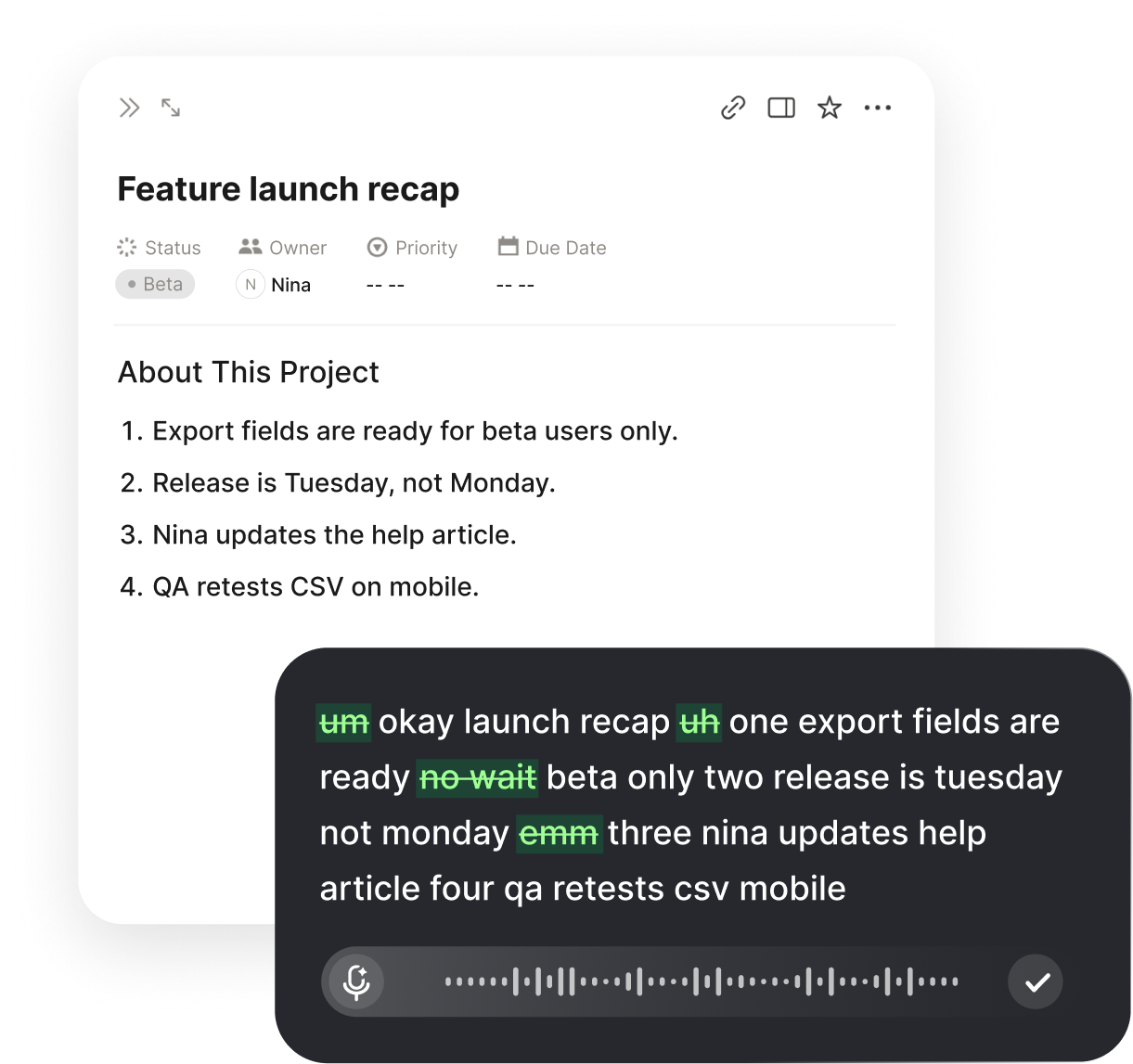
The Cost of Delayed Replies
The cost of a delayed reply is rarely the reply and always the waiting. The client waiting for a yes, the team waiting for a decision, the on-call incident waiting for the acknowledgment. Voice to text urgent replies collapse exactly that wait: the answer is already in your head, and the only gap is the drafting. Press the shortcut, speak the sentence, and the acknowledgment leaves while the question is still fresh. Voiskey turns the spoken words into clean text, you verify the one fact that matters, and you send. The wait dies in thirty seconds instead of thirty minutes.
Delay is habit-forming in both directions. Every reply you postpone strengthens the reflex to postpone the next one, until the inbox opens with a wall of messages you now have to re-read before answering. Speaking short-circuits the loop because the reply is too quick to be worth deferring. When answer time drops to under a minute, the default action on the fresh message changes from later to now, and the later pile stops growing. That is the whole system: make it fast, keep it fast, and the fast becomes the normal. The normal is what your sender starts to expect, and expectation is the culture of the inbox.
There is a second cost, subtler than the timing: the quality of the delayed answer. An urgent thread answered an hour late by memory is answered at the edge of context, so it comes back with an apology for the delay and a request to remind you what they needed. That reply sharpens, not softens, the urgency. Answer while the context is hot and the reply is precise: the exact question, the exact answer, the exact next move. Precision is why urgency exists, and the voice keeps the moment near the send. The fresh answer is also the honest answer, which is the part that matters under pressure.
Thirty Seconds to a Sent Draft
Here is the thirty-second protocol, and it is built on one rule: never draft a quick reply, speak it. One, open the message and read the question once. Two, say the answer out loud as a complete sentence, exactly as you would answer it in a call. Three, press send after one check of the facts. That is it. No subject line negotiation for a reply, no formatting, no second paragraph. Voiskey's dictation lands the sentence in the field, and the sentence you spoke is usually better than the one you would have typed, because you did not have time to soften it.
The protocol depends on good defaults for the common cases. The acknowledgment reply: received, I will send the report in twenty minutes. The decision reply: approved, go ahead with the second option. The redirection reply: I am traveling, Sarah will pick this up, and her time zones match yours. Say each one once and the pattern is learned. Write these three defaults on a sticky note next to the screen. When the urgent message arrives, you are not composing a reply, you are choosing which spoken sentence fits, and the thirty seconds actually fit. The defaults work because urgent problems are rarely novel; they are familiar problems with a deadline.
Time it yourself in the first week. Use the timer on your phone: message read, reply sent, timer stopped. Most people land near forty seconds, and the ones who land at two minutes find the cause is not speaking but re-reading, because they stopped in the middle to check another thread for context. The fix is to speak the whole reply before checking anything, then do one verification pass with the source open. The draft you have is enough to send, and the check is a filter, not a rewrite. Time the tenth reply, not the first. The first one is you learning the tool; the tenth one is you learning the habit.
Triaging by Speaking
Urgency is not the same as importance, and the triage question is not how fast is the sender asking but what happens if I do nothing for an hour. Put that question in the routine instead of the emotion. Open the inbox, read the first message quietly, and answer the question out loud: nothing, it can wait, or the verification window closes at five and it is four now. The spoken answer is the triage. Then do the corresponding action: speak the reply if it is truly urgent, or archive or flag it if not. The verdict sentence is the triage, and the triage is the decision.
Triage in batches, but only the reading. Open the inbox once in the morning and say the verdict on each message, one line: approval, waits for Friday, incident, immediate, newsletter, archive. The verdicts come out in a minute and you have led the queue in order of consequence. Then answer the immediate ones by voice, in order. The mistake is to triage by opening and replying from the top, because the third message down is often the one with the clock ticking. Read all, speak the verdicts, then execute in consequence order. The spoken verdict also tells you which replies you can dictate from memory and which need the source open.
Respect the responder's own language. When a message already says urgent, the client called, believe the escalation and answer the client question first. When a message says no rush, it can wait. But the moment you suspect a mismatch, say the reminder to yourself: the ask is small and the wait is expensive. Then dictate the quick note to the sender if the reality differs from the tone: the fix is in, but it goes to production tomorrow, and I will tell you the day it ships. Specific beats apologetic, always. And the note you send is the note you would want to receive, which is the final standard for urgent mail.
The Hasty-Reply Checklist
Fast is not careless, and the difference is a five-item checklist you run in ten seconds before sending anything urgent. One, is the addressee right? Two, is the reply answering the actual asked question, and not the one I assumed? Three, does a number appear, and is it the number I meant? Four, does a name appear, and is it spelled right? Five, does the reply state a date or a decision in the same breath? Run the list out loud in the shorthand: person, question, number, name, move, and send. The checklist is why people call you reliable under pressure.
The most dangerous hasty reply is the one that looks finished and answers the wrong question. You read the signature line, you saw the subject, and you spoke the answer to a question they asked last Tuesday. So the checklist starts with the question, not with the reply. Read the actual ask in the last message, then state it before you answer: you are asking whether the backup ran, that is a yes, and the log is clean. Your spoken restatement is the guardrail, and in the echo of the question, the wrong answer has nowhere to hide. Restating is ten seconds, and it is the ten seconds that protect the send.
When the reply is partial, say that it is partial and name the rest. The budget is approved today as an advance, and the full analysis arrives Tuesday. The partial answer sent beats the complete answer withheld. And if the answer is no, give the no with the alternative, in one line and no apology tour: no, we cannot reverse the charge, but I have filed the adjustment so it appears next month. The hasty checklist does not exist to make you slower; it exists so the fast word keeps every promise it makes, and so the fast word is never the wrong word.
Inbox Fatigue Without the Downtime
Inbox fatigue is not caused by the volume; it is caused by the anticipation of each reply as a writing task. A queue of twenty messages is a queue of twenty essays, and the weight of the unstarted essay is what drains you. Dictation reframes the queue: twenty messages is twenty sentences you already know. When the writing compression happens naturally in speech, the inbox loses its psychic mass. The fatigue does not vanish, but it stops compounding, because the unsent pile does not grow while you were avoiding it. The queue stays visible and small, and a small queue is a bearable one.
Guard against the fatigue of always-on by scheduling the voice block, not the waiting. Two blocks a day, morning and mid-afternoon, for urgent threads: read, speak the verdict, send. Then close the tab. The urgent reply, by definition, arrives when the sender needs it, which is during your block, so the block catches the queue. The off hours are when you recover. People who answer everything in one minute and never close the inbox are not faster; they are just permanently tired. Speak fast, schedule off, and the speed survives. The block is the guarantee, and the guarantee is what keeps the habit from collapsing on a busy week.
Use the saved time for the two things that matter more: the long project the inbox keeps eating, and the one message a week that deserves a genuine, deliberate email, the apology, the negotiation, the delicate one. Those get typed, or at least edited with care, by a person whose inbox is empty. Which is why the loop closes properly: the urgent replies go out in thirty seconds by voice, the queue stays short, and the careful emails still get the full attention they need. That is the sustainable version of speed, and it is the version that does not burn out by Friday afternoon.
FAQ s
Most urgent replies take thirty to forty-five seconds with the protocol: read the message once, say the answer as a complete sentence, run the five-point check, and send. Compare that with the two minutes of typing plus the delay of deferring it, and the habit becomes obvious. The speed holds up best for replies you already know the answer to.
Use the checklist before you send: is the person right, did you answer the actual question, are the numbers right, is the name right, and is there a decision or date in the message. Restate the question out loud before you answer it, and the wrong-guess reply disappears. Fast and checked is a habit, not a talent.
Yes. Open the thread, read the last message, and dictate the reply into the response field the same way you would a new message. The conversation context stays on screen, so the ask is visible while you speak, and Voiskey writes the reply directly into the thread where you already are.
Send the acknowledgment immediately by voice: received, full answer by noon. Then answer the substance in the promised window. The sender's anxiety is about being ignored, not about the length of the reply. A short, dated promise buys you the time to write the considered version.


 Voiskey
Your voice, amplified.
Choose a real task, follow the steps, and review the results with your team before expanding the rollout.
Use it across macOS, Windows, iOS, and Android