
Voice Notes for Thesis Defense Preparation
Rehearse a thesis defense aloud, answer by answer and slide by slide.
 Voiskey Team
Build a Question Bank for the Defense
Voice Notes for Thesis preparation starts with the questions your committee is likely to ask. Write the obvious ones first: what is the central claim, why does it matter, what is the strongest counterargument, and what would you do differently. Then add questions about method, evidence, scope, and contribution. Ask two peers and one advisor to add the questions they would ask if they were examining the work. Group the bank by chapter and by theme so you can rehearse a section at a time. A written bank turns a vague fear into a finite list you can work through.
Rank the questions by risk rather than by likelihood. A question you can answer easily is low risk even if it is certain to appear; a question that exposes a gap in the method is high risk even if it is unlikely. Mark each question as comfortable, shaky, or unknown. Spend most rehearsal time on the shaky group, because those answers improve fastest. For the unknown group, prepare an honest response that states what the work does and does not establish. Do not try to eliminate every unknown; a defense is a conversation, and acknowledging a limit is often stronger than improvising.
Write a one-line answer for every question before writing a full one. The one-line answer is the claim you want the committee to remember. Once the line is clear, add evidence from the thesis, then a qualification, then a link back to the contribution. If you cannot write the one-line answer, the question has exposed a gap in your thinking rather than in your delivery. Mark it and return to the relevant chapter. This process often improves the thesis itself, not just the rehearsal, because it forces you to state the argument without the support of a long written section.
Keep the bank alive as the defense approaches. After each rehearsal, add the questions that surprised you and rewrite the answers that ran long. Remove duplicates and merge questions that test the same idea. Number the entries so you can refer to them during practice without reading the full text. Bring the bank to meetings with your advisor and ask which questions matter most. A bank that grows and sharpens over several weeks is a better preparation than a fixed list written the night before. Treat the bank as a living document and review it after every single rehearsal and simulation.
Rehearse Answers in Spoken Paragraphs
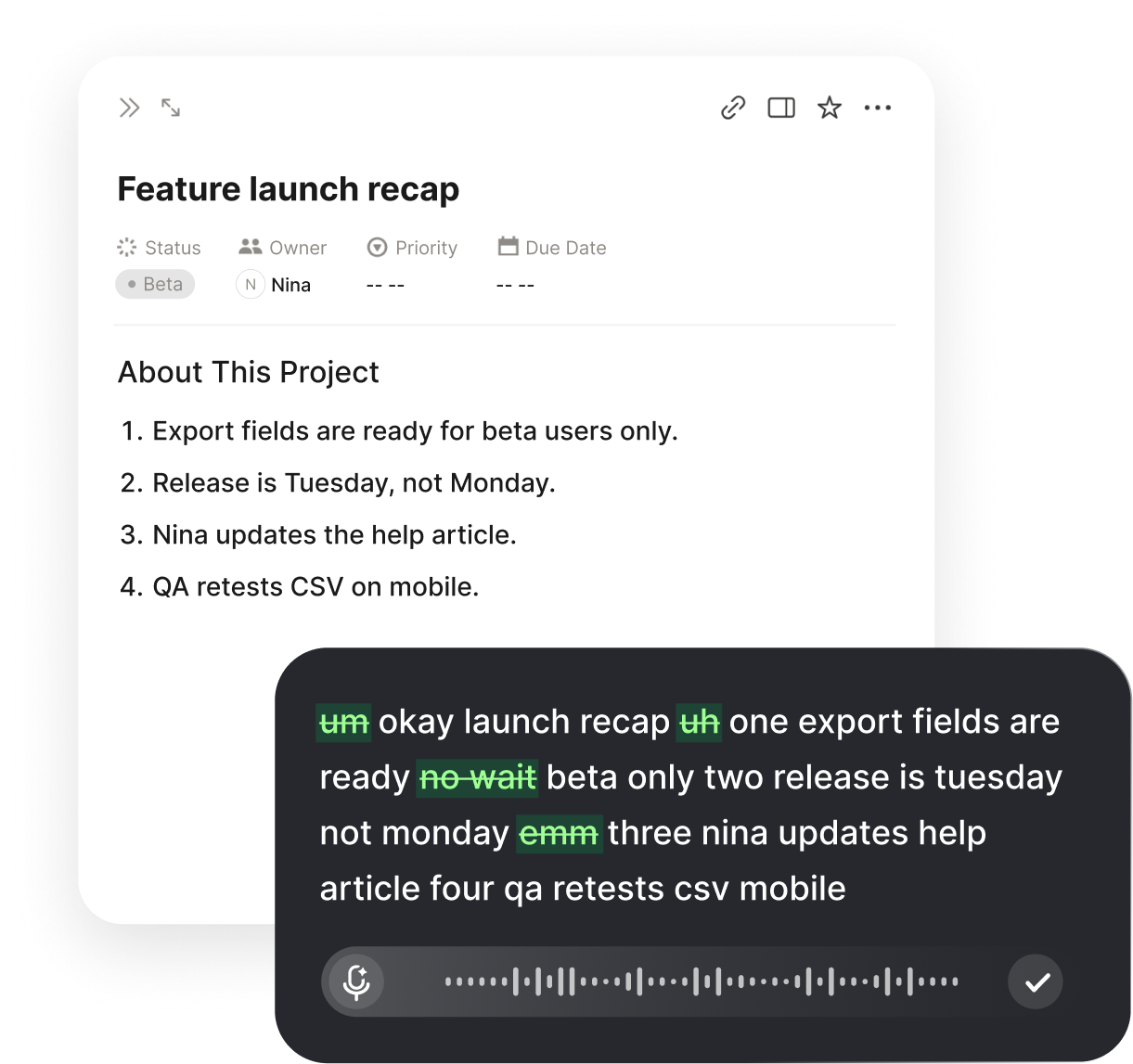
Practice answers as spoken paragraphs rather than as written essays. A good defense answer has a direct response, a piece of evidence, a qualification, and a return to the main argument. Say the direct response in one sentence, then support it with a specific result, example, or citation. Add the limit or uncertainty, then connect the answer back to the thesis. Keep the whole answer to about sixty to ninety seconds. The app removes filler and false starts, so the captured answer shows whether the structure holds when you speak under mild pressure in front of another person who may interrupt.
Rehearse the same question in three lengths. First give the full answer, then a thirty-second version, then a single sentence. Committees sometimes interrupt or ask for a shorter response, and the ability to compress without losing the point is a sign of mastery. The one-sentence version is also useful when a question arrives at the end of a long session and time is short. Read all three versions aloud and check that the claim stays the same. If the short version changes the meaning, the long version is probably doing too much work for a single answer in a live exchange.
Work on the first ten seconds of each answer. A rushed opening or a long preamble makes a strong answer sound uncertain. Practice starting with the claim, then pausing briefly before the evidence. If the question is ambiguous, restate it in your own words and ask whether you have understood it correctly. That move buys time and prevents you from answering a different question. Record the opening three times and keep the version that sounds calm and direct. Committee members remember how an answer begins. A calm opening also gives you a moment to organize the evidence that follows in the rest of the answer.
Use a peer as an active listener. Ask them to interrupt, ask a follow-up, and say when an answer lost the thread. Their interruptions are more useful than silent nods because they simulate the actual exchange. After each round, ask them to restate your answer in one sentence. If their restatement differs from your intended claim, the answer needs a clearer structure. Keep a short note after each session with the questions that caused trouble and the fixes you tried. Repetition with feedback is what turns preparation into fluency. Schedule the next round before you finish the current one.
Time the Talk Track for Each Slide
A defense presentation usually has a strict time limit, and the talk track should fit it before the slides are polished. Speak one paragraph per slide, timed with a stopwatch. Write the target time for each slide at the top of the notes and check the total against the limit. If the total runs over, cut content rather than speaking faster. Most overruns come from slides that try to make two points, so split or remove them. A timed talk track gives you a realistic plan and protects the last section, which often carries the contribution and deserves a calm delivery.
Open with the claim, not with a tour of the outline. Committees have read the thesis; they want to know what you are arguing and why it matters. Use the first slide to state the problem, the gap, and the claim in three sentences. Then move to the evidence in the order that supports the argument, not the order in which you did the work. Save the literature review for questions unless the committee expects a short framing section. A clear opening makes the rest of the talk easier to follow and signals that you can prioritize under real pressure.
Give each slide one job and one transition. Write the job in a note, such as establish the method or show the main result, and check that the slide does only that. Say the transition aloud so the audience knows why the next slide follows. If a transition feels arbitrary, the argument has a gap. Keep numbers few and large, and say the one number that matters rather than reading a table. Time the slide after each revision; edits tend to add seconds that accumulate. A talk that fits the limit with a little room is easier to deliver well.
Rehearse the ending more than any other section. The last two minutes should restate the claim, summarize the evidence, acknowledge the limits, and name the contribution. Practice stopping at the limit rather than rushing to add one more point. Prepare a short version in case the chair signals that time is nearly up. After the final sentence, pause and invite questions. A controlled ending makes the transition to questions feel deliberate and gives the committee a clear place to begin. Rehearse this closing transition until it feels routine rather than abrupt, and practice it both with and without full slides.
Simulate the Defense and Refine
Run at least two full simulations before the real defense. Invite two or three people, give them the thesis and the question bank, and ask them to behave like a real committee: interrupt, follow up, and press on weak points. Keep the time limit and the slide order. Ask one person to take notes on your answers rather than on the slides. After the simulation, collect the questions that caused hesitation and the answers that ran long. A realistic simulation reveals more than another solo rehearsal because it tests how you respond to another person's pacing, interruptions, and follow-up questions.
Debrief immediately while the memory is fresh. Ask each participant for one strength and one specific change. Write the feedback into the question bank beside the relevant answer. If two people identify the same weakness, treat it as a priority. If the feedback conflicts, test both suggestions in the next rehearsal rather than choosing by preference. Assign a date for the next simulation and a short list of answers to revise before it. A debrief that produces specific revisions is worth more than general encouragement. End the debrief with a short written list of changes, owners, and dates for the next round.
Prepare the logistics as carefully as the content. Confirm the room, the equipment, the slide format, and the time limit. Test the file on the presentation machine if possible, and carry a backup copy on a second device. Decide what you will do if a slide fails or the projector is unavailable. Plan the first sentence you will say and the last sentence before questions. Arrive early enough to test the setup without rushing. Logistical calm protects the attention you need for the argument. Write the plan on one page and read it briefly before you enter the exam room.
Set up your rehearsal tools before the final week. Download Voiskey, install it for your operating system, and test the shortcut in your notes document. If you qualify for the student offer, sign in with a school email and enter the code sent to that address. Create a single file with the question bank, the timed talk track, and the answer patterns. Run one last captured rehearsal two days before the defense and review only the answers that still feel uncertain. Then stop rehearsing new material and trust the preparation and the rehearsal record you have built over the past several weeks.
FAQ s
Speak each answer to your question bank aloud and capture the result for review. Voiskey places the text in your notes, removes filler and false starts, and adapts formatting, so you can see whether the claim appears early and whether the evidence supports it before the next rehearsal.
Yes. Answer each question in the four-part pattern of direct response, evidence, qualification, and return to the argument, then read the captured answer and cut it to sixty or ninety seconds. Voiskey removes stutters and self-corrections, so the practiced answer sounds calm rather than memorized.
Speak one paragraph per slide while a stopwatch runs, then capture the paragraph as speaker notes. Voiskey places the text in your notes field and adapts formatting. Compare the total with the limit, cut slides that make two points, and rehearse the ending until it fits with a little room.
Mark the sentence where each claim appears and move it to the front if it is buried. Compare the captured answer with your one-line answer, check that the evidence matches the thesis, and remove claims you cannot support. Send two transcripts to your advisor and revise the weakest answers before the next simulation.


 Voiskey
Your voice, amplified.
Download Voiskey for Mac and Windows and speak your next draft into place.
Use it across macOS, Windows, iOS, and Android