
Voice Notes for Internship Journals

Capture the workday in four prompts and keep a clean record

Voiskey Voiskey Team
Student Voice NotesLecture CaptureVoice Notes Internship

Choose the Journal Rhythm

Voice Notes for Internship journals work when the rhythm is set before the first busy day. Decide how often you will write: daily, every other day, or weekly with a short daily list. Daily entries are usually easier to keep during a placement, because the details of a task fade faster than the memory of the day. Choose a fixed moment, such as the walk back from the office or the first ten minutes at home. Put that moment on your calendar as a recurring block. A journal that depends on finding free time will always lose to the next task on the list.

Define what a useful entry contains before you start writing. Most internship journals need four things: what you did, what you learned, what you found difficult, and what you will try next. Add the people you worked with and the tools you used, because those details make the entry useful for a later interview or report. Keep the same four prompts for every entry so the journal can be reviewed by scanning. If your course requires a specific format, copy its headings into your template and use them from day one. A fixed structure removes the blank-page pause that kills daily habits.

Decide the level of detail and keep it steady. An entry of five to eight sentences is usually enough to preserve the day without turning the journal into a second job. Include one specific example, such as a problem you solved or a mistake you caught, because specifics make the entry worth rereading. Avoid writing only a list of tasks, which records activity but not learning. If a day was routine, say so and note one small observation. Steady detail beats occasional long entries, because the journal is a record of the placement, not a long series of essays written for a course.

Plan how the journal will be used at the end. You may need it for a course report, a performance review, or an interview answer. Write those uses on the first page and keep them in mind when choosing details. If a report will ask for evidence of growth, note one change in your practice each week. If an interview will ask about a challenge, keep a short list of difficult moments with what you did. A journal with a destination is easier to maintain, because each entry then has a purpose beyond maintaining the habit and each review has a clear use.

Dictate the Day While It Is Fresh

Speak the entry as soon as the day ends, before the commute and the evening errands blur the details. Sit somewhere quiet, open the journal document, and answer the four prompts in order. Keep each answer to one or two sentences and do not edit while speaking. The first version is a capture, not a final text. If a detail is uncertain, say uncertain and move on; you can check it later. A fresh spoken entry preserves the specific words people used and the order in which events happened, which is exactly what written notes from memory tend to flatten.

Use the first minutes for facts and the last minutes for reflection. Start with the tasks, the people, and the tools, because those are the details most likely to fade. Then move to what you learned and what was difficult. Saving reflection for the end lets the facts come out cleanly and gives the reflection something concrete to stand on. If the day was long, shorten the facts and keep one reflection. If the day was significant, extend both. This order keeps the entry balanced and stops it from becoming either a task list or a diary of feelings on the page.

Capture the language of the workplace as you hear it. Note the names of systems, the acronyms, and the phrases your team uses, and add a short explanation for each. These entries become a personal glossary and help you describe the work accurately in later reports. If you do not understand a term, write it with a question mark and ask the next day. Review the glossary once a week and remove entries you now understand. Add each new term to the glossary the same day you meet it. Learning the vocabulary is part of the placement, and the journal is the natural place to keep it.

Handle the days when nothing seems worth writing. A routine day still contains a decision, a shortcut, or a small failure, and any of those makes a useful entry. Use the prompts as a checklist and answer each in one sentence even if the answer is brief. If the day was genuinely empty, write one line about why and stop. A missed entry is less harmful than an inflated one, so do not pad the journal to meet a word target. The habit survives on honesty and a low bar, not on dramatic material or an impressive word count at the end of the day.

Shape Entries for a Supervisor

Write some entries with a supervisor in mind, even if the journal stays private. A supervisor wants to see what you did, what you learned, and where you need help, usually in that order. Practice that shape once a week so you can summarize the placement clearly when asked. Lead with the outcome, then the process, then the question. Keep the tone plain and avoid blaming people or teams. This exercise improves the journal and prepares you for the performance conversations that decide whether the placement is extended or recommended. It also gives you ready answers for interviews later in the term.

Keep a separate line for requests and blockers. If you need access, a review, or a decision, write the request in one sentence with the date and the person. Then review the open requests every Friday and follow up on anything unresolved. This line turns the journal into a light work log as well as a learning record, and it prevents small blockers from quietly delaying your tasks for a week. A supervisor who sees a clear request can act quickly, while a vague complaint tends to be postponed. The line should be factual and short, with no editorializing or blame.

Prepare a short weekly summary from the daily entries. Read the week, then write five lines: the main outcome, one skill practiced, one problem solved, one open question, and the plan for next week. This summary is what most supervisors and course reports actually need, and it takes far less time than rereading every entry. If a week was difficult, state the difficulty plainly and name the support you need. Keep the summary in the same document so the daily detail and the weekly view stay connected. A weekly summary turns a pile of entries into a story of progress.

Review the journal's tone before sharing any entry. Remove frustration that names individuals, and replace it with a description of the situation and the action you took. Keep the facts, because a sanitized journal loses its value. If an entry records a conflict, write what happened, what you tried, and what you would do differently. This version is professional, honest, and safe to discuss. The test is simple: would you be comfortable if the person mentioned read the entry? If not, rewrite the entry until you would be, while keeping the substance of the event intact and recognizable to a reader.

A Trial Week With Voiskey

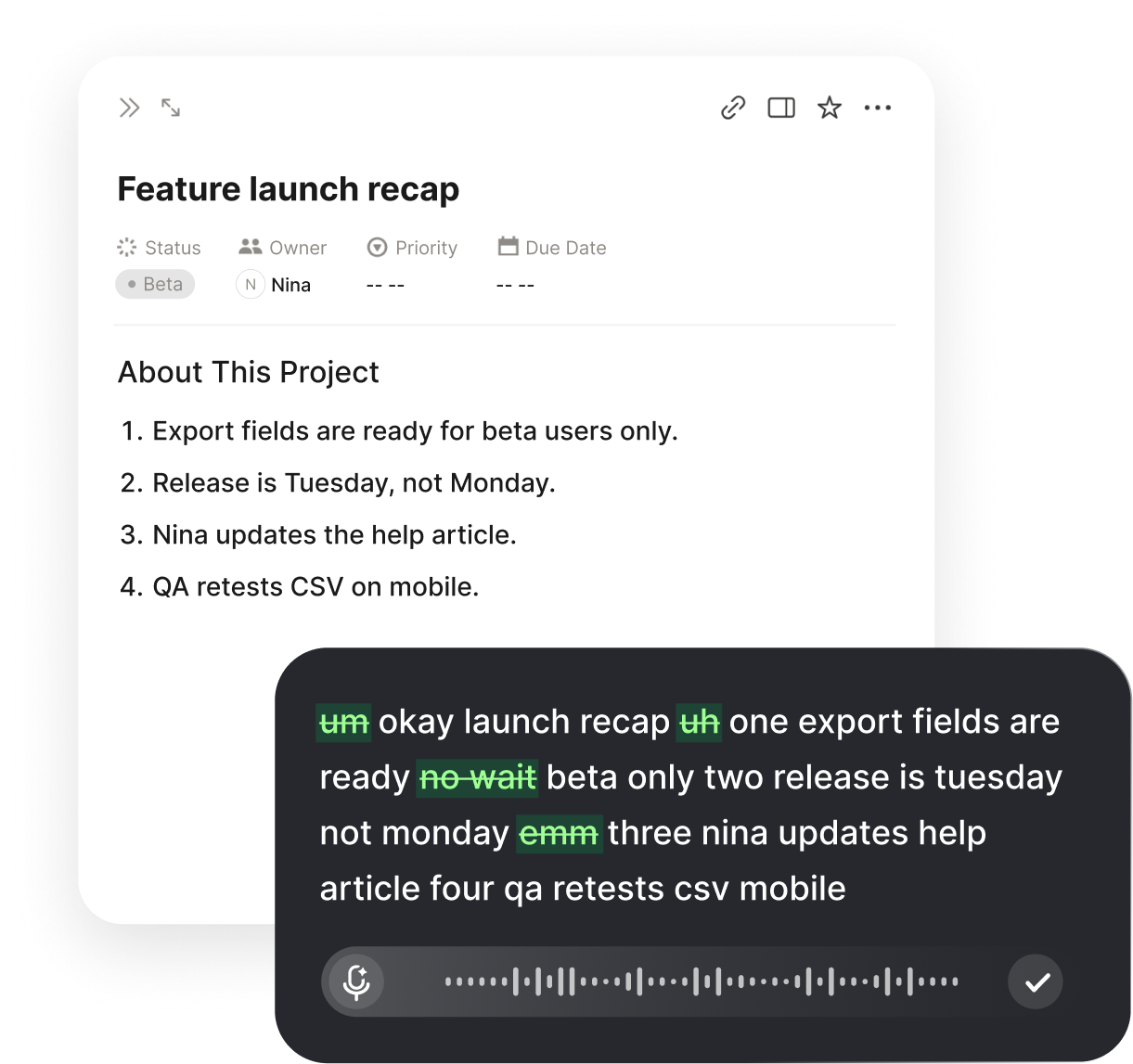
Run the journal for one week with a spoken capture before you rely on it for a full placement. Open the template, answer the four prompts aloud, and stop after eight sentences. Voiskey fits this routine because you press a shortcut, speak, and text appears at the insertion point in the journal file you already use. It removes filler words, stutters, false starts, and self-corrections, so the entry reads like a written note. It can also learn the names, jargon, and acronyms of your workplace, which reduces repeated spelling fixes and keeps the personal glossary consistent during the trial week.

Compare the spoken entries with two handwritten ones from earlier in the placement. Check which version preserves more specific detail, which is faster to produce, and which is easier to read a week later. Keep the four prompts identical so the comparison is fair. If the spoken entries are shorter, add one sentence about the people and one about the tools. If they are longer but vaguer, tighten the prompt order. Voiskey adapts punctuation and formatting to what you are doing, so a spoken list and a spoken paragraph can share one template. Download Voiskey if you want the same routine on a second device.

Plan the exceptions the trial will expose. On a late day, record only the facts and one reflection. On a day with a sensitive event, write the entry as a factual description and leave the naming for a private conversation. On a day with no time, speak a two-sentence note and expand it the next morning. Write these three fallbacks on the template so they are decided in advance. The journal should survive a bad week without becoming a source of guilt. A routine with explicit fallbacks is easier to restart than one that demands a perfect daily record every single day.

Close the trial with a verdict and one adjustment. Keep the prompts that produced useful entries, drop the question you never answered, and add the fallback you actually used. Then dictate one more entry with the revised template. A trial is complete when a supervisor or a course tutor can read an entry and understand what you did and learned without asking questions. If that test fails, the entry is too thin or too abstract, and the fix is one more specific example rather than a longer entry. Write the verdict beside the template and keep it with the first revised entry.

Maintain the Journal Habit

Keep the journal visible by attaching it to a habit that already exists. The walk home, the last coffee, or the first minutes after closing the laptop can all serve as the trigger. Put the template in the same place every day and keep the four prompts on the first line. If a day slips, write a two-line entry the next morning rather than skipping it entirely. A chain of small entries is more useful than a perfect week followed by silence. The habit survives on a reliable trigger and a low minimum, not on motivation that rises and falls with the workload.

Review the journal every two weeks for quality, not just quantity. Read three entries and check whether they contain a specific example, a learning point, and a next step. If any is missing, add one prompt to the template for the next two weeks and see whether it helps. Count how often a request line was used, because that tells you whether the journal is functioning as a work log too. Keep a short log of changes. A periodic review keeps the structure matched to the placement, and it stops the journal from drifting into a list of tasks with no learning.

Use the journal when preparing for reviews and applications. Search the entries for examples of problems solved, skills practiced, and feedback received. Write three short stories from those examples, each with a situation, an action, and a result. This preparation is far easier with a steady journal than with a last-minute memory exercise. If you use Voiskey to draft the stories, the same spoken structure keeps them consistent. A journal that feeds reviews and applications repays the daily effort, and the stories take only minutes to assemble when the source entries already exist. That preparation is what makes the last week of the placement feel calm.

Close the placement with an archive and a handover note. Save the weekly summaries, the glossary, and the best entries as one set, named by company and dates. Write three lines about what to keep, what to change, and what to do differently next time. Download Voiskey if you want to dictate the handover note and the first entry of your next placement into the same structure. Check the prompts and the trigger once before the new role begins. An archived journal turns one placement into a reusable method for the next one, and it takes about fifteen minutes to prepare.


FAQ s

Press the shortcut after the workday and answer four prompts aloud: what you did, what you learned, what was difficult, and what comes next. Voiskey places text at the insertion point in your journal file, removes filler words and false starts, and adapts punctuation to your entry style.

Voiskey learns names, jargon, acronyms, and spelling preferences, so the systems and phrases your team uses become easier across the placement. Say a new term clearly once, then add it to your glossary. Support for 100+ languages also helps in multilingual workplaces.

Speak the entry right after the workday ends, keeping facts first and reflection second. Stop after eight sentences and edit later. Voiskey polishes filler and grammar slips, and it learns your workplace names and acronyms, so the entry stays readable across the placement.

Voiskey supports up to 220+ words per minute, about 5x faster than typing, which helps when you are tired and want the entry finished quickly. You press a shortcut, speak the four prompts, and text appears at the insertion point. The Speak-Polish-Type-Edit workflow keeps the entry short and leaves only a light edit.

Say less. Get more
Say less. Get more
Say less. Get more
Say less. Get more
VoiskeyVoiskey

Your voice, amplified.

Download Voiskey for Mac and Windows and speak each internship day into a journal.

Use it across macOS, Windows, iOS, and Android

Use it across