
Balancing Part-Time Work and Study with Voice Notes
Use the short gaps between shifts and classes to keep coursework moving
 Voiskey Team
Finding the Gaps Between Shifts and Classes
Balancing Part-Time Work and study is mostly a problem of fragmented time. A student with a job rarely has a free afternoon; what they have is twenty minutes before a shift, a bus ride between campus and work, and a short break in the middle of the day. These gaps are too small for a full study session but large enough to capture a thought, review a definition, or plan the next task. The first step is to stop treating the gaps as wasted time and start treating them as the real unit of work. A plan built around gaps is a plan that can actually survive a working week.
Map a typical week before changing anything. Write down the fixed blocks: classes, shifts, travel, and the hours you protect for sleep and meals. Then mark the small gaps that appear between them, and label each one with what it could realistically support. A five-minute gap can hold a spoken reminder or a single question; a twenty-minute bus ride can hold a spoken summary of a reading; a half-hour break can hold a short planning session. The map shows you where the time actually is, which is usually different from where you assumed it was. Do this once, then adjust it when the schedule changes.
Protect the gaps from unnecessary work. A gap does not need to be filled with a task; sometimes the best use is to think without a screen. Speak a thought, let it sit, and return to it later. The point of mapping is to give yourself options, not to schedule every minute. If a gap is consistently taken by recovery, that is a valid use and should be planned rather than resented. A realistic plan includes rest, because a schedule that ignores rest collapses after a few weeks. The goal is a sustainable rhythm, not a perfectly packed calendar. The map is the starting point.
Decide what kind of work fits each gap. Low-energy gaps suit capturing thoughts, sending a short message, or reviewing a definition. Higher-energy gaps suit planning, drafting a paragraph, or working through a problem. Match the task to the energy available, not to the amount of time alone, because a tired twenty minutes is not the same as an alert twenty minutes. Keep a short list of tasks sorted by the energy they require, and pick from the right list when a gap appears. This small habit prevents the common pattern where a difficult task is started in a tired gap, abandoned, and then avoided for days.
Capturing Course Notes Between Tasks
Capture course notes in the gaps rather than saving them for a long session. After a class, before a shift, or during a break, speak the main point, one example, and one question into your notes document. This takes two minutes and preserves the material while it is still fresh. The alternative, waiting for a free evening, usually means the material has faded and the notes become a reconstruction. Short, frequent capture also fits the rhythm of a working week, where long blocks are rare and unpredictable. The habit is to capture at the edges of the day, when the transition between work and study already exists.
Keep the capture structure simple enough to use under time pressure. One heading, one claim, one example, one question. Do not try to write a full summary in a five-minute gap; aim for a seed that you can expand later. The seed is valuable because it records what you understood at the moment, not what you can reconstruct afterward. If the gap is longer, add a second example or a short explanation. If the gap is shorter, record only the question. Consistency matters more than completeness, because a regular stream of seeds is easier to work with than an occasional perfect summary.
Use the transitions themselves as capture points. The walk from a lecture hall to a bus stop, the wait for a shift to start, and the first minutes after clocking out are natural boundaries where your attention is free. Speak a short note at each boundary, and you will find that the day produces three or four small records without a dedicated study block. These records also help you separate work from study mentally: the boundary note closes one context and opens the next. Over a week, the boundary habit produces more usable course material than a single exhausted evening session.
Review the captured seeds before they go stale. Once a day, or at the end of a shift, read the seeds and decide which ones deserve expansion. Expand one or two, not all of them, and keep the rest as a list of topics to revisit. This prevents the capture document from becoming a graveyard of half-thoughts. If a seed no longer makes sense, delete it; if it raises a question, move it to the question list. A short review keeps the capture habit useful and stops it from turning into another source of unfinished work that hangs over the week.
Drafting Work and Study Messages Quickly
A working student writes a lot of short messages: shift swaps, assignment questions, group coordination, and updates to a manager or tutor. These messages are small but they add up, and they are often written in the gaps when typing is awkward. Speaking them is faster and fits the moment. Say the message in the field where you already type, check the tone, and send. The key is to keep the message short and specific, because a spoken message that rambles is harder to edit than a brief one. A useful pattern is context, request, and deadline, in that order.
Match the tone to the recipient. A message to a manager should be direct and respectful; a message to a study group can be informal and quick. Voiskey adapts tone and word choice to what you are trying to do, so you can speak naturally and then adjust the result for the relationship. Read the message once before sending, especially if it was spoken in a hurry. A short spoken message that is clear is better than a long typed one that arrives late, but a clear message still needs a quick check for names, times, and dates. A short message is easier to check.
Use templates for recurring messages. Shift swap requests, deadline extensions, and group updates repeat throughout a term, and each has a standard shape. Write the shape once, then speak the variable details into it. A template saves time and prevents the omission of a key detail, such as the date you need to swap or the specific question you are asking. Keep the templates in a short list and update them when the situation changes. Over a term, the templates become a small personal system for handling the administrative side of work and study. A quick check prevents most confusion.
Send messages in batches when possible. Constant small messages fragment attention, especially during a shift or a class. Collect the messages you need to send, speak them in one short block, and send them together. This reduces context switching and gives you a chance to review the whole set for consistency. If a message is urgent, send it immediately; otherwise, batching is usually better. The goal is to handle the administrative layer efficiently so that it does not consume the attention you need for the actual work and study. Templates also turn a rushed gap into a reliable, repeatable action.
Keeping Both Sides Organized
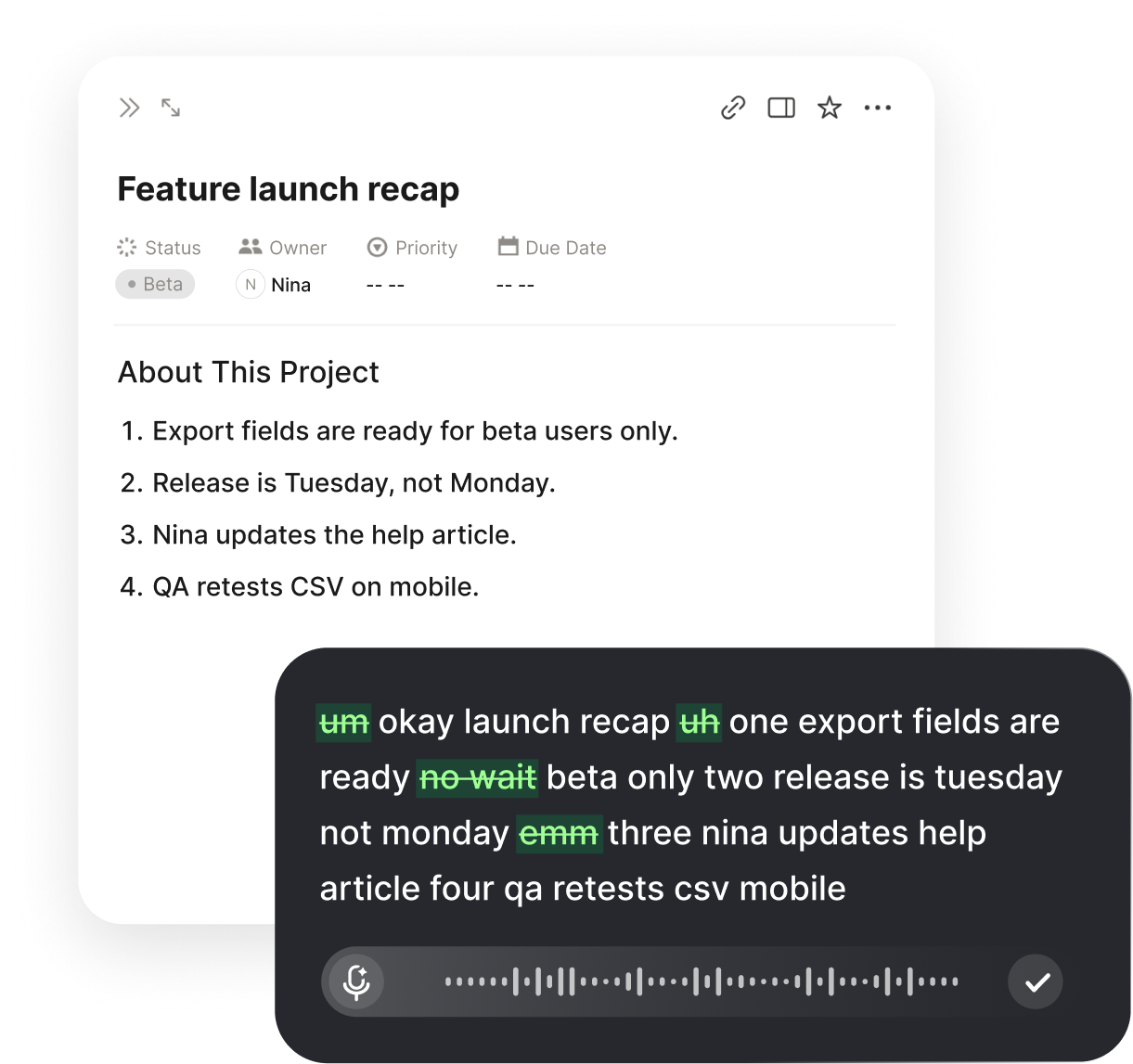
Voiskey helps a working student keep both sides organized because the text lands in the document or field where you are already working. You press a shortcut, speak a note or message, and text appears at the insertion point, so there is no separate transcription step between the thought and the record. Voiskey removes filler words, stutters, and false starts, and it adapts punctuation and formatting to the task. The workflow is Speak-Polish-Type-Edit: speak the note, polish it, type the exact dates and names, then edit before sending or saving. Fewer steps means more of the short gaps actually produce something useful.
When you download Voiskey, set up two clear destinations: one for work and one for study, each with a fixed structure. The work document holds shift notes, requests, and reminders; the study document holds course seeds, questions, and deadlines. Keeping them separate prevents the common problem where a work reminder ends up buried in course notes. Within each document, use dated sections and a short list of open items at the top. A fixed structure means you can find the relevant note in seconds during a break, which is the only kind of organization that survives a fragmented week. Fewer steps matter in a short gap.
Use a single weekly list to connect the two sides. At the start of the week, write the fixed commitments from work and study in one place, then add the three most important outcomes for the week. This list is the bridge between the two documents and the place where conflicts become visible, such as a shift that overlaps a deadline. Review it at the end of the week and move anything unfinished. Download Voiskey and keep the weekly list in the same document as your study notes, so you can update it by voice when the schedule changes unexpectedly.
Keep the administrative layer shallow. Two documents and one weekly list are enough for most working students. Adding more folders, tags, and trackers usually increases maintenance without improving recall, especially when the week is busy. If a note has no clear destination, put it in a parking section and process it during the weekly list. The goal is a system you can run in five minutes, not a system that requires a dedicated planning session. A shallow system that you actually use beats a detailed one that you abandon when a shift runs late. The list is the bridge between both sides.
Protecting Rest While Staying on Track
The biggest risk in a working term is not a missed deadline but cumulative fatigue. A schedule that uses every gap for study looks efficient for two weeks and then collapses. Protect rest deliberately by leaving some gaps empty and by keeping the study plan small enough to survive a hard shift. Voiskey supports this because a spoken note takes less energy than typing one, so the work fits into the gaps without demanding a full session. The aim is a rhythm you can keep for a term, not a sprint that ends in exhaustion. Rest is part of the plan, not a reward for finishing it.
Define a minimum version of the week for difficult periods. On a heavy work week, the minimum might be one course capture per day, one weekly list, and one short review. Everything else can wait. Write the minimum down before the week starts, so you know what to protect when time disappears. A minimum version prevents the all-or-nothing pattern where a busy week turns into a lost week. When the schedule eases, return to the fuller routine. The ability to scale down and back up is what makes a working student's system durable. Protect the empty gaps too.
Separate recovery from study. A break spent reviewing notes is not a break, and a shift followed by an immediate study block leaves no transition. Build a small boundary between the two, such as a walk, a meal, or a few minutes of silence. During that boundary, do not open a study document. The boundary helps you arrive at each context with attention rather than residue from the previous one. Download Voiskey and use it to speak a two-line handoff at the end of a study block, so the next session starts with a clear pointer instead of a vague memory.
Review the balance once a month. Ask whether the plan protected sleep, whether the course work moved forward, and whether the job is taking more than the agreed hours. If the answer to any question is no, change one thing rather than overhauling everything. A monthly review is enough to catch a drift before it becomes a crisis, and it is short enough to fit into a working week. The point of the whole system is to make the term sustainable, and sustainability is measured over months, not days. A calm, repeatable routine is the best protection against burnout. A monthly check is enough.
FAQ s
You press a shortcut, speak a short note, and text appears at the insertion point in your notes document. Voiskey removes filler words, stutters, and false starts, so a two-minute capture between tasks arrives as a usable seed that you can expand during a later review.
Voiskey adapts tone, vocabulary choices, formatting, and punctuation to what you are trying to do. That means you can speak a short message to a manager or a study group, then read it once and adjust before sending, instead of composing the whole message at a keyboard during a break.
Yes. Voiskey works at the system level, so you press a shortcut and speak, and text appears at the insertion point in any app or text field. You can keep your current work and study documents and message window without copying text between them.
Keep the capture and the plan short. Speak one heading, one claim, one example, and one question into your notes, then update a single weekly list with the most important outcomes. A shallow routine that takes five minutes is easier to keep than a detailed system that a late shift interrupts.


 Voiskey
Your voice, amplified.
Download Voiskey for Mac and Windows and keep coursework moving between shifts.
Use it across macOS, Windows, iOS, and Android