
Dictating Study Plans Before Exams
Speak the plan, schedule the blocks, correct it every Sunday
 Voiskey Team
Map the Exam Calendar First
Dictating Study Plans Before exams begin works when the calendar is already on the table. Start by listing every exam with its date, time, room, and format, then add the weight of each assessment and the topics it covers. Mark fixed commitments such as labs, shifts, and travel so the plan does not pretend those hours are free. Count the days between today and the first exam, then subtract the days you know will be lost to review sessions or travel. The result is a realistic window, not an optimistic one. Write this calendar on a single page and keep it where you plan, because every later decision depends on these numbers being visible.
Sort each course by what the exam actually demands. A closed-book definition exam rewards recall and short answer practice; a problem exam rewards worked examples and error review; a project defense rewards a clear narrative and evidence. For each course, write the three highest-value activities and the three topics you understand least. This list, not the page count of the textbook, sets the plan. If two courses compete for the same days, decide which one gets the morning hours when your attention is best. Record that decision in writing so a later mood does not silently reverse it.
Set the non-negotiables before you touch the schedule. Sleep, meals, exercise, and any paid work belong on the page first, because a plan that assumes none of them will collapse in the first week. Add one buffer half-day for every five study days, and protect one evening each week with no study at all. Mark the last day before each exam as review only, with no new material. If the calendar cannot hold these basics, reduce the scope of the plan rather than the basics. A study plan is a promise you can keep, not a document that looks impressive and fails by day four.
Write a short goal statement for the whole exam period. It should name the outcome you want, the constraint you accept, and the one habit that matters most, such as daily recall or nightly error review. Keep it to two sentences and read it before each planning session. If the goal and the calendar disagree, the calendar wins, and the goal gets revised. This statement is also the test for new requests: if an activity does not serve the goal, it does not enter the plan. A written goal prevents the plan from growing until it is impossible to follow.
Dictate the Plan in One Sitting
Once the inputs are ready, dictate the whole plan in one sitting rather than assembling it piece by piece over days. Open the document you already use, press the shortcut, and speak in a fixed order: exam dates, course priorities, fixed commitments, then daily blocks. Speaking the plan aloud forces you to hear whether the workload is plausible; a week that sounds impossible when spoken will not survive contact with reality. Keep each spoken segment short and move on. The first pass is meant to produce a complete, honest draft for the whole exam period, not a polished schedule that you will rewrite anyway.
Use plain, declarative sentences so the draft is easy to edit. Say the course, the date, the activity, and the duration, for example review chapter four on Tuesday for ninety minutes. Avoid vague phrases such as study more or catch up, because they give a future reader nothing to schedule. When you change your mind mid-pass, say the correction plainly and let the tool clean up the false start. Do not stop to fix formatting while speaking; mark a mental note and continue. A complete draft with a few rough edges is more useful than a perfect first page and no plan for the remaining weeks.
Build the plan in descending size. Start with the exam weeks, then the weeks before them, then the current week, and finally today. This order keeps the plan anchored to real deadlines instead of drifting toward whatever feels urgent this morning. When you reach today, choose only the first block and the first review task, because a plan that begins with a giant list invites delay. Say the first block in a full sentence and repeat it once. Write the block on a card and place it beside your keyboard. Starting the plan with an executable block is the difference between planning and postponing.
Review the spoken draft immediately after dictating. Read it once for missing days, then check that every exam has a review day and every week has a buffer. Fix contradictions such as two activities booked at the same hour, and replace any block that names a topic without a task. Add owners: which activities need a study partner, a tutor, or a lab booking. Then say the first three days aloud again to test whether the wording is natural. This short edit pass converts a spoken stream into a schedule you can follow, and it takes far less time than rebuilding the plan later.
Turn the Plan Into Daily Blocks
A study plan only works when it becomes blocks on a calendar you actually check. Copy each day's activities into the calendar you already use, with a start time, an end time, and a one-line task. Name the block by the action, not the subject, so the calendar tells you what to do rather than what to think about. Keep blocks between forty-five and ninety minutes and put a ten-minute break after the hard ones. If a block needs a specific room, book, or partner, add that detail to the title. The calendar, not the planning document, becomes the working surface for the week.
Sequence each day by energy, not by habit. Place the hardest recall or problem work in the hours when you are sharpest, and place review, organization, and light reading in the low-energy slots. Protect the first hour of the day from messages and errands, because that hour often decides whether the plan holds. Build one short recall session into every study block so the material is tested rather than only read. If a day collapses, the plan should name which block to drop first, and that choice should be the lowest-value one. Deciding the priority order in advance prevents panic from choosing for you.
Connect the days with a weekly review slot. Put a thirty-minute review at the end of each week to compare planned blocks with completed ones and to move unfinished work to a specific new slot. Count only completed blocks, not hours of good intentions. If a course keeps losing its slots, either the plan is overloaded or the course needs a different activity, and the review is where you decide which. Keep the review on the same weekday and time so it becomes automatic. A weekly review converts a static plan into a system that corrects itself before the exam week arrives.
Prepare the materials each block needs before the day begins. A block that starts with a search for notes, slides, or practice problems loses its first ten minutes and often its momentum. At the end of each study session, write the next block's first action and gather what it requires. Keep one folder per course and one list of open questions. If a block requires a partner, confirm the time the day before. These small preparations turn the calendar from a wish list into an executable daily sequence, and they cost far less than repairing a broken study day later in the week.
Run a Trial Week With Voiskey
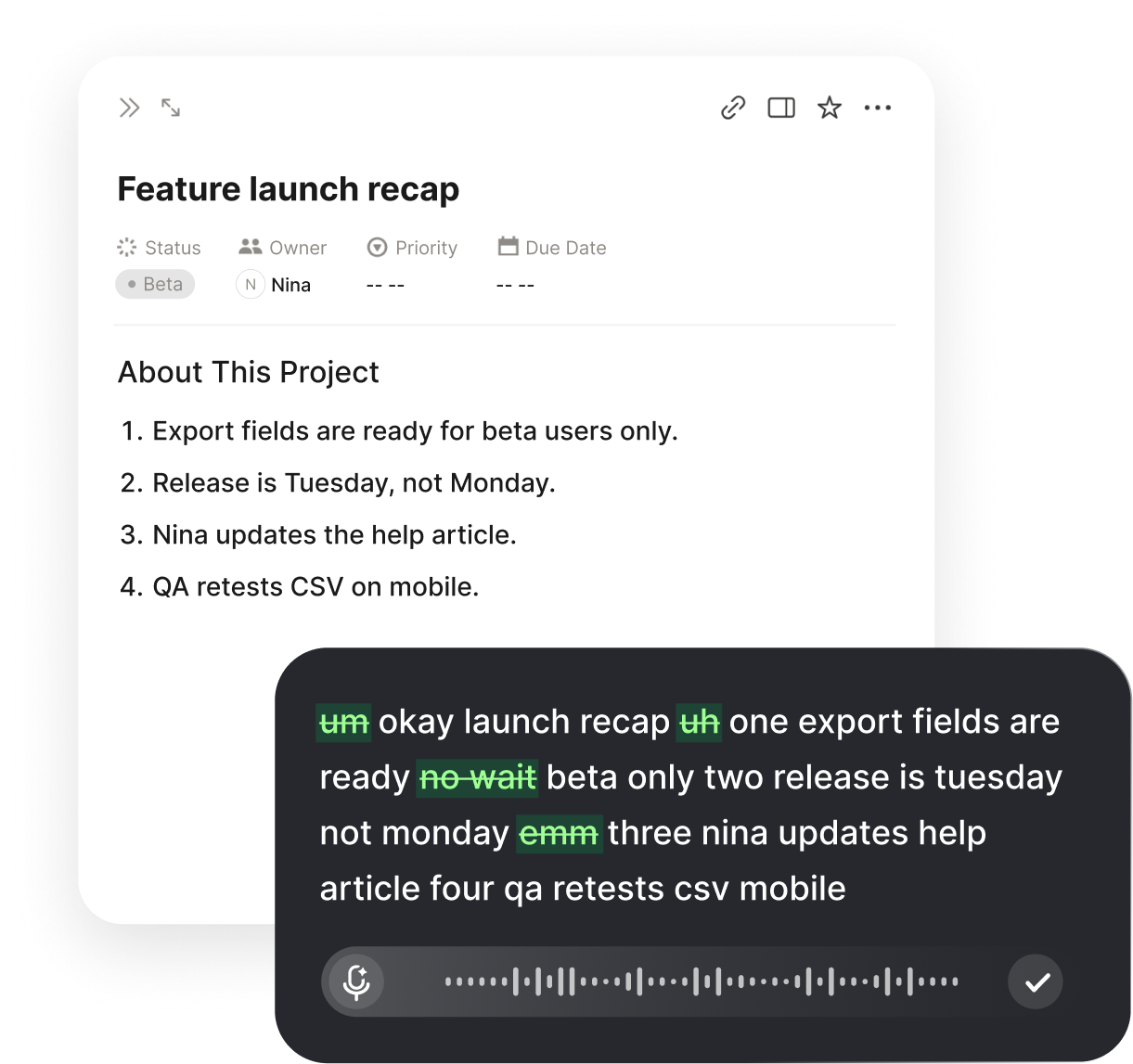
Before committing to a full exam period, run the plan for one ordinary week and test how you capture it. Speak each day's plan into your calendar notes and then dictate a short end-of-day review: what was completed, what slipped, and why. This review is the most valuable text you will produce, because it shows whether the plan matches your real pace. Voiskey fits this loop well: press the shortcut, speak the review in plain sentences, and let the text appear in the note field you already use. The app removes filler words and false starts, so the review reads like a written log rather than a transcript.
Measure three things during the trial week. Count completed blocks, the number of times you moved a block, and the minutes spent on the daily review. These numbers tell you whether the plan is overloaded, whether the review is cheap enough to keep, and where the schedule breaks first. Do not chase a perfect week; a trial that exposes two weak spots is doing its job. At the end of the week, compare the spoken reviews with the calendar and mark each mismatch. If you want the same loop on a second device, download Voiskey and sign in, then keep the spoken structure identical so the logs stay comparable.
Handle the exceptions the trial will produce. A missed block, a surprise assignment, or a cancelled review session should each have a written response, decided before the exam period starts. For a missed block, move it to the named backup slot rather than squeezing it into the next day. For a surprise assignment, take the time from the lowest-value block and record the trade. For a cancelled session, shorten the review instead of skipping it entirely. Write these rules in the same document as the plan. When the real exam weeks arrive, the exceptions are already decided, and the plan bends without breaking.
Finish the trial with a one-page verdict. State what to keep, what to change, and what to drop, each in one line with evidence from the week. Keep the spoken review habit even if the calendar needs a rebuild, because the daily log is what makes the plan correctable. Record the first day of the real exam period and the first block you will execute. Then put the plan away until the weekly review. A trial week is successful when you can point to specific changes and a next action, not when every planned block was completed without exception.
Adjust the Plan Every Sunday
The Sunday review is the control point for the whole exam period. Open the calendar, the daily reviews, and the list of open questions, then answer three prompts in order: what was completed, what moved, and what changed in the courses. Speak or write the answers before making any edits, because the honest record matters more than a tidy calendar. Then rebuild only the coming week, not the whole term. Voiskey makes this fast if you dictate the prompts and let the text land in your planning note; the polished result is easier to read than a rushed stream of thoughts.
Use the review to rebalance courses, not to punish yourself. If one course has consumed its slots without progress, change the activity rather than adding hours: switch from rereading to practice questions, or from solo work to a study partner session. If another course has been neglected, give it the first block of two mornings next week. Record each change with one reason and one expected effect. At the next review, check whether the effect appeared. This loop turns adjustments into small experiments, which is far more reliable than rewriting the plan from memory every week and keeps the record honest.
Keep the review short enough to survive a busy week. Thirty minutes is enough when the inputs are ready: the calendar, the daily log, and the question list. Set a timer, work in the fixed prompt order, and stop when the coming week is scheduled. If something needs deeper thought, add it to a separate list and handle it outside the review. The value comes from repetition, not from length. Put the review on the calendar as a recurring block with a clear title. A review that happens every Sunday at the same time will beat an ambitious monthly session that keeps getting postponed.
Close the loop before the exam week. Two weeks out, switch from building coverage to testing recall, and reduce new material to the topics already flagged. One week out, confirm rooms, times, and materials, and cut the plan to review blocks only. Download Voiskey if you want to dictate the final review notes and the exam-day checklist into the same document, then read them aloud once from the same planning note as a rehearsal. The last Sunday before the first exam should produce a short, calm checklist, not a new plan. That calm transition is the clearest sign the system worked.
FAQ s
Speak the plan into the document you already use, in a fixed order: dates, priorities, fixed commitments, then daily blocks. Voiskey places text at the insertion point and removes filler words, stutters, and false starts, so the draft reads like a written schedule. You can then edit the blocks in the same file without retyping anything.
Voiskey learns names, jargon, acronyms, and spelling preferences, so course titles and topic labels are easier to reproduce across sessions. Say an unusual term once, then use it normally in later blocks. Support for 100+ languages also helps when your reading list mixes languages.
Prepare the inputs first, then speak in one sitting in descending size: exam weeks, earlier weeks, this week, today. Keep sentences plain and declarative, and do not stop to fix formatting mid-pass. Voiskey adapts punctuation and formatting to what you are doing, so the draft is readable enough to edit immediately after you finish.
Voiskey supports up to 220+ words per minute, about 5x faster than typing, which matters when the plan is long and the exam is close. You press a shortcut, speak the schedule, and text appears in your planning document. The Speak-Polish-Type-Edit workflow leaves you a clean draft to correct rather than a blank page to fill.


 Voiskey
Your voice, amplified.
Download Voiskey for Mac and Windows and speak your exam plan straight into a schedule.
Use it across macOS, Windows, iOS, and Android