
Cross-Border Creators
Draft YouTube Scripts With Your Voice, Not a Blank Doc
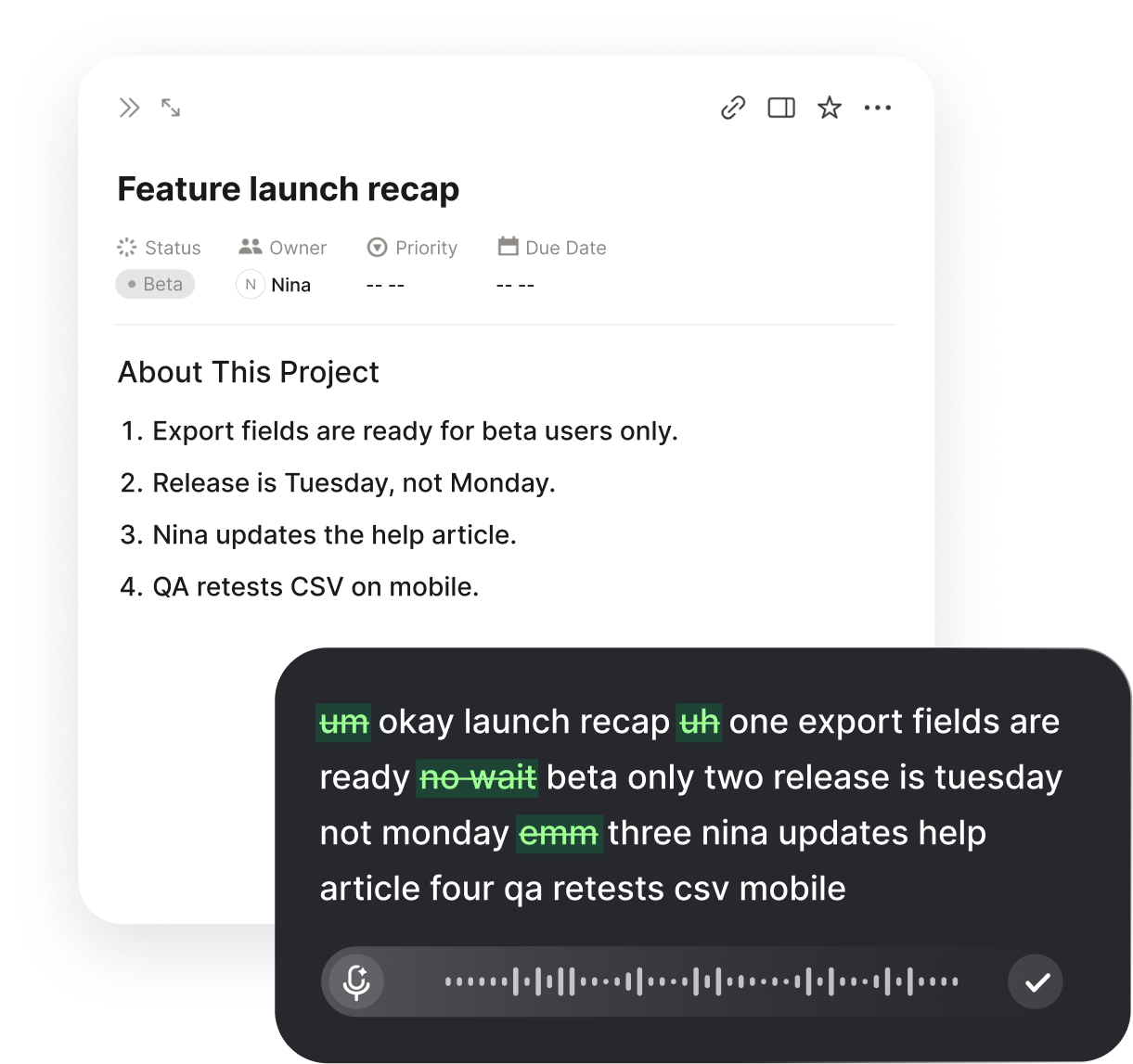
Creator work is ideas first and typed scripts second. Speak the hook, the sections, and the tone — with your cursor in the doc, Ask AI hands you a first pass. Free to start.
Why Cross-Border Creators Still Script on Paper
Cross-border creators often think in one language and publish in another. The idea for the video is clear — a product review, a sourcing trip, a marketplace tutorial — but the script still has to land in natural English on camera.
Speaking runs at around 220 words per minute, typing at around 45. For a hook, three sections, and a CTA, that gap is the difference between recording this week and leaving an outline in your notes app.
A YouTube script generator in search results usually means a web form with generic intros. Voiskey is different: you describe the topic, the viewer, and how the video should flow — by voice — and Ask AI hands you text at your cursor so you can edit before you hit record.
Ask AI for a YouTube Script Draft
Ask AI works two ways. From a blank doc, say what you need: eight-minute script on finding suppliers on 1688, audience is new Amazon sellers, hook with a common mistake, three main sections, end with subscribe and comment prompt, conversational not lecture.
Already have context on screen? Select it — a bullet outline, a prior video transcript, or pasted research — then ask by voice: expand this into a full script with transitions and B-roll cues in brackets. Ask AI uses your selection as the brief.
Open the doc you already use, click where the section should go, and speak your request. The draft appears at your cursor — no copy-paste step. If the intro runs long, select just that block and ask again: thirty-second hook, lead with the payoff.
What to Say Before You Record
Hook and Promise
Say what the viewer gets in the first thirty seconds — so the opener earns the click, not just introduces the topic.

Section Beats
Talk through the three or four beats the way you would explain them on camera. Speaking keeps sections distinct instead of one long paragraph.
Stories and Examples
One sourcing story, one failure, one win. Ask AI can turn spoken anecdotes into lines you can actually read aloud.
B-Roll and Visual Cues
Say when the screen should cut to product shots or screen recordings. Select the draft and ask to add bracketed visual notes.
CTA and End Card
Describe the subscribe ask, the link in description, and what comment you want — plainly, so the close does not ramble.
Short-Form Cutdown
After a long script, select a section and ask for a sixty-second Shorts version with a stronger hook.
Works Where You Write Scripts
Voiskey works anywhere you can type — Google Docs, Notion, Word, teleprompter apps in the browser, Descript or CapCut caption fields, and Slack where you share drafts with an editor. Put your cursor where the section belongs and dictate; the text appears on screen where you are writing. Revise in place the same way you would type.
If you already use Voiskey for notes or creator email, scripting is the same habit: cursor in the doc, speak, text lands in the field. Ask AI adds a structured first pass when you are staring at a blank heading.
Typical creator script workflow:
- Full script from a spoken outlineAsk AI YouTube script
- Expand selected bullet notesSelect text, then ask by voice
- Shorten or punch up the hookSelect, then ask by voice
- Final read-through in your docVoice typing for notes
- Caption or description draftVoice typing for work
FAQ s
No. Voiskey does not record video, generate thumbnails, or publish to YouTube. It helps you produce text at your cursor — in Google Docs, Notion, a teleprompter field, or a notes app — using voice and Ask AI.
Yes — two ways. Select context first — a video brief, competitor outline, or your bullet notes — then ask by voice: write a ten-minute script intro and three sections about Amazon FBA fees, conversational US English. Or select one section and ask to shorten, add a story beat, or rewrite just that block.
No. You supply the topic, the audience, and the tone. Voiskey turns what you say into clean text; it does not replace your on-camera personality.
Yes. Say the beats in whichever language is faster for you, then ask for US English on camera. Voiskey adjusts word order and phrasing so the script reads naturally, not like a literal translation.
For hooks, outlines, and section rewrites, often yes. Two thousand words a week covers many short-form scripts and intros. Full long-form videos use more; the free month up front is enough to see your pace.


 Voiskey
Your voice, amplified.
Speak the outline with your cursor in the doc — the draft appears where you write. Turn your voice into polished, ready-to-use text wherever you work.
Use it across macOS, Windows, iOS, and Android