
Communication
Writing Cold Emails That Get Replies: The 3-Line Formula
Stop opening with what you do. Start with what you understand about them
Why Cold Emails Fail in the First 2 Lines
The average professional receives dozens of cold emails a week. Most are deleted after the first sentence. Not because the product is bad or the timing is wrong — but because the opening line is about the sender, not the recipient.
"Hi, I'm [Name] from [Company]. We help [industry] companies achieve [outcome]." That sentence, in some variation, starts a majority of cold emails. It puts the reader in evaluation mode immediately: should I care about this company? Most of the time, the answer is no before the second sentence lands.
The reason this pattern persists is that it feels logical. You introduce yourself, explain what you do, make the case. But email isn't a pitch deck. It's a message from one person to another. The fastest way to get someone to read yours is to prove — in the first line — that you understand something specific about their situation.
The 3-Line Formula Explained
The 3-Line Formula strips cold email down to what actually drives replies: a signal that you've done your homework, a single sentence of value, and an ask small enough to say yes to without thinking twice.
Line 1 is proof you know them. Line 2 is the reason they should care about you. Line 3 is the smallest possible next step. That's it — under 100 words, most of the time. No company backstory, no feature list, no social proof unless it's directly relevant.
This structure works because it mirrors how people actually make quick decisions about strangers asking for their time. You don't owe a reply to someone who clearly sent the same email to 500 people. You might reply to someone who clearly read your last post and isn't asking for much.
The Three Lines in Detail
Each line does a specific job. Here's what to put in each one — and the mistake most people make.

Line 1: Show You Did Your Homework
One specific, verifiable detail that proves this email was written for this person. A product they launched, a talk they gave, a recent market move. Five minutes on LinkedIn is usually enough. Fabricated specificity is worse than none.
Line 2: Your Value in One Sentence
Say what you do in terms of their outcome, not your product's features. "We help e-commerce brands reduce cart abandonment" beats "We improve conversion." The more precisely it maps to their actual situation, the better.
Line 3: The Low-Friction Ask
A question they can answer in two sentences, or a resource offer with a yes/no. "Is improving X something on your radar for Q4?" A yes starts a conversation without locking anyone into a calendar commitment.
Real Examples
Before: "Hi Sarah, I'm Alex from Acme. We're a leading provider of logistics software for retail companies. Our platform helps companies optimize their supply chain and reduce costs. I'd love to connect for a quick call to show you how we've helped similar companies. Are you free this week?"
After (3-Line Formula): "Noticed you just rolled out same-day delivery in three new markets — that's a big operational lift. We help mid-market retailers keep fulfillment costs from ballooning during that kind of growth. Is this something your ops team is actively working on right now?"
The after version is shorter, more specific, and ends with a question the recipient can answer in ten seconds. No call booked, no commitment required. Just a signal: are you interested? That's the threshold for a useful reply, and it's much lower than blocking time on a calendar.
Voice-Drafting Cold Emails with Voiskey
The 3-Line Formula works best when the email actually sounds like a human wrote it — specific, direct, and conversational. That's harder to achieve by typing, where the instinct is to tighten and formalize until the message sounds like everyone else's.
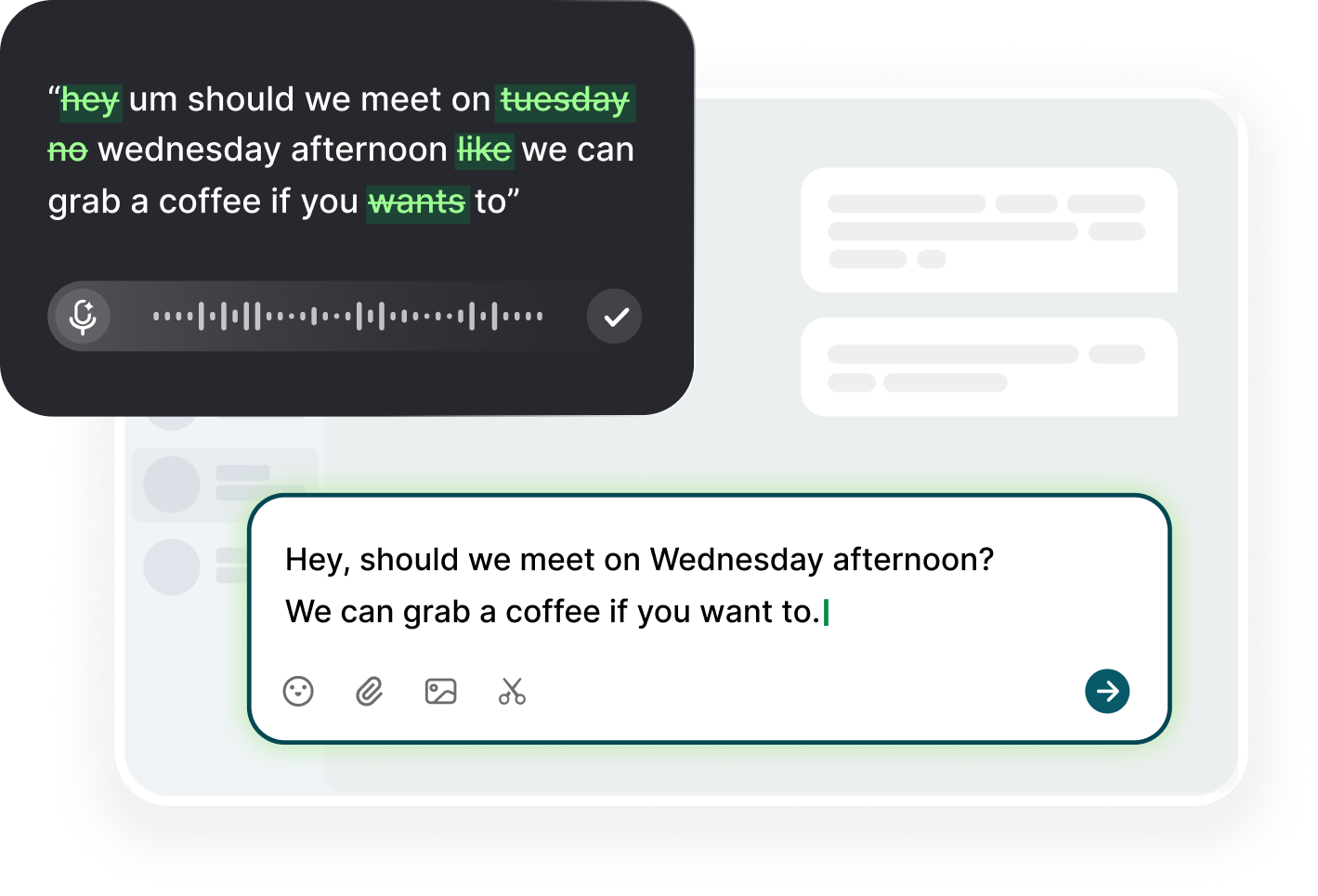
With Voiskey, you can speak the email the way you'd explain it to a colleague: "Hey, so for the Sarah email — she just expanded to three new markets, and I want to connect that to the fulfillment cost problem and ask if they're thinking about it for Q4." Voiskey's Expression Intelligence reads the Gmail compose context and formats that spoken brief into a clean, appropriately-toned email draft.
The output preserves the specificity and natural voice that make the formula work, without the editing loop that strips it back out. Draft faster, sound more human, get more replies.
FAQ s
Under 150 words for the body, ideally closer to 75-100. The 3-Line Formula describes the logical structure — proof of research, value, ask — not literally three lines of text. Each element can be a sentence or two, but the email should be scannable in under 20 seconds.
Yes, but only when it's genuine. A first line that references something specific and recent — a product launch, a piece of content, a market move — consistently outperforms generic openers. The signal it sends is that you chose to write to this person specifically, which creates a basic social obligation to at least read the rest.
A question they can answer in one sentence is usually the most effective. "Is [specific outcome] something you're prioritizing this quarter?" or "Would it be useful if I sent you [specific resource]?" Avoid open-ended questions like "What are your thoughts?" — they require effort and don't guide the conversation anywhere.
Five to ten minutes is usually enough. Check their LinkedIn for recent activity, then their company's newsroom for recent launches. Look for the most recent development that connects to the problem you solve. Recent and specific beats thorough every time.
Yes, with one adjustment: the first line should add new value rather than just referencing your previous email. A follow-up that opens with a new piece of relevant information — a stat, a case study, a changed framing — earns another read. "Just following up" does not.


 Voiskey
Your voice, amplified.
Speak naturally, write effortlessly, and move faster. Turn your voice into polished, ready-to-use text wherever you work.
Use it across macOS, Windows, iOS, and Android