
Voiskey at the San Francisco AI Conference
Bridging the Expression Gap Between Thinking and Speaking
 Voiskey Team
Voiskey at the San Francisco AI Conference: Bridging the Expression Gap Between Thinking and Speaking
During the recent AI Conference in San Francisco, the rapid growth of artificial intelligence was on full display. At the AWS booth, Digital Trends reporter Dan Gaul interviewed Shimiao Huang, the Product Lead at Voiskey.
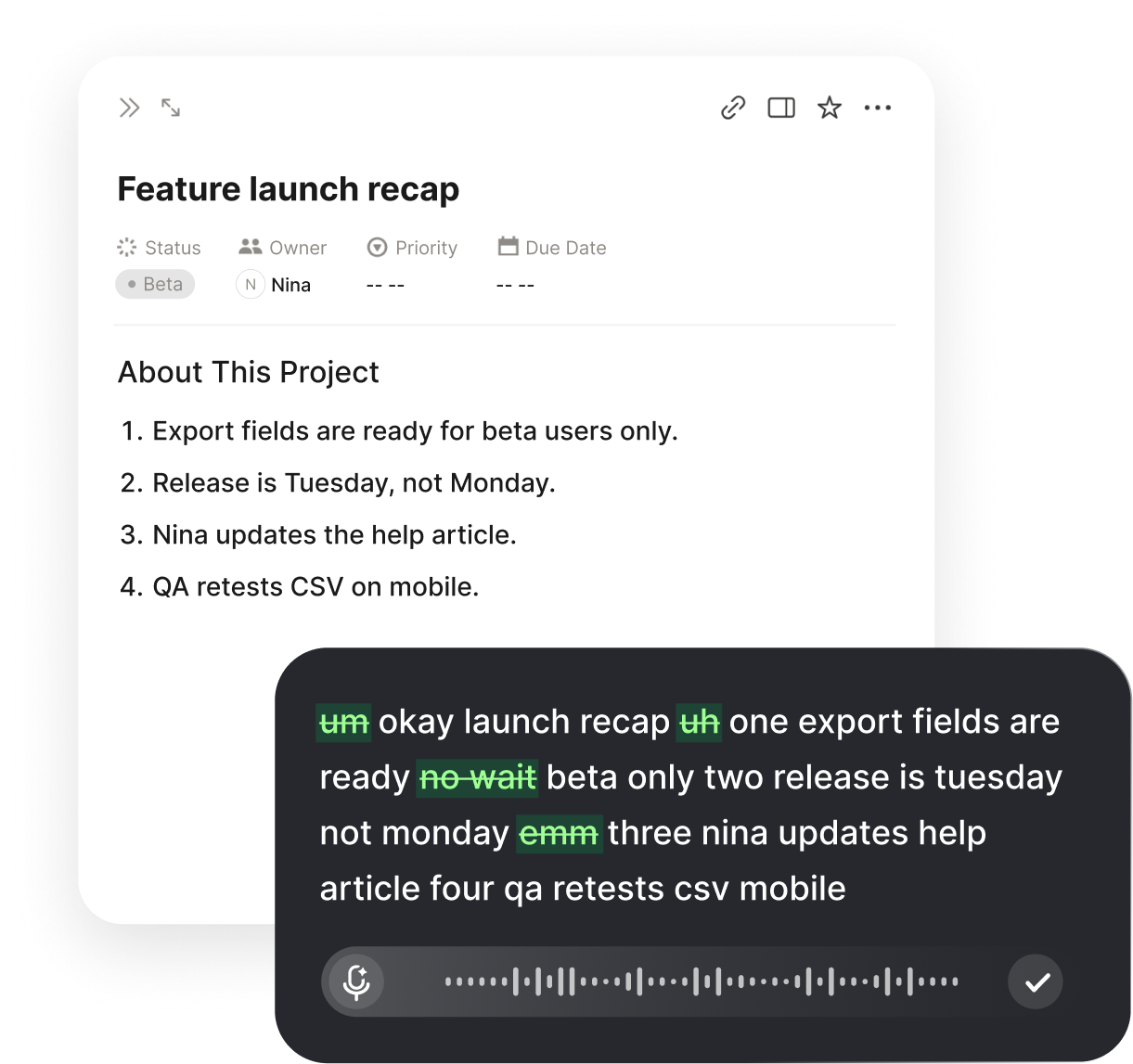
Voiskey is an innovative AI voice typing application that translates raw speech into clean, context-aware text in seconds. In this interview, Shimiao discusses the origin of the product, how Voiskey is building an agentic communication operating system, and how our partnership with AWS is helping us achieve this vision. Read the full interview transcript below.
Digital Trends: First, could you tell me a little more about yourself, what you do at Voiskey, and what problems you are trying to solve for your customers?
Shimiao: Hi, I'm Shimiao, the Product Lead at Voiskey. We're building an AI voice keyboard that turns what you say into clean, context-aware, and ready-to-send text. We want to help people express themselves freely. There's always a gap between what you think and what you write. Typing is too slow to catch up with your thoughts; speaking is fast, but it comes out messy. That's the gap we want to close with Voiskey. You can just talk whatever you want, and it understands what you mean, not just what you say. Then it turns it into polished, clean text that fits your writing style. We are building the product for people writing and typing all day, such as professionals, entrepreneurs, content creators, and even students and teachers. We just want everyone to write easily in any text box on your desktop or your phone.
Digital Trends: For me, I needed dictation recently. I injured my wrist, tore a ligament, and had a cast all the way from my shoulder down to my wrist. I couldn't find a really good way of dictating because I couldn't use a mouse, and I couldn't type because my arm was in an awkward position. So Voiskey is also perfect for that—not just being able to express myself quickly by talking, but also for when I have a physical ailment, right?
Shimiao: We had the exact same problem. For my first startup, we were in media and consulting, so I was typing all day to write articles and make presentations. Years of keyboard use caused damage to both of my wrists. So actually, I didn't pick the voice to work; my wrists helped me pick it. That's why I joined Voiskey to build the AI voice keyboard. I hope this application can help people not just write easily, but also help people with disabilities improve their accessibility.
Digital Trends: Where do you see the most use of Voiskey? Is it with people with disabilities? Is it with engineers? Where do you see the most usage coming from?
Shimiao: The top one is "vibe coding." When we talk with an AI agent or a large language model, speaking allows you to give them more context. I think that's the reason why the AI voice keyboard product has had an explosion.
Digital Trends: You're an engineer as well, right? So this is through your own use cases. What type of improvement have you seen using Voiskey versus just typing in general?
Shimiao: Speed.
Digital Trends: So, you've seen it as a speed improvement over manually typing.
Shimiao: And the second one, as I mentioned before, is context. We know that if you want the agent or the AI to understand you precisely, you need to give them more context. But when talking, we can just run away or say a lot of stuff. (When you type,) you need to organize yourself and organize your wording, which is pretty slow.
Digital Trends: It's context in the sense that it is condensing and simplifying what you're saying into something more manageable. It's removing filler words, and it's also learning while you use it.
Shimiao: You give context like which app you're using, your personal style, and your history to adjust the tone and format of the text.
Digital Trends: You're based in the US right now, and you have over 100 languages supported in Voiskey. What markets are important to you next? Where are you going?
Shimiao: Currently, our primary market is North America. But we see fast-growing demand in Europe and the Asia Pacific. Because in all these markets, there are a lot of people working in global teams, and they are typing and messaging all day. That's where Voiskey helps the most.
Digital Trends: So basically global. If you have 100+ languages right now, it's pretty massive. Was North America always your number one destination first? How has that expansion been? Are you in Canada, the US, Latin America, and South America as well?
Shimiao: Our focus market is the US now, but we also do a lot of marketing and user growth in the Asia Pacific area, such as Japan.
Digital Trends: What are some of the challenges that you face going into Asian and European markets versus North America?
Shimiao: It's not just about translating words. I think it comes down to three things. The first one is localization. In our app, we help users process their text, so we should make the content sound natural and familiar to them, not just correct. This is associated with cultural expression styles. So localization is a key point.
Digital Trends: That sounds really difficult to do.With all the cultural differences from North America, the US specifically, to Asian markets. I'm assuming Amazon and AWS is helping you out to solve that problem. How are they doing that?
Shimiao: Three things they help us a lot with. First, investing in infrastructure. With AWS global infrastructure, we can expand into new markets easily. Second is privacy and security. Especially for our app, which is a voice keyboard, people really care about their data. In different markets, they have different rules. With AWS security infrastructure, we can help our users trust us with their data.
Digital Trends: Some other features on Voiskey—obviously, the 100 languages is one. But what is something else that is really important to you, that you are proud of, that you are doing with Voiskey?
Shimiao: I think we're so proud of our cross-platform experience, especially on mobile devices, since our team has been working on mobile keyboards for over 10 years. If you try Voiskey on your iPhone or Android, you will feel it's so seamless for both typing and voice input. It's very native.
Digital Trends: As a startup, you face a lot of challenges, not just successes. Can you talk about a specific challenge that you've had and how you've overcome it?
Shimiao: One big challenge is how to build a fast-growing, AI-native organization. Models are evolving every day, so our team needs to learn very fast. But in the opposite way, we need to provide users with the most reliable and consistent experience. Sometimes this is a hard thing. For example, the JEV model has been very popular in the past few weeks. Our engineers and product managers are testing those new models and trying to implement them into our product so they can provide a more and faster experience for the users. They've got a lot of pressure.
Digital Trends: I could talk about that all day because it's kind of crazy where we were six months ago and where we are today; the landscape is completely different, and it's only going faster. JEV is a great example. Everybody is all about JEV. How do you avoid the "shiny object syndrome" of “we need to jump on this too, or maybe we shouldn't”? How do you make that decision?
Shimiao: We ask all of our teammates to try out the JEV model. They need to experience it and get a sense of what it can do. Then we collect ideas from everyone.
Digital Trends: So basically, just let people be curious and play with the new stuff that's coming out.
Shimiao: Yes, and also passion and high agency.
Dan (Digital Trends): Let's talk about the AWS partnership. How has AWS enabled you to innovate quickly in AI?
Shimiao: I think the most helpful thing for us partnering with AWS is the speed. With AWS Bedrock, we can easily access the top AI models. It usually takes weeks to add a new model to our products, but now it just takes minutes. Our engineers save a lot of time on building the infrastructure, so now they can throw more time into building a better product for our users.
Dan (Digital Trends): So they're providing the infrastructure to build on, but also all the different models and the ability for you to integrate those quickly.
Shimiao: Yes, all the frontier models. It gives us a lot of choice.
Digital Trends: Here at the AI conference, how is AWS helping you build connections, and what type of connections are you looking for?
Shimiao: San Francisco is the heart of AI. Since we're based in both Singapore and the US, we want to know more about the top experts, developers, and companies. We want to learn how they use AI to deliver a better product. AWS is our bridge to get into the local San Francisco AI community.
Digital Trends: And AWS is such a big company with so many people wanting to work with them. Since you're a partner and a client of theirs, they're willing to help build those bridges and connections here.
Digital Trends: What is next for Voiskey?
Shimiao: There’s a voice now that the keyboard will die. But I disagree. Even with all the advanced speech technology, we still need the keyboard. Combining the keyboard and the voice provides a total experience to employ in the agentic time. What we want is not just building a voice input app. What we're building is an agentic communication operating system to help users work and input with AI or talk with a human easily and help get their job done quickly.
FAQ s


 Voiskey
Your voice, amplified.
Speak naturally, write effortlessly, and move faster. Turn your voice into polished, ready-to-use text wherever you work.
Use it across macOS, Windows, iOS, and Android