
Productivity & Comfort
Typing Fatigue: Why It Happens and How to Write With Less Effort
Speak more, type less, end the day with energy to spare.
What typing fatigue feels like
Typing fatigue is the tiredness that sets in after hours at the keyboard — and it is both physical and mental. Physically, your hands, fingers, and forearms feel heavy or achy. Mentally, your focus frays, small errors creep in, and writing that was easy in the morning feels like a slog by mid-afternoon.
It is different from injury: fatigue is the everyday drain of doing a demanding task for too long without relief. But left unmanaged, day after day of pushing through it makes work slower and less pleasant — and adds to the wear that can lead to strain over time.
Physical and cognitive causes
The physical side comes from repetition and static posture: the same finger movements, the same held position, thousands of times a day. Muscles that never fully relax tire out, which is why your hands feel worn by evening.
The cognitive side is easy to overlook. Typing forces you to convert thoughts into keystrokes while simultaneously monitoring spelling, punctuation, and layout. That constant translation taxes attention, so a long writing day drains mental energy as much as physical.
Why speaking beats typing for high-volume writing
There is a simple speed gap: people speak at roughly 220 words per minute but type at around 45. For anything you already know how to say, speaking gets the thought out four to five times faster — with a fraction of the physical effort.
Speaking is also closer to how you think. Instead of slowing your ideas down to keyboard speed and policing every character, you say what you mean and let the tool handle the cleanup. That removes a big chunk of the cognitive load that makes long writing sessions so tiring.
Offloading repetitive writing to your voice
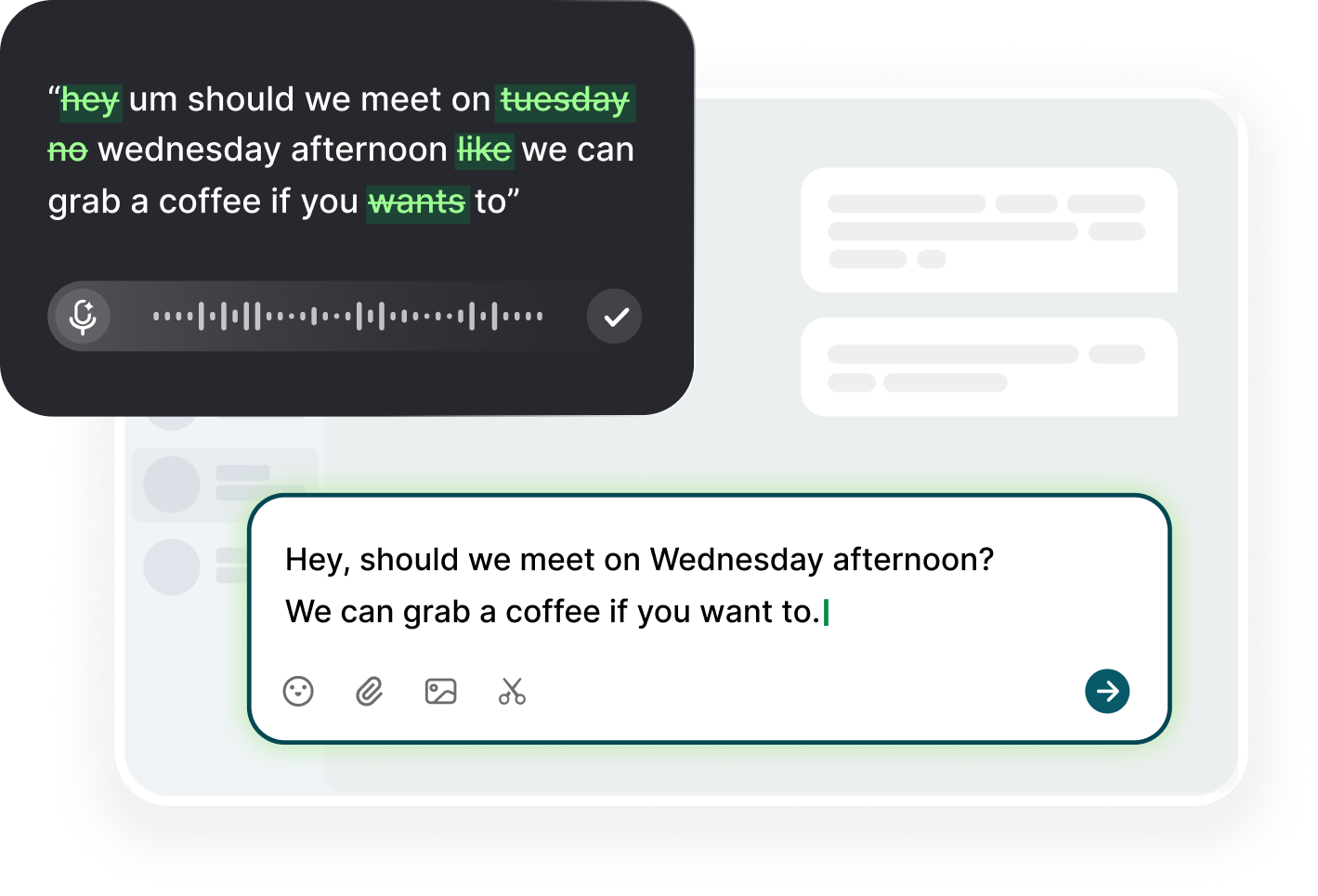
Voiskey is an AI voice typing app that turns natural speech into clean, ready-to-use text. You speak your message the way you would say it, and Voiskey removes filler words, fixes punctuation, and shapes it into a polished draft you review before sending — no typing required for the bulk of the work.
The biggest wins are the things you write over and over: replies, follow-ups, status updates, notes, and prompts. Moving that high-volume, repetitive writing to your voice is where fatigue drops the most, because it is exactly the work that grinds your hands and attention down.
Building a lower-fatigue workflow with Voiskey
On your computer, download Voiskey for macOS or Windows, click into any text field, trigger your dictation shortcut, and speak. On your phone, install it from the App Store or Google Play, add it as a keyboard, then tap into a field and talk. It works across the apps you already use and supports 100+ languages.
Voiskey never sends anything on its own — you review and send every message yourself, the same as a typed one. The free plan covers 2,000 words a week, enough to shift the most draining, repetitive writing off the keyboard and keep the keyboard for the few things that truly need it.
Simple habits to pace a long writing day
Combine voice input with a few basics. Take short breaks to rest your eyes and hands, alternate between speaking and typing so no single mode dominates, and batch similar messages so you can knock them out quickly by voice.
The goal is not to eliminate typing — it is to stop spending your freshest energy on low-value, repetitive writing. Let your voice carry the routine output, and save your hands and focus for the work that actually deserves them.
FAQ s
Two things stack up: physical strain from repetitive finger motion and static posture, and cognitive load from constantly converting thoughts into keystrokes while monitoring spelling and formatting. Long uninterrupted sessions make both worse.
Speaking runs at roughly 220 words per minute versus about 45 typed, so you produce the same text with far fewer keystrokes and less mental translation. Voiskey turns your speech into a clean draft, cutting both the physical and cognitive effort of writing.
The repetitive, high-volume writing you already know how to say — replies, follow-ups, updates, notes, and prompts. That is where fatigue builds fastest, so it is where voice typing helps most.
Yes. Voiskey produces a draft from your speech, then you review, edit, and send it yourself. Nothing is sent automatically.
Absolutely, and it is a good habit. Use voice for routine, high-volume writing and the keyboard for detailed edits or specialized text. Alternating keeps any single mode from wearing you down.


 Voiskey
Your voice, amplified.
Speak naturally, write effortlessly, and move faster. Turn your voice into polished, ready-to-use text wherever you write.
Use it across macOS, Windows, iOS, and Android