
Voice to Text for Email Translation
Translate Emails With Your Voice, Not a Blank Page
Cross-language email is still typing-heavy. Speak the angle, the proof, and the ask—with your cursor in the compose box, the draft lands on screen. Free to start.
Why Translated Email Still Starts With Writing
Cross-border email is a spoken idea in your head and a typed paragraph in someone else's language. Most people know the reply before they open the thread; the delay is turning it into sentences that do not sound machine-made.
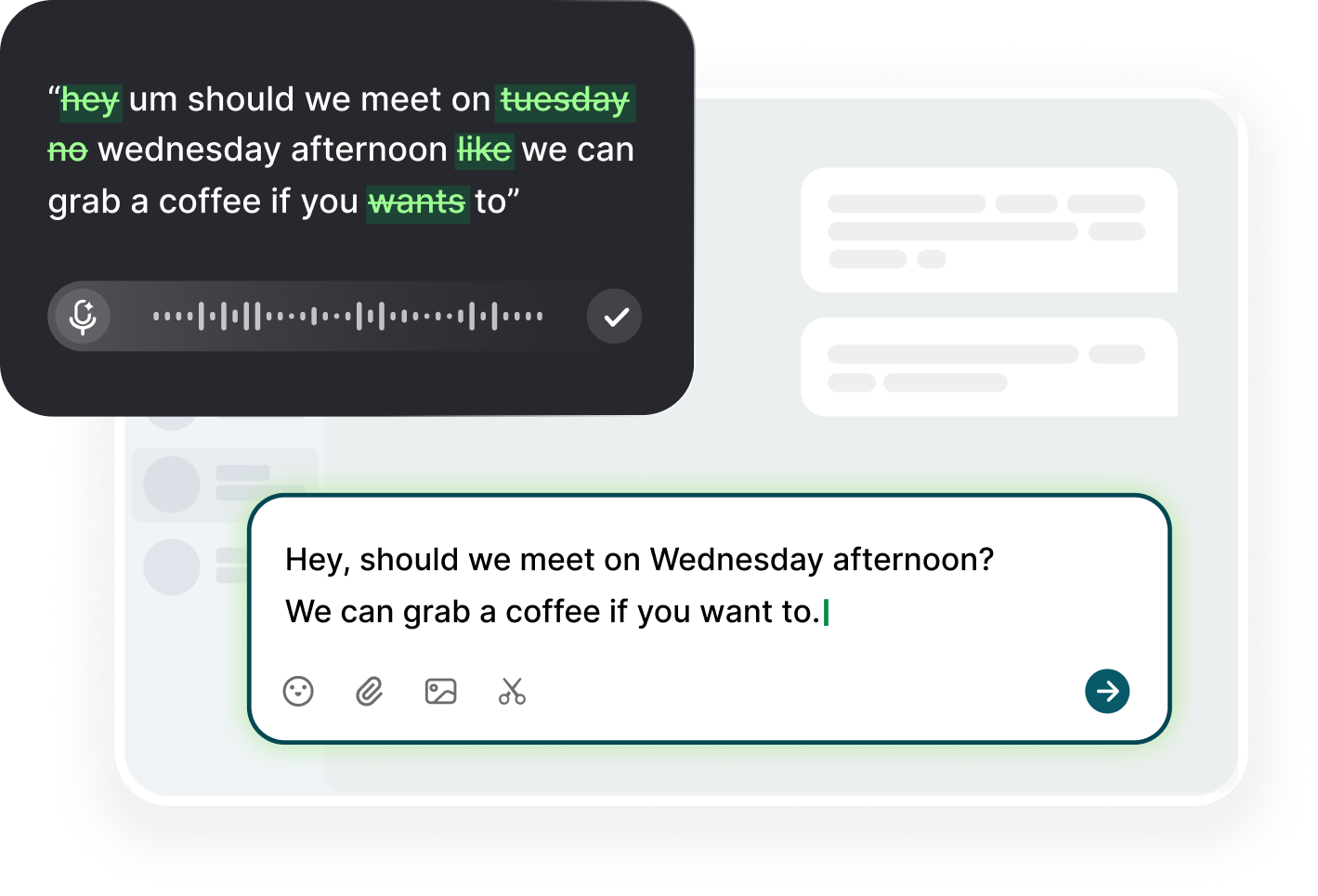
Speaking runs at around 220 words per minute, typing at around 45. Across a language line, that gap is the difference between sending today and parking a draft you never finish.
A translate-email tool in search results usually means paste into a web form, then re-edit tone. Voiskey is different: you describe who you are writing to, what you need to say, and the language they expect—by voice—and the text appears at your cursor so you can edit before send.
Dictate a Translated Email Draft
From a blank compose box, say what you need: a short note to a French client confirming next week's ship date, professional but warm, in their language.
Already have context on screen? Select it—a LinkedIn headline, CRM note, or pasted prospect detail—then speak: write this reply in Spanish, mention the hiring push, ask for fifteen minutes next week.
Open the email app you already use, click into the compose box, and speak. The draft appears at your cursor—no copy-paste through a translator tab. If one paragraph feels stiff, select just that section and revise: make this two sentences and sound less formal.
Use voice translation for email when you want to:
- Reply in the client's language without drafting twice
- Keep regional spelling (colour, Strasse, 简体 vs 繁體)
- Shorten or soften a selected paragraph in place
- Stay in Gmail, Outlook, or Superhuman—no tab hop
What to Say Before You Send
Who and Why Now
Name the role, company, and trigger so the opener has context—not a generic compliment in the wrong register.
One Proof Point
One result, one customer type, or one metric. Speaking keeps you from stacking three case studies into paragraph two.
The Ask
A single next step: reply with a time, book a link, or answer one question. Say it plainly so the close does not wander.
Tone Check
Tell Voiskey if this should sound curious, direct, or warm. Select the opener and revise register without rewriting the rest.
Shorter Variant
Mobile inboxes reward brevity. Ask for a version under eighty words after you have a longer first pass.
Follow-On Angle
Save a spoken note on what to say if they do not reply, so your second touch is not written from scratch a week later.
Works Where You Send Mail
It works in Gmail, Outlook, Apple Mail, Yahoo Mail, Thunderbird, Proton Mail, Spark, and Superhuman—plus browser-based email clients, work inboxes, and school portals. Put your cursor in the compose field and dictate; the text appears where you are writing.
Across 100+ languages and 20+ keyboards, pick the shortlist you actually use with clients this quarter. Narrower detection usually means cleaner translation-ready text.
If you already use Voiskey for email dictation, translated drafts are the same habit: cursor in the body, speak, text lands in the field. Voice input adds a structured first pass when you are staring at a blank line in another language.
Typical translated-email workflow:
- First-touch draft from a spoken briefVoice typing for emails
- Draft from selected context in their languageVoice typing for emails
- Shorten or soften a selected paragraphVoice typing for emails
- Chat follow-up when the thread jumps channelsVoice typing for messages
- Account note after you hit sendVoice typing for notes
FAQ s
No. Voiskey does not send mail, warm inboxes, or scrape leads. It helps you produce the text at your cursor—in Gmail, Outlook, Apple Mail, Spark, a CRM note field, or a doc—using voice input across 100+ languages.
Yes. Select context first—a LinkedIn bio, job post, CRM note, or meeting recap—then speak: write a reply to this person in German about our product and ask for fifteen minutes. Or select part of a draft and ask to shorten, soften, or rewrite just that section.
No. You still supply the prospect, the hook, the tone, and the target language. Voiskey turns what you say into clean text; it does not replace your judgment about what is worth sending.
No. Voiskey works at the input level where you type. It does not read stored emails, contact lists, or CRM records. What happens to audio is covered in the Privacy Policy.
For short drafts and revisions, often yes. Two thousand words a week covers many one-paragraph openers and follow-on tweaks. Long personalized sequences in a second language use more; the free month up front is enough to see your pace.


 Voiskey
Your voice, amplified.
Speak naturally, write effortlessly, and move faster. Turn your voice into polished, ready-to-use text wherever you work.
Use it across macOS, Windows, iOS, and Android