
Voice to Text for Translation
Translate With Your Voice Across 100+ Languages
You already know what to say. The slow part is typing it in another language. Speak once—Voiskey turns it into text you can send. Free to start.
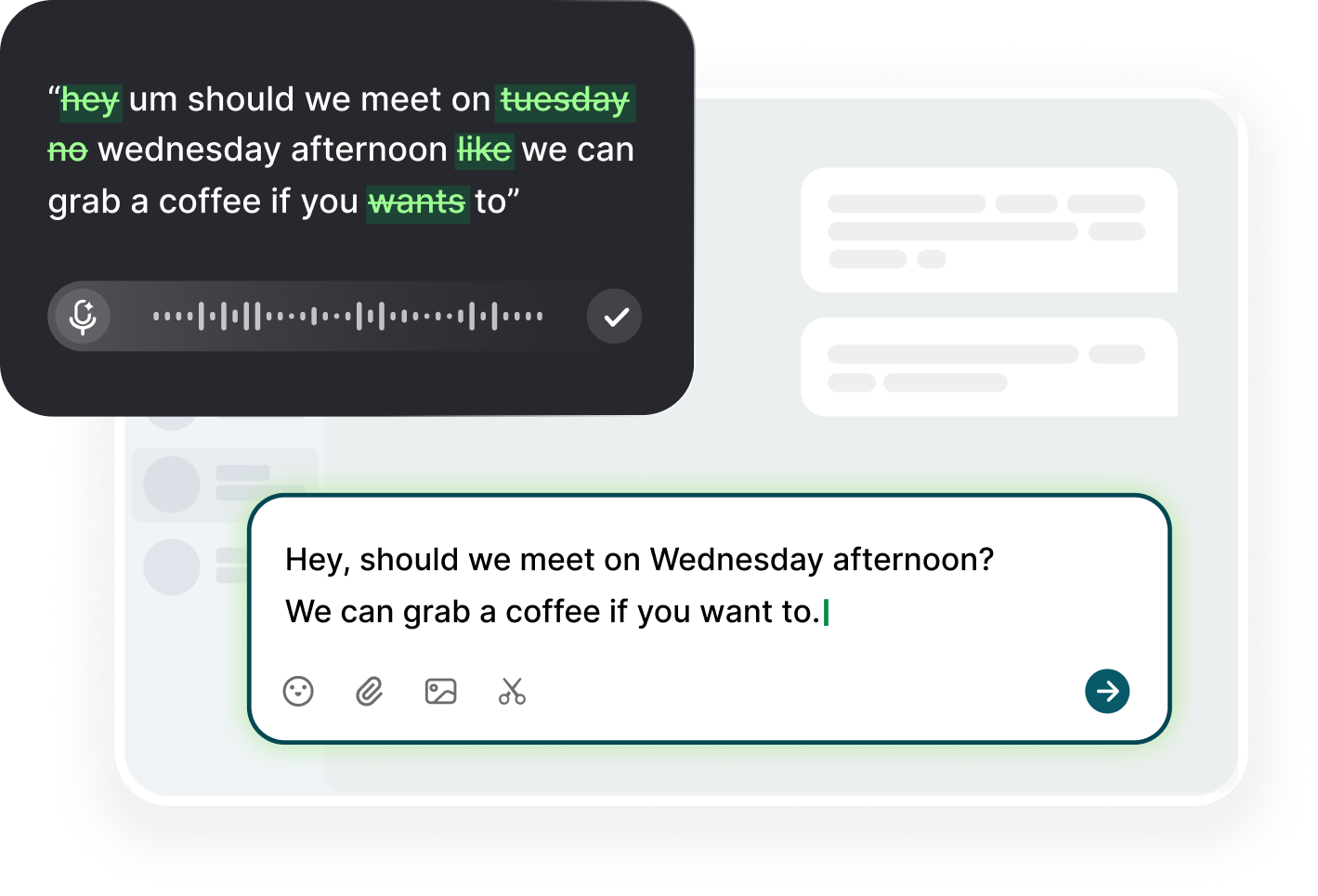
When Thinking Is Fast and Typing Is Slow
You can explain the update out loud in seconds. Typing the same update in a second language takes longer, and the delay is where meaning gets flattened.
People reach for a separate translator, paste a draft, then re-edit tone. That is three tools for one reply.
Speaking runs at around 220 words per minute; typing sits near 45. Across a language line, the gap is not just speed—it is whether the message leaves today.
Say it in the language it arrives in your head. Let Voiskey land clean text at the cursor, then adjust the few phrases that still need your ear.
How Multilingual Dictation Works
Configure the languages you speak most. Voiskey detects which one you are using at the start of a session and keeps that segment consistent.
Regional variants matter for translation-quality writing. British English, Canadian English, Swiss German, Simplified Chinese, Traditional Chinese, and Cantonese are different choices—not cosmetic labels.
Changes apply on the next dictation. Selections sync across devices so the phone in the hallway matches the laptop on the desk.
If the wrong language keeps winning, turn off broad auto-detect and keep only the languages you need. Narrower choice usually means cleaner translation-ready text.
Use multilingual voice typing when you want to:
- Dictate in a language other than English
- Switch languages between sessions without retyping
- Keep region-specific spelling (colour, Strasse, 简体 vs 繁體)
- Handle light code-switching without a second app
What People Dictate When Languages Switch
Client Replies
Say the point in the language you think in. Send in the language they expect—without drafting twice.
Chat Follow-Ups
Short Slack or WhatsApp notes that still need native rhythm, not dictionary order.
Meeting Recaps
Capture decisions while they are fresh, in the language the room used.
Support Tickets
Answer in the customer's language without hunting for the right keyboard layout.
Team Handoffs
Context for the next owner, spoken once, readable in the language your team shares.
Personal Notes
Journal or research notes in whatever language the idea showed up in.
Why This Beats Paste-Into-a-Translator
A paste workflow forces you to write first, then translate, then fix register. Voice typing collapses the first two steps into one spoken pass.
Voiskey supports 100+ languages and aims for phrasing a native reader would actually use, not a word-for-word swap that sounds translated.
You stay in Gmail, Slack, Notion, or the CRM field you already opened. No tab hop, no lost thread context, no second clipboard.
You still own the send button. Translation help is useless if it ships a tone you would never say out loud.
Set the Languages You Actually Use
Pick only the languages you dictate in most weeks. Fewer options usually mean better detection and fewer wrong-script surprises.
Choose one variant per language family when the pairs conflict—Simplified or Traditional Chinese, German or Swiss German, American or British English.
On your phone and desktop, the same gesture works: click the field, speak, review, send. Voiskey is a keyboard where typing already happens.
That is the whole translation stack for everyday writing: 100+ languages available, your shortlist active, and text that lands ready to edit—not ready to rebuild.
Workflows when languages switch:
- Notes and recaps in the spoken languageVoice typing for notes
- Client email in their languageVoice typing for emails
- Chat replies across language linesVoice typing for messages
- Async updates for multilingual teamsVoice typing for teams
- Post-meeting next stepsVoice typing for meetings
FAQ s
Yes. Voiskey supports 100+ languages and 20+ keyboards, including regional variants such as British English, Swiss German, and Simplified or Traditional Chinese. You pick the set you use; the rest stay out of the way.
No. It adjusts word order, register, and everyday phrasing so the result reads like it was written in that language rather than translated line by line. You still review before you send.
You can. Occasional words from a second language are normal. For best accuracy, keep the session mostly in one language, or select only the two or three languages you actually switch between.
Only if you truly bounce across many languages. If you mostly write in two, select those two. A smaller list usually beats letting the model choose from the full 100+ languages set.
For everyday email, chat, and notes, voice typing plus a quick read is often enough. Legal contracts, regulated copy, and published marketing still belong with a human translator when the stakes are high.


 Voiskey
Your voice, amplified.
Speak naturally, write effortlessly, and move faster. Turn your voice into polished, ready-to-use text wherever you work.
Use it across macOS, Windows, iOS, and Android