
Time Management Tools for Deep Work
Use Time Management Tools to Guard Focus, Not Fill It With Typing
Focus apps protect the block. Voice typing protects the minutes around it. Say the plan, the note, and the handoff—then get back to the work. Free to start.
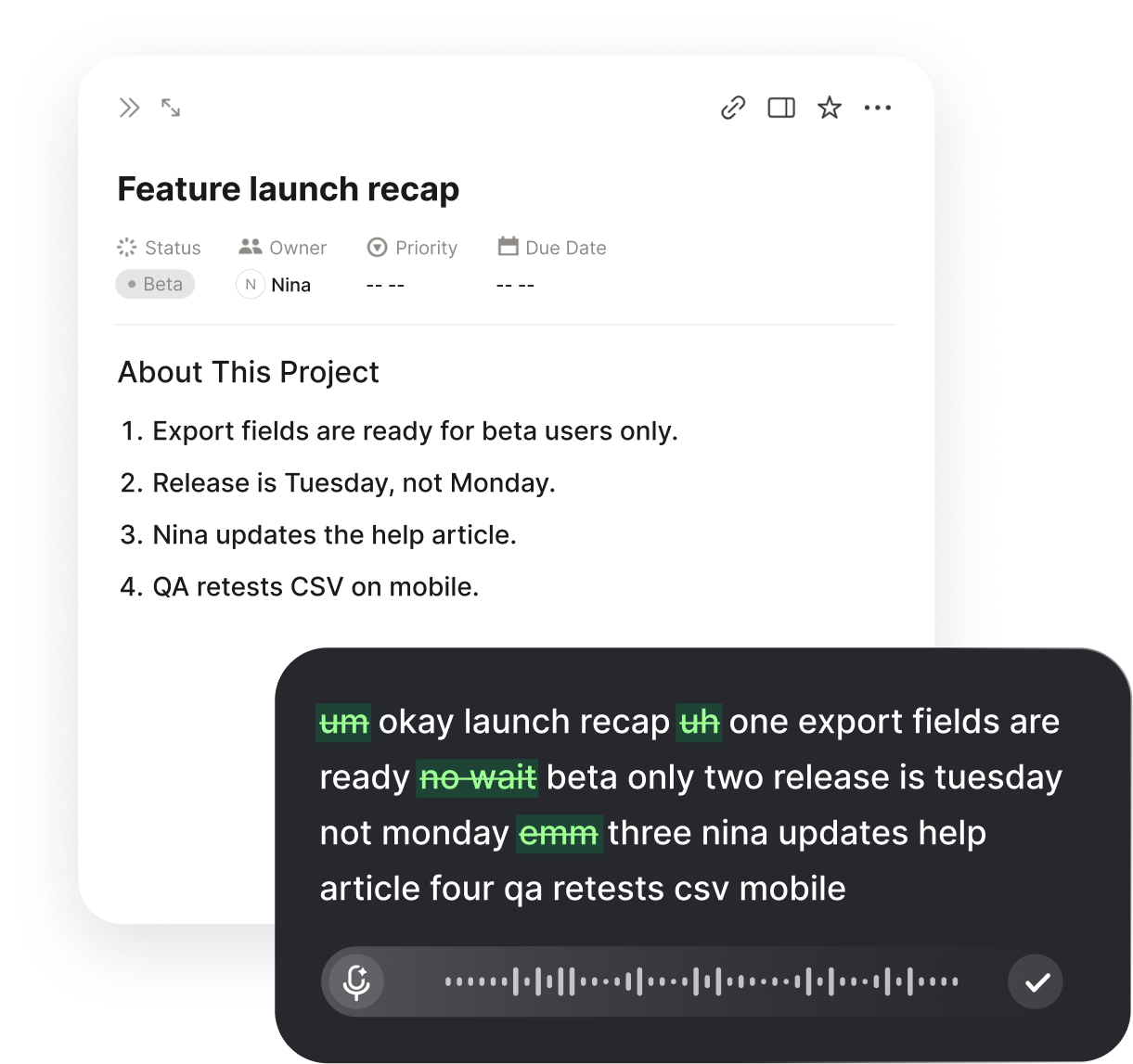
Why Focus Blocks Still Leak Time
You blocked two hours. The calendar says Focus. Then you spend twelve minutes typing the brief, rewriting the Slack status, and hunting for yesterday's note.
Deep work fails less often from weak willpower than from slow edges. The block itself is fine. The typing around it is what steals the first and last stretch.
Time management tools that protect attention—timers, do-not-disturb, calendar Focus Time—still need a fast way to state what the block is for and what came out of it.
Speaking runs at around 220 words per minute. Typing sits near 45. For a paragraph of context at the start of a session, that gap is the difference between starting now and starting late.
Time Management Tools Built for Focus
A focus stack is narrower than a full productivity suite. You want fewer surfaces and clearer rules.
Google Calendar Focus Time keeps meetings off the block. Forest or a Pomodoro timer makes the phone less interesting for twenty-five or fifty minutes. Raycast can launch the doc and mute distractions with a keystroke. Notion or a plain doc holds the work itself.
Those time management tools own the container. They do not write the intention or the wrap-up for you. That is still your job—and it is faster out loud.
Focus-first stack:
- Google Calendar Focus Time — block meetings from the deep-work window
- Forest or Pomodoro timer — keep the phone out of the session
- Raycast — open the right doc and tools without hunting
- Notion or Docs — hold the actual work
- Voiskey — speak intentions, mid-block notes, and wrap-ups
What to Dictate Before and After a Block
Session Intention
Thirty seconds before the timer: what done looks like, what you will ignore, and where the draft lives.
Mid-Block Capture
A stray idea that would otherwise open a new tab. Speak it into a parking note and return to the work.
Block Wrap-Up
What moved, what is still open, and the single next step. Paste into the project page before you leave the seat.
Handoff for Later You
Context your future self will need after lunch. Spoken notes beat cryptic calendar titles.
Status Without Context-Switch
One Slack line that you are heads-down until 2. Say it, send it, close the channel.
Tomorrow's First Block
End of day: speak the title and outcome for tomorrow's first focus slot while the priority is still obvious.
Pomodoro and Habit Stacking With Voice
Pomodoro works because the unit is small enough to start. It falls apart when each interval begins with typing a description you already know.
Habit stacking helps here. After you start the timer, speak one sentence of intention. After the break begins, speak one sentence of progress. The formula stays simple: after [timer action], I will [voice capture].
You still choose the length—twenty-five minutes or forty. The point is that time management tools for focus stop asking you to type the ritual every time.
Keep Flow Without Another App Switch
Voiskey works at the input level, so the same dictation lands in your timer note, calendar description, Notion page, or Slack composer. There is no deep-work app to migrate into.
Teach it project names and acronyms once so mid-block parking notes stay searchable. Softer speech works when a quiet corner is not an option.
Protect the block with time management tools. Fill the edges with your voice. That is usually enough to make deep work feel shorter to start and cleaner to leave.
Workflows around a focus day:
- Intentions and wrap-up notesVoice typing for notes
- Defer emails without typing essaysVoice typing for emails
- Heads-down status in chatVoice typing for messages
- Async handoffs after a long blockVoice typing for teams
- Recaps when a call interrupts focusVoice typing for meetings
FAQ s
Use voice for the edges of the block, not the middle. Speak the intention before you start and the wrap-up when the timer ends. During the session, silence still wins.
Not always. But most deep-work failures happen in the five minutes of setup and the ten minutes of cleanup. That is exactly where time management tools get better inputs from voice.
Yes. Voiskey picks up softer speech, including a whisper, so you are not broadcasting your task list to the whole floor.
Yes. Timers stay timers. You speak into the note field, the calendar block, or the doc beside them. Nothing replaces the focus tool—you feed it clearer text.
For most people, yes. Short intention notes and end-of-block recaps fit easily inside two thousand words a week, with a free month and referral months to prove the habit.


 Voiskey
Your voice, amplified.
Speak naturally, write effortlessly, and move faster. Turn your voice into polished, ready-to-use text wherever you work.
Use it across macOS, Windows, iOS, and Android