
Calendar and Inbox Time Management Tools
Make Time Management Tools for Your Calendar and Inbox Actually Fast
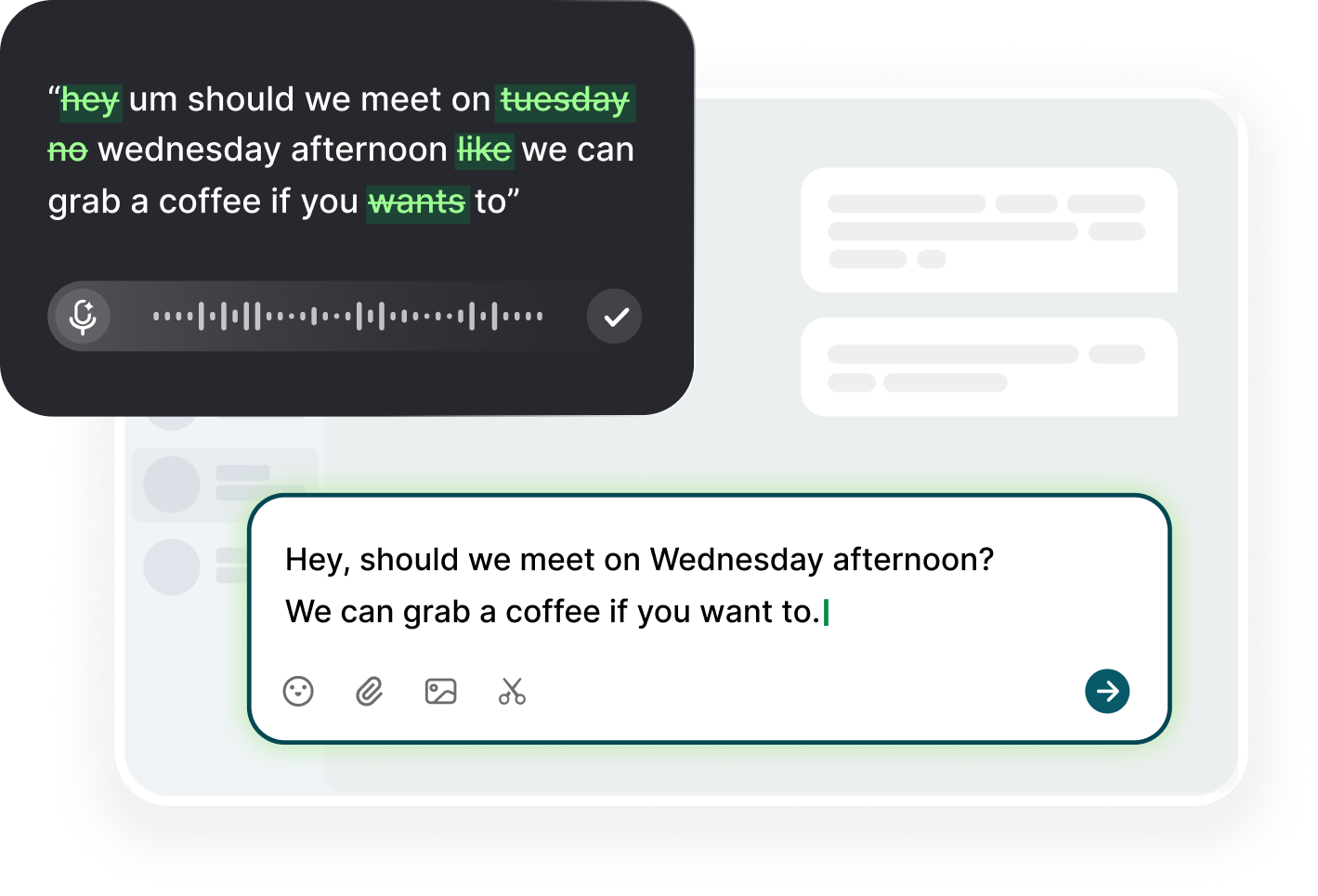
Most days are won or lost in the calendar and the inbox. Say the block label, the reply, and the follow-up—Voiskey turns them into text where you already work. Free to start.
When the Calendar Owns the Day
If your week is wall-to-wall meetings, productivity advice about morning routines is noise. The calendar already decided the shape of the day.
What you can still control is the quality of each block and the speed of the inbox that fills the cracks. Vague titles, empty descriptions, and postponed replies are where hours disappear.
Time management tools for scheduling and email only help if updating them is faster than ignoring them. Typing every label and follow-up is why people stop.
Speak the outcome into the block. Speak the reply while the ask is still clear. Then the tools reflect a day you can actually navigate.
Time Management Tools for Schedule and Email
Google Calendar remains the default for a reason: it is fast, shared, and everywhere. Focus Time, find-a-time, and simple drag-to-block cover most needs without another calendar product.
For email, some people stay in Gmail or Outlook; others pay for Superhuman when keyboard speed and reminders are worth it. Either way, the bottleneck is often composing, not finding the thread.
Pair those time management tools with task capture that is close to the calendar—Routine, Any.do, or a simple list—so ad hoc asks do not live only in your head.
Schedule and inbox stack:
- Google Calendar — meetings, Focus Time, and time blocks
- Gmail, Outlook, or Superhuman — the daily email grind
- Routine or Any.do — tasks that arrive between invites
- Voiskey — speak block labels, invite notes, and replies
What to Dictate Into Blocks and Threads
Block Titles With Outcomes
Replace 'Work' with the real deliverable. Say it once so the week view tells a useful story.
Invite Context
Agenda, decisions needed, and pre-reads—spoken into the invite before guests accept blind.
Same-Day Follow-Ups
The email that should leave before the next call. Speak the point while you still care about the thread.

Defer With a Plan
When you cannot answer now, say the reason and the next date. A clear defer beats a silent stall.

Reschedule Notes
Why the meeting moved and what changed. Future attendees should not have to guess.

End-of-Day Inbox Sweep
Three replies you owe. Speak them in a row, send what is ready, schedule the rest.
Time Blocking Without Vague Titles
Time blocking fails when every block says the same three words. The calendar looks full and still gives no guidance at 9 a.m.
Use time management tools to hold the slots, then dictate a one-line outcome into each description: what done means, what you will ignore, and where the file lives.
Review at the end of the day the same way. Speak what slipped and where it moves tomorrow. The system stays honest because updating it no longer feels like a second job.
One Input Across Calendar and Mail
Voiskey works anywhere you can type. Calendar event fields, Gmail compose, Outlook, Slack when the thread jumped channels—same gesture.
On your phone between rooms, the keyboard works the same way, so a parking-lot follow-up does not wait until you are back at the desk.
Calendar and inbox time management tools already run your day. Voice typing is how you keep them current without giving them another unpaid hour.
Workflows for a meeting-heavy week:
- Block labels and prep notesVoice typing for notes
- Inbox replies and defersVoice typing for emails
- Quick chat confirmationsVoice typing for messages
- Team schedule updatesVoice typing for teams
- Post-meeting next stepsVoice typing for meetings
FAQ s
Only if speed is the bottleneck and you are ready for the cost. Many people keep Gmail or Outlook and use time management tools plus voice typing to shrink the slow parts instead.
Yes. Click into the event title or description, speak, and the text lands where you were about to type. The same works in the invite note or a linked doc.
You still review before send. Speaking tends to keep sentences shorter, which helps. Adjust tone if you need to—the words remain yours.
No. Superhuman is one option among time management tools for heavy email users. Voice typing helps whichever inbox you already live in.
Often yes. Short block labels, invite notes, and quick replies fit two thousand words a week. Upgrade when long drafts become the daily default.


 Voiskey
Your voice, amplified.
Speak naturally, write effortlessly, and move faster. Turn your voice into polished, ready-to-use text wherever you work.
Use it across macOS, Windows, iOS, and Android