
Voice to Text for Thesis Writing
Make the Thesis Feel Less Like a Wall
A thesis is too big to face all at once. Speak one chapter's argument at a time and Voiskey gives you words on the page, so the daily habit that actually finishes a thesis stops feeling impossible. Free to start.
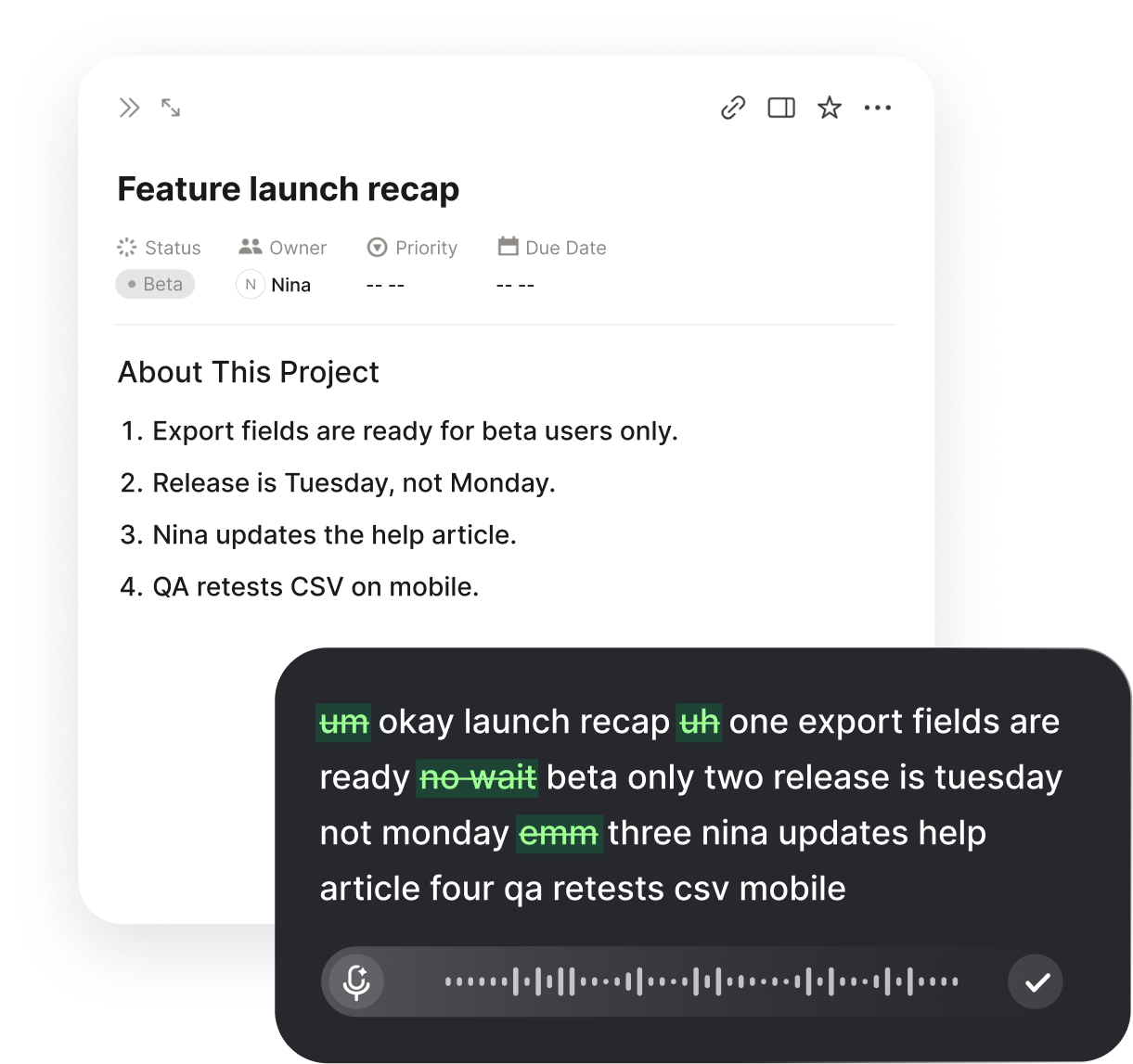
The Document Is Too Big to Stare At
A thesis fails on momentum more than on ideas. Opening a hundred-page file and managing to add two sentences before you close it again is demoralizing, and a week of that is how projects quietly stall for months at a time.
Speaking a single argument aloud lowers the stakes. You are having a conversation about one chapter, not confronting the whole degree, and a conversation is something you can start even on a bad day. At around 220 spoken words a minute, a short session still produces real text.
That is the whole trick with a long document. The barrier is starting, and speaking removes it, so the daily habit that actually finishes a thesis becomes something you can keep.
What Students Dictate
Lecture notes
Voice to text for lectures works best in the gaps around class. Walk out and talk through what actually mattered while it is still fresh. There is no time limit on a session, so a three-hour seminar can come out in one go.
Essay drafts
Dictate an essay the way you would explain it to a friend who is not in your class. Say the messy version, then rearrange the text afterwards. The words are still yours. All you have changed is how they get onto the page.

Reading notes
Talk through a paper's argument as you go, instead of stopping to type a comment every time you have a thought.

Emails to professors and TAs
The message you have been rewriting since Tuesday takes about thirty seconds to say out loud.
Group projects
Updates, handoffs, and the message explaining what you meant in the last message.

Prompts for AI tools
A good prompt is longer than most people want to type, so it gets shortened into something vague. Say the whole thing instead.
Work in Chapters, Not the Whole Thing
Pick one sub-section and dictate what you want it to argue before worrying about how it fits the larger structure. A daily spoken pass of even a few hundred words keeps the draft moving, and over months that consistency matters far more than any single perfect paragraph.
Dictate against your outline so the structure stays visible, and mark the gaps you still need to fill before you stop for the day. Tomorrow you open the file already knowing where to point your voice.
A sustainable thesis rhythm:
- Pick one sub-section to draft today
- Speak its core argument in plain words
- Add the evidence you already have on hand
- Mark gaps to fill, then stop for the day
Revision Is Where It Becomes a Thesis
Spoken chapters are raw, and that is the point. You now have material to restructure with your advisor's feedback instead of a blank section and an approaching meeting. Read a paragraph back, and dictate a sharper version over the weak spots rather than deleting weeks of progress.
Your advisor sees a normal draft. Voice is only how the words got onto the page; the argument, the evidence, and the edits are all yours, exactly as they would be if you had typed every word.
In Your Real Working Document
Voiskey works wherever you write, so dictate into the same Word or LaTeX-friendly editor you will defend from and keep your references and chapter files coherent. Dictate the prose and add markup and equations by hand, where voice fills the paragraphs and you handle the notation.
Keep your literature-review notes in the same place, and turn advisor meetings into dictated action lists you will actually revisit. The whole long-form workload runs through one input method.
Thesis work you can speak:
- Chapter first draftsVoice typing for documents
- Literature review notesVoice typing for notes
- Advisor meeting recapsVoice typing for notes
- Committee update emailsVoice typing for emails
Getting Started Is Free
You get one month of Pro free on signup, up to two more months for inviting friends, and 2,000 words a week after that with no expiry. Short daily drafting sessions can fit; a full multi-chapter thesis with heavy revision will use more over time.
No .edu address or enrolment check needed. Open your working document, pick one sub-section, and talk through what it should argue.
FAQ s
It helps most with the daily habit. Getting a few hundred spoken words down each day is what finishes a thesis, and speaking lowers the barrier to start on the days you would otherwise write nothing.
Dictate against your outline, one sub-section at a time, and keep everything in one document so the structure stays visible while you draft. You narrate into the shape you already planned.
They see a normal draft. Voice is only how the words reached the page; the argument and the edits are yours, the same as if you had typed it.
Dictate the prose and add markup and equations by hand. Voice fills the paragraphs, which is the slow part of a thesis, and you keep the keyboard for notation.
Yes. Voiskey picks up softer speech, including a whisper, so you can keep drafting in a shared apartment or a quiet library without disturbing anyone.
Short daily drafting sessions can fit in the free plan, but a full multi-chapter thesis with rounds of revision will use more words over the months of the project.


 Voiskey
Your voice, amplified.
Speak naturally, write effortlessly, and move faster. Turn your voice into polished, ready-to-use text wherever you work.
Use it across macOS, Windows, iOS, and Android