
BD
Draft LinkedIn Messages With Your Voice, Not a Blank Box
Partnership and pipeline work still happens in LinkedIn DMs. Speak the angle, the proof point, and the ask — with your cursor in the message box, the draft lands on screen. Free to start.
Why BD Still Lives in LinkedIn Messages
Business development runs on short, credible messages — connection requests, InMails, follow-ups after an event, nudges before a renewal. You usually know the angle before you open LinkedIn; the delay is turning it into two or three sentences that do not sound copied.
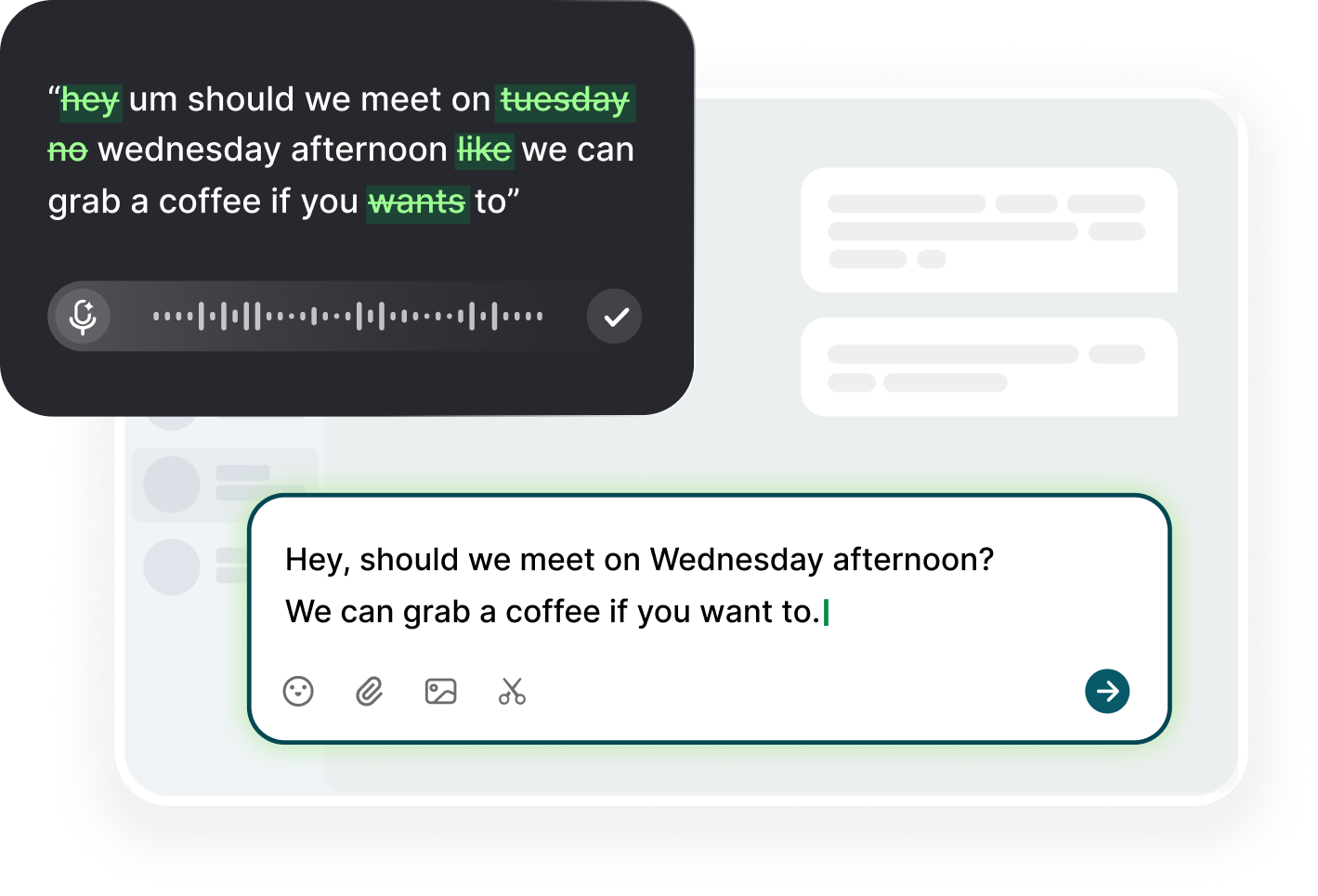
Speaking runs at around 220 words per minute, typing at around 45. For a tight note with one context line and one ask, that gap is the difference between sending today and saving a draft you never finish.
A LinkedIn message generator in search results often means a web form with generic openers. Voiskey is different: you describe the person, the hook, and the tone — by voice — and Ask AI hands you text at your cursor so you can edit before send.
Ask AI for a LinkedIn Message Draft
Ask AI works two ways. From a blank message box, say what you need: a short note to a VP Partnership at a SaaS company, reference their recent integration post, ask for a twenty-minute intro call next week, direct but friendly.
Already have context on screen? Select it — a LinkedIn headline, About blurb, job post, or pasted prospect detail — then ask by voice: write a connection message to this person about our API partnership and ask for a short call. Ask AI uses your selection as the brief.
Open LinkedIn or the app you already use, click into the compose field, and speak your request. The draft appears at your cursor — no copy-paste step. If the opener is too long, select just that line and ask again: make this under fifty words and lead with why now.
What to Say Before You Send
Who and Why Now
Name the role, company, and trigger — a post, a launch, a mutual connection — so the message opens with context, not a generic compliment.
One Proof Point
One result, one customer type, or one reason this is relevant to them. Speaking keeps you from stacking three case studies into one paragraph.
The Ask
A single next step: reply with a time, book a link, or answer one question. Say it plainly so the close does not wander.
Tone Check
Tell Ask AI if this should sound curious, direct, or warm. Select the opener and ask for a softer or bolder version without rewriting the rest.
Shorter Variant
Mobile LinkedIn rewards brevity. Ask for a version under eighty words after you have a longer first pass.
Follow-On Angle
Save a spoken note on what to say if they do not reply, so your second touch is not written from scratch a week later.
Works Where You Network
It works in LinkedIn on desktop and mobile, plus Gmail, Outlook, HubSpot, Salesforce activity fields, Slack, and Notion where you log outreach. Put your cursor in the compose field and dictate; the text appears on screen where you are writing. Revise in place the same way you would type.
If you already use Voiskey on the Messages workflow, LinkedIn drafts are the same habit: cursor in the box, speak, text lands in the field. Ask AI adds a structured first pass when you are staring at a blank line.
Typical LinkedIn BD workflow:
- Connection note from a spoken briefAsk AI LinkedIn message
- Draft from selected profile contextSelect text, then ask by voice
- Shorten or soften a selected paragraphSelect, then ask by voice
- Send in LinkedIn or log in CRMVoice typing for messages
- Follow-up after no replyVoice typing for work
FAQ s
No. Voiskey does not send bulk messages, scrape profiles, or warm inboxes. It helps you produce text at your cursor — in LinkedIn, Gmail, a CRM note field, or a doc — using voice and Ask AI.
Yes — two ways. Select context first — a LinkedIn headline, About section, recent post, or job change — then ask by voice: write a short connection note referencing their post and ask for fifteen minutes. Or select part of a draft and ask to shorten, soften, or rewrite just that section.
No. You supply the person, the reason you are writing, and the tone. Voiskey turns what you say into clean text; it does not replace your judgment about what is worth sending.
Yes. Select the headline, About section, or a recent post, then ask by voice for a message that references it. You bring the context; Voiskey turns your spoken brief into text at your cursor.
For short DMs and revisions, often yes. Two thousand words a week covers many connection notes and follow-on tweaks. Long personalized sequences use more; the free month up front is enough to see your pace.


 Voiskey
Your voice, amplified.
Speak the brief with your cursor in the message field — the draft appears where you write. Turn your voice into polished, ready-to-use text wherever you work.
Use it across macOS, Windows, iOS, and Android