
Legal Dictation Software
Legal Dictation Software That Works Anywhere You Draft
Most legal dictation software traps you inside one transcription suite, so your words have to be exported and pasted before they are useful. Voiskey is different: it is a voice keyboard, so your legal dictation software lives inside every app you already draft in. Free to start.
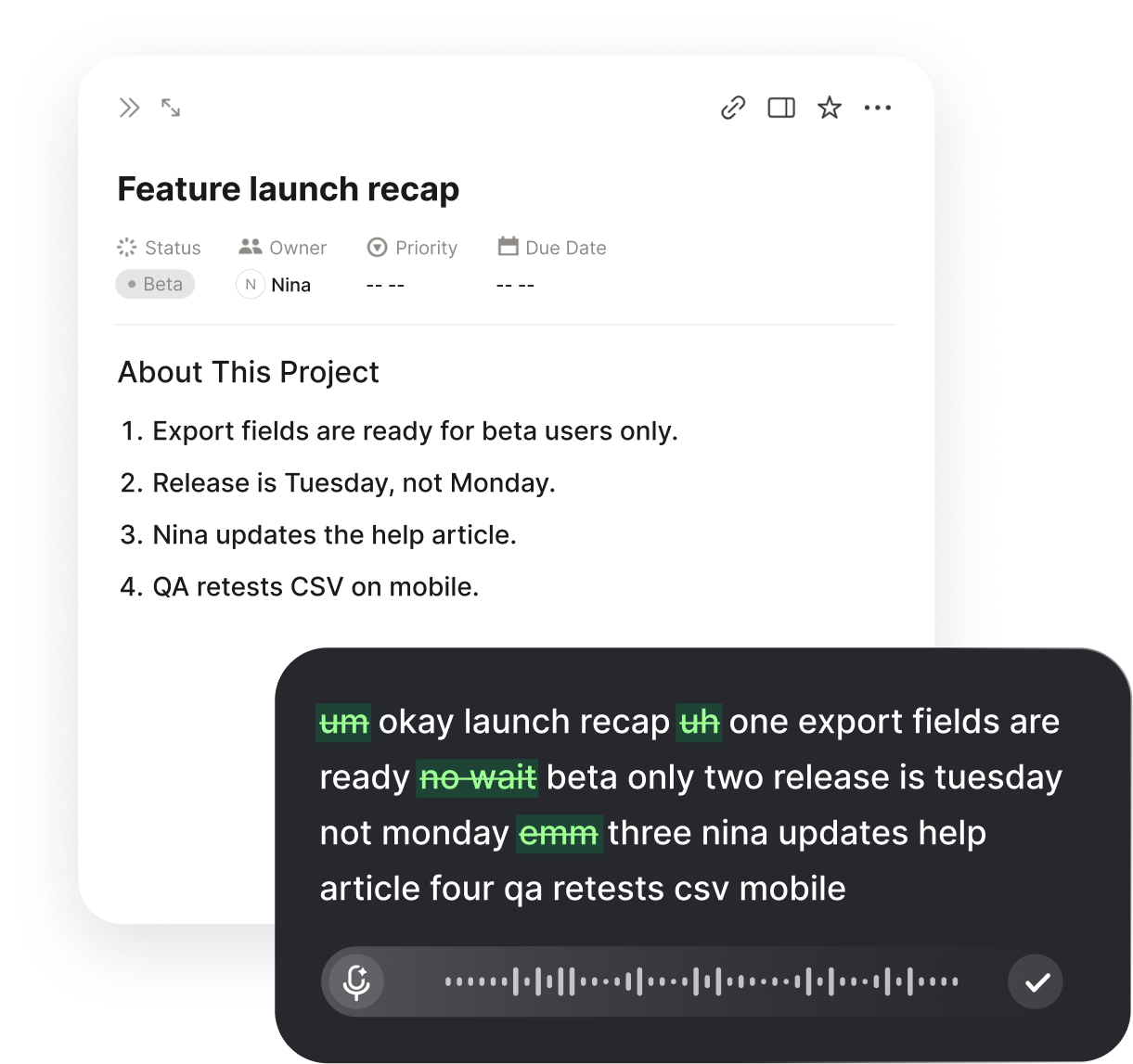
Why Typing Legal Work Is Slow
Legal dictation software earns its place for a simple reason: legal drafting is some of the slowest typing anyone does. A brief is not a quick email. It is argument, authority, and precise language that you compose in your head first and then grind out one keystroke at a time. Typing runs at around 45 words a minute even when the words come easily, and legal prose rarely comes easily, so a motion that is fully formed in your mind can still take an afternoon to get onto the page.
The cost is not only the hours. It is the way typing interrupts the thought. You know the argument you want to make, but the moment you start hunting for keys you lose the thread, backtrack, and rewrite the same sentence three times. The structure you had clearly in mind on the drive to work dissolves into a half-finished paragraph. For most lawyers the bottleneck is never the thinking; it is the distance between a complete thought and a complete sentence on screen.
Speaking closes that distance. You talk at roughly 220 words a minute, which means you can say a full point in the time it takes to type a few words of it. The real promise of legal dictation software is not that it transcribes a recording somewhere else, but that it lets you say the sentence you were already composing and watch it appear, finished, in the document you are working in. The words stay yours. All that changes is how quickly they arrive.
Where Lawyers Actually Dictate
The best moments to dictate are the ones where you already know what you want to say and typing is the only thing in the way. That covers far more of a legal day than most people expect. It is not just long-form briefs; it is the steady stream of correspondence, notes, and routine drafting that fills the hours between the headline tasks and quietly eats the schedule.
Because Voiskey works anywhere you can type, you are not limited to one document type or one program. You dictate the first pass of an argument into your word processor, the summary of a call into your matter notes, and the reply to opposing counsel into email, all with the same voice keyboard. The point is to remove typing as the gatekeeper for every one of these tasks, not to force your work into a dedicated transcription window.
Legal work that goes faster by voice:
- First drafts of briefs and motionsSay the argument, then edit the structure
- Client and counsel correspondenceClear the inbox in minutes, not an afternoon
- Memos and matter notesCapture reasoning while it is still fresh
- Post-call and post-hearing summariesDictate what happened before details fade
How to Dictate a Legal Document Step by Step
Dictating a legal document well is a habit, not a trick. The lawyers who get the most out of it treat their voice the way they would treat a dictaphone handed to a longtime assistant: they speak in complete thoughts, name the punctuation that matters, and leave the cleanup for a dedicated editing pass. Here is a reliable way to draft a motion or memo start to finish.
Once the habit sets in, the sequence becomes automatic and the draft comes out in a fraction of the time. The key is discipline about keeping drafting and editing separate: resist the urge to perfect sentence one before you have spoken sentence ten, and your throughput jumps. Everything above works the same whether you are producing a two-page letter or a thirty-page summary judgment motion.
Draft a document by voice:
- Open the document where it will actually live, whether that is Word, Google Docs, or a memo field in your case system, and place your cursor where the text should go.
- Speak the roadmap first: say the issue, your conclusion, and the two or three reasons in plain sentences so the skeleton of the argument exists before you polish it.
- Dictate each section in full thoughts, saying punctuation where it changes meaning, such as periods, commas, and new paragraph, so the structure lands as you talk.
- Say citations as parties and reporter, then pause and glance at the text to confirm the volume and page before moving on, treating each cite as a quick verify step.
- Make a second pass for edits, deleting, reordering, and tightening by voice or keyboard, since separating drafting from editing is what keeps you moving.
- Apply your firm template or heading styles at the end, so formatting never interrupts the flow of the argument.
Accuracy on Legal Terms and Citations
Accuracy is the question every lawyer asks first, and it is the right question. A tool that mangles party names or drops a negative out of a holding is worse than useless. Voiskey is built to handle technical language, and it learns the names and field-specific vocabulary you use most, so the client names, opposing firms, statutes, and recurring terms of art in your practice come out the way you write them rather than as a generic guess.
Common legal vocabulary is handled well out of the box, from standard Latin phrases like res judicata and voir dire to procedural terms you use every day. For anything unusual, the reliable approach is the same one good drafters already use for anything they type: say it clearly once, then verify it on screen. Citations in particular reward a quick glance. Speak the parties and reporter, confirm the numbers, and your Bluebook formatting stays trustworthy without slowing you down.
Editing by voice is part of the accuracy story too. You do not have to produce a perfect first pass, because you are not supposed to. Dictate the messy version while the reasoning is hot, then go back and correct, cut, and reorder. Separating the drafting pass from the editing pass is exactly how experienced writers work, and it is far faster than trying to type a flawless sentence the first time.
Works In Your Existing Tools
The reason to prefer a voice keyboard over a locked-down transcription suite is that your legal work does not live in one place. It lives in Microsoft Word and Google Docs for drafting, in Outlook and Gmail for correspondence, in the notes and memo fields of your case management or CRM system, and in the chat tools your team uses to coordinate. A dictation product that only works in its own window forces an extra export-and-paste step onto every one of those, which is exactly the friction you were trying to remove.
Voiskey works anywhere you can type, with nothing to integrate and no setup, so the same voice keyboard follows you across every one of those apps. It runs on Mac, iPhone, iPad, and Android, which matters when a draft starts at your desk and a client reply has to go out from your phone between meetings. Because it picks up softer speech, including a whisper, you can keep working at a low volume in a shared office or a quiet corner of the courthouse.
Where your voice keyboard shows up:
- Word and Google DocsBriefs, motions, and agreements
- Outlook and GmailClient and opposing-counsel email
- Case management and CRMMatter notes and time entries
- Phone and tabletDraft between meetings and hearings
Getting Started Is Free
You can try legal dictation software on real work before you commit a cent. Everyone gets the same generous start: one month of Pro free when you create an account, up to two more months when you invite colleagues, and then 2,000 words a week on the free plan afterward, with no expiry date. That is enough to dictate a steady diet of emails, notes, and short memos and feel the difference in your own matters, not in a demo.
There is no verification to clear and no special license tier to unlock before you begin. Create an account, open the document or email where your next piece of writing already needs to go, place your cursor, and start speaking. The fastest way to know whether talking beats typing for legal drafting is to say your next paragraph out loud and watch it land.
FAQ s
Yes. Transcription services send audio away and return a document hours or days later, usually for a per-minute fee. Voiskey writes your words into the live document as you speak, so there is no handoff and no waiting. You stay in control of the draft the entire time, editing by voice or keyboard whenever you want.
It handles common legal vocabulary well, including terms like voir dire, res judicata, and estoppel, and it learns the names and phrases you use most. For a precise citation, speak the parties and reporter, then glance at the text and fix any volume or page number by voice or keyboard. Treating citations as a quick verify step keeps your Bluebook formatting reliable.
Yes. Voiskey is a voice keyboard, so it types wherever your cursor is, including Microsoft Word, Google Docs, Outlook, and the note or memo fields in most case management and CRM tools. There is nothing to integrate; if you can type in a field, you can dictate into it.
Voiskey picks up softer speech, including a whisper, so you can dictate at a low volume in a shared office or on the move. For privileged or sensitive matters, use the same discretion you would with any draft and dictate where you would feel comfortable speaking aloud about the file.
You get one month of Pro free when you create an account, up to two more months for inviting colleagues, and then 2,000 words a week free with no expiry. There is no verification step and no special license tier required to try it on real work before you decide.
Voiskey focuses on turning speech into clean, correctly punctuated text in the app you choose, so your existing templates, styles, and numbering stay in charge of formatting. You dictate the substance, then apply your firm's heading styles or pleading template exactly as you do today. This keeps the output predictable and easy to review.


 Voiskey
Your voice, amplified.
Speak naturally, write effortlessly, and move faster. Turn your voice into polished, ready-to-use text wherever you work.
Use it across macOS, Windows, iOS, and Android