
Introduction Email Generator
Write an Introduction Email With Voice Ask AI
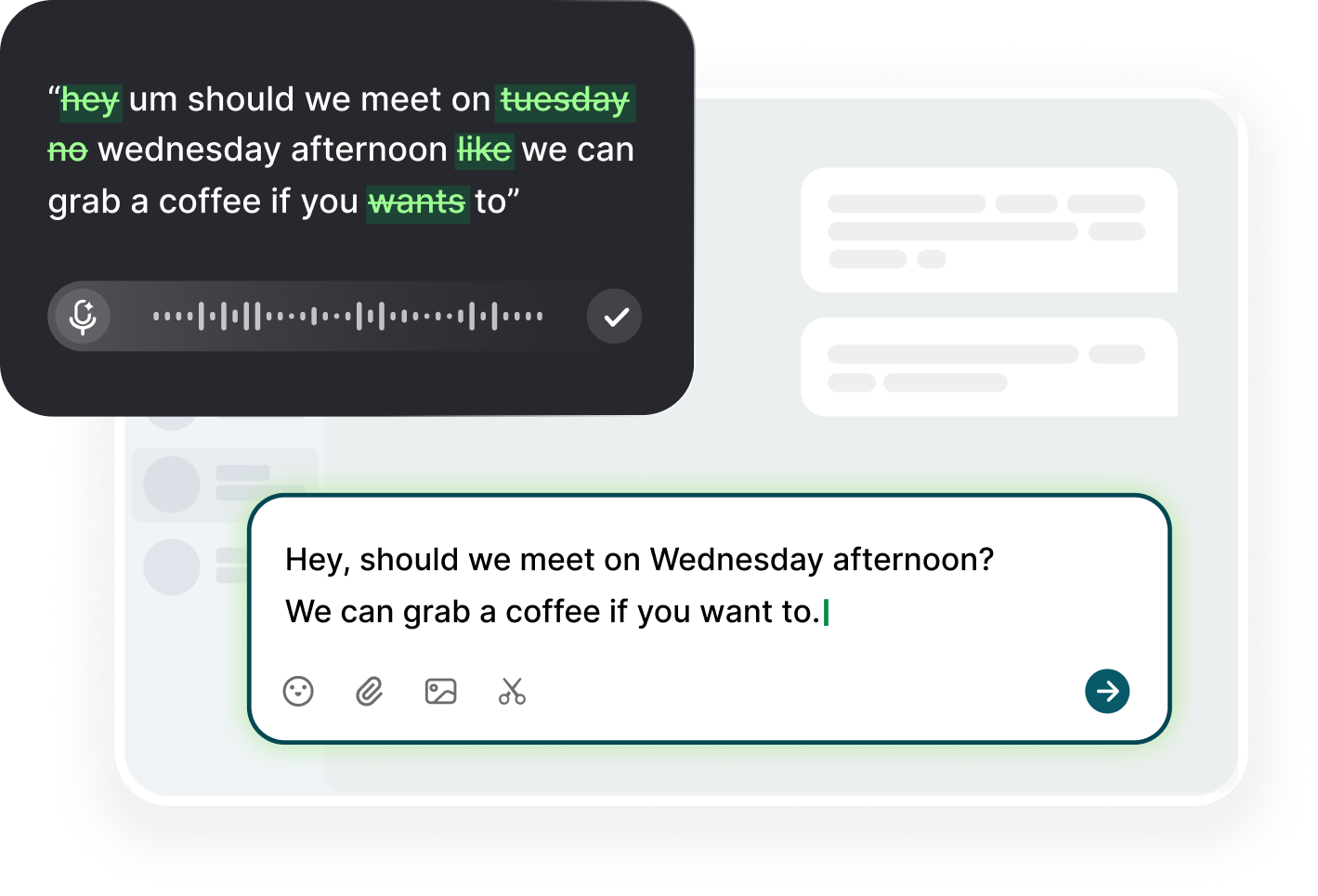
An introduction email only works when the context is specific and the note stays short. Say who is meeting whom and why — with your cursor in the compose box, the draft lands on screen. Free to start.
Why Introduction Emails Stall
An introduction email looks simple until you try to fit three names, two contexts, and one reason to connect into four sentences without sounding like a form letter.
A template for introduction email from the web gives you placeholders. Your real note needs the project, the mutual friend, or the conference where you met — details you know but rarely type quickly.
Speaking the intro while you have both parties in mind produces a draft in one pass. Voiskey Ask AI formats it; with your cursor in the compose box, the text appears on screen and you adjust a line if needed.
Ask AI for an Introduction Template
Ask AI works two ways. From a blank compose box, describe the intro: connect my former colleague Sam to a design lead at Acme; they both work on design systems; Sam is exploring roles; keep it under one hundred words; professional and warm.
Already have context on screen? Select it — a LinkedIn headline, a mutual contact's note, or pasted details about either person — then ask by voice: write an intro email to connect these two people and explain why they should talk. Ask AI uses your selection as the brief.
Open the email app you already use, click into the compose box, and speak your request. The draft appears at your cursor. Select the opening or the ask and refine by voice if the first version is too long or too casual.
How to Write an Introduction Email by Voice, Step by Step
This is the part people actually want: a repeatable routine you can run every time, not another static sample to copy. The goal is to go from a blank compose box to a finished introduction email in under two minutes, with the real names and context already in place, so you send it instead of leaving it in drafts.
Run the sequence below with your cursor already in the compose field. Each step is something you say out loud, so the whole draft is spoken rather than typed, and you only touch the keyboard for the final small fixes a human eye catches.
The reason to do it in one pass, right when the connection is top of mind, is that the context stays specific. An intro written from memory a day later turns vague; an intro dictated while you still remember why these two people should talk keeps the one detail that makes the recipient say yes.
The one-pass routine for an introduction email:
- Click into the compose box of the email app you already use and put the cursor where the body should start.
- Press the dictation shortcut and name the type out loud — connector intro, self introduction, or new-hire hello — so Ask AI frames it correctly.
- Say both parties and the single reason they should talk, in the buyer's or recipient's own words, not a generic pitch.
- Add the constraints you care about: keep it under one hundred words, professional and warm, and end with one clear next step.
- Let the draft land at your cursor, then select the opening line and the closing ask and refine either one by voice if it runs long.
- Read it once, fix the one name or title only you would catch, and send it from your own account.
How to Run a Double Opt-in Introduction the Right Way
The double opt-in is the polite standard for connecting two people: you check with the second person before you put the first person in front of them. Done well it protects everyone's time; done by hand it means writing two separate notes and keeping the context straight across both, which is exactly where most intros stall.
You can run the whole exchange by voice. Dictate the short permission ask first, then, once the answer comes back, dictate the real connecting note that hands off the context you already gathered. Because you are speaking rather than retyping, the second message keeps the specific detail from the first instead of thinning out into a generic hello.
The payoff is that nobody feels ambushed and the recipient gets a reason to reply in the first line. Speak the ask while the request is fresh, and the follow-through note is ready the moment the green light lands.
Double opt-in, run by voice:
- In a note to the second person, dictate a two-line permission ask: who wants to meet them, why it is relevant, and a simple yes or no.
- When they agree, open a fresh compose box addressed to both and put the cursor in the body.
- Say each person's name, role, and the one shared reason to talk, so the connecting note carries real context, not a template.
- Ask Ask AI to end with a clear hand-off line — I will step back and let you two take it from here.
- Select the subject suggestion and the opening sentence and tighten either by voice before you send.
Introductions You Can Dictate
Connector Intro
Two people, one reason to talk, permission from both. Say each name and what they care about.
Self Introduction
New client, hiring manager, or collaborator. Who you are, why you are writing, one credible detail.
New Hire Hello
Introduce yourself to the team or a cross-functional partner on day one — friendly and specific about your remit.

Vendor or Partner Intro
Who you represent, what you are proposing, and the one next step — without a deck in paragraph form.
Referral Intro
Name the referrer, the problem, and why this recipient is the right person to speak with.
Conference Follow-up Intro
Met briefly at an event; remind them where; suggest a short call. Dictate while the badge photo is still on your desk.
How to Tighten and Reuse an Introduction Email
Most intros do not need to be written from scratch — they need to be edited down and reused. A first draft is almost always too long and too formal, and the fastest fix is to speak the change to the exact lines that are wrong rather than retyping the whole message.
Editing by voice works on a selection. Highlight the paragraph that rambles and ask to cut it in half; highlight the stiff opening and ask to make it warmer; highlight the ask and tell it to name one concrete next step. Each pass changes only what you selected, so you keep the parts that already read well.
Reuse is the same move in reverse. Start from an intro that landed, select the middle where the names and reason live, and speak the new people and the new reason for connecting. You keep the structure and tone that worked and swap only the facts, which is far faster than opening a blank template every time.
Trim and reuse without retyping:
- Select the longest paragraph in the draft and ask by voice to cut it to two sentences.
- Select the greeting and ask to make it warmer, or more concise for a busy executive.
- Select the closing and ask it to end with exactly one next step and a time window.
- To reuse, open a draft that worked, select the names-and-reason section, and speak the new parties and the new context.
- Read the swapped version once to confirm no old name slipped through, then send.
Works Where You Send Mail
It works in Gmail, Outlook, Apple Mail, Yahoo Mail, Thunderbird, Proton Mail, Spark, and Superhuman — plus browser-based email clients, work inboxes, and school portals. Put your cursor in the compose field and dictate; the text appears on screen where you are writing.
Pair Ask AI for the first draft with voice typing when you only need to tweak a sign-off or add a calendar link. Same keyboard on desktop and mobile.
Introduction email workflow:
- Say names, context, and desired next step — or select details and ask by voice
- Review the introduction email template Ask AI returns at your cursor
- Select lines to shorten or soften by voice
- Review in place and send
FAQ s
A self introduction email template is you writing to someone new about yourself. A connector intro is you introducing two other people with permission from both sides. Tell Ask AI which type you need and who the parties are.
Yes. Select a name, role, LinkedIn snippet, or note about either person, then ask by voice: write an intro email connecting Sam to the design lead at Acme — they both work on design systems. You can also select part of a draft and ask to make the opening warmer or the ask shorter.
Yes. Say that Person A asked to meet Person B, you checked with B, and you want a short connecting note with context for both. Voiskey drafts the text; you still send from your account.
Tone is in your brief. Ask for warm but professional, or concise for a busy executive. Select any paragraph and ask by voice to make it friendlier or shorter.
No. You provide names and context by voice or typing. Voiskey does not read your contacts, calendar, or sent mail.
Yes. Start from a prior draft, select the middle section, and speak the new names and reason for connecting. Faster than rewriting the whole introduction email template each time.


 Voiskey
Your voice, amplified.
Say who is meeting whom and why it matters. With your cursor in the compose field, the introduction lands on screen — ready to review and send.
Use it across macOS, Windows, iOS, and Android