
Voice to Text for Essay Writing
Talk Through the Argument Before You Polish It
The blank page is worse than the ideas. Say your argument out loud the way you would explain it to a friend, and Voiskey gives you a messy first draft to shape instead of a cursor to stare at. Free to start.
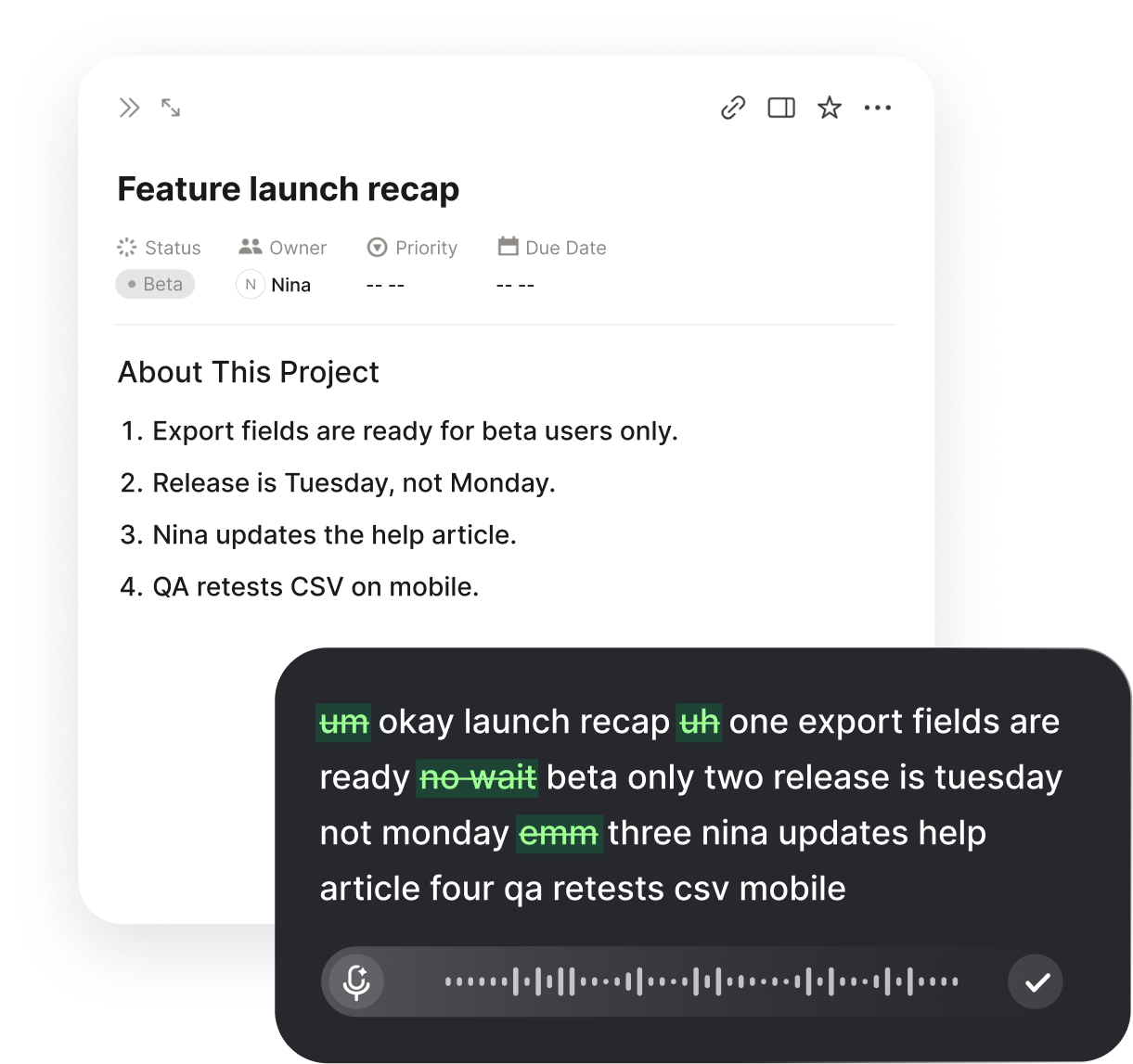
The Hard Part Is Starting
Most essays stall not because you have nothing to say, but because writing the first sentence feels like a commitment you have to get right. So you rewrite the opening four times and call it work. Speaking has none of that weight, because a spoken sentence never feels final.
Talk through your thesis the way you would explain it to a friend who is not in your class. Say the messy version out loud, and you have raw material to cut down instead of empty space to fill. The words are still yours. All you have changed is how they get onto the page.
Speaking runs at around 220 words a minute against 45 for typing, so the rough draft arrives while you still have the whole argument in your head, not an hour later when half of it has slipped away.
What Students Dictate
Lecture notes
Voice to text for lectures works best in the gaps around class. Walk out and talk through what actually mattered while it is still fresh. There is no time limit on a session, so a three-hour seminar can come out in one go.
Essay drafts
Dictate an essay the way you would explain it to a friend who is not in your class. Say the messy version, then rearrange the text afterwards. The words are still yours. All you have changed is how they get onto the page.
Reading notes
Talk through a paper's argument as you go, instead of stopping to type a comment every time you have a thought.
Emails to professors and TAs
The message you have been rewriting since Tuesday takes about thirty seconds to say out loud.
Group projects
Updates, handoffs, and the message explaining what you meant in the last message.
Prompts for AI tools
A good prompt is longer than most people want to type, so it gets shortened into something vague. Say the whole thing instead.
Speak the Draft, Then Sculpt It
Dictate your point, your evidence, and why it matters, one paragraph at a time. Do not stop to fix wording, because that is what editing is for and stopping is what breaks your flow. A spoken draft is usually longer and more honest than a typed one, which gives you more to trim toward a tight final version.
If you lose your train of thought, pause and restate. Because everything lands as editable text, a false start is easy to delete without derailing the paragraph you were building.
A paragraph you can speak:
- State the claim in one sentence
- Give the evidence or example
- Explain how it supports your thesis
- Link to the next point
Editing Beats Writing From Zero
Once the rough draft exists, your job shifts from inventing to improving: reordering paragraphs, tightening sentences, and checking that the logic actually holds. That is a completely different kind of work, and a much easier one, than producing prose from nothing.
Read it back and dictate replacements over the weak lines rather than deleting and retyping from scratch. The first draft sounds casual, and that is fine. You edit a spoken draft into academic tone the same way you would tighten any rough writing.
In the Writing Tool You Submit From
Voiskey is a voice keyboard, so it works wherever you write, with no copy-paste from a separate voice app. Dictate directly into Google Docs or Word so your citations, formatting, and word count stay in one place and your outline never gets lost in the shuffle.
You can dictate quietly too. Voiskey picks up softer speech, including a whisper, so drafting an essay in a shared room or a library is no problem.
Essay stages students dictate:
- Brainstorm and thesisVoice typing for notes
- Rough body paragraphsVoice typing for documents
- Intro and conclusion rewritesVoice typing for documents
- Feedback notes to yourselfVoice typing for notes
Getting Started Is Free
You get one month of Pro free when you create an account, up to two more months when you invite friends, and 2,000 words a week on the free plan after that, with no expiry date. A short essay draft fits comfortably; long research papers with heavy revision use more over time.
No .edu address and no enrolment check required. Open the doc you submit from, start talking, and edit the draft that appears.
FAQ s
The first draft will, and that is exactly what you want. You edit a spoken draft into academic tone the same way you would tighten any rough writing, and starting from real material beats starting from a blank page.
Speak the author and year as a placeholder while drafting, then paste the formatted citation during editing. Voice gets the argument down; formatting is a quick second pass in your citation manager.
No. The ideas, argument, and edits are all yours. Voice typing is just an input method, like typing instead of handwriting, and Voiskey writes what you say rather than generating the content for you.
Pause and restate. Because it lands as editable text, a false start is easy to delete without breaking your flow, and spoken drafts are longer and more honest than typed ones anyway.
Anywhere you type, with no setup. Google Docs and Word for the essay itself, plus Notion or Apple Notes for your outline and Gmail for the email to your professor when you have a question.
For a short essay draft, yes. You get a month of Pro free, up to two more for inviting friends, then 2,000 words a week. Long research papers with heavy revision use more words across the project.


 Voiskey
Your voice, amplified.
Speak naturally, write effortlessly, and move faster. Turn your voice into polished, ready-to-use text wherever you work.
Use it across macOS, Windows, iOS, and Android