
Sales
Sales Discovery Call: Write the Follow-Up While It Is Fresh
Right after a sales discovery call you remember everything — then the next call starts. Speak the write-up while it is still fresh. Free to start.
What Is a Discovery Call
A discovery call is where you learn whether there is a real problem, who owns the decision, and what "done" looks like for the buyer. It comes before a heavy pitch — you are mapping fit, not closing yet.
What is a discovery call in practice? Structured questions, careful listening, and a clear next step. The conversation is spoken. The part that usually slips is the write-up.
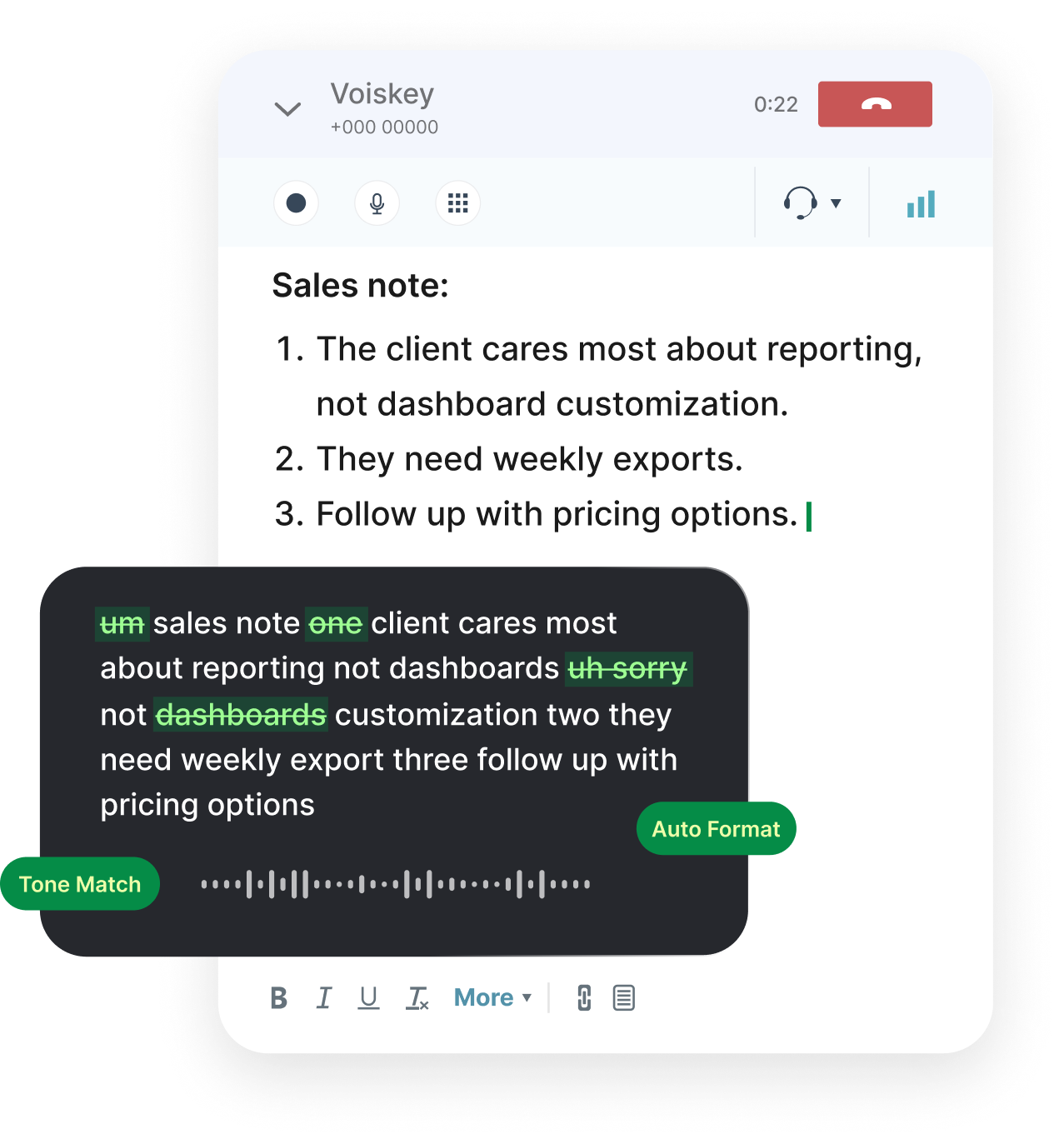
Sales discovery call notes only help if they exist while details are still warm. Speak the summary into Salesforce, HubSpot, Notion, or email — wherever your cursor already is.
How to Prepare for a Discovery Call
How to prepare for a discovery call starts with a short discovery call template: what you already know, what you still need, and what would make the call a win.
How to run a discovery call is easier when the structure lives on screen. Say the outline out loud: opener, problem, impact, stakeholders, timeline, next step. Edit once — that is your discovery call structure.
Put your cursor in the prep doc and talk. Speaking runs at around 220 words per minute, typing at around 45. A one-minute spoken prep often beats ten minutes of half-finished bullets.
Discovery Call Questions That Stay Useful
Discovery call questions should uncover pain, impact, owners, and timing — not fill silence. Best discovery call questions are short enough to ask naturally and specific enough to qualify.
Build a living list: good discovery call questions for this segment, plus a discovery call questionnaire you reuse. After each strong call, speak one new question into the list.
Keep frameworks light on this call. BANT questions cover budget, authority, need, and timeline — enough to decide if the deal deserves a deeper qualification pass later.
Write It Up While the Call Is Fresh
Sales follow-ups decay fast. Right after a discovery call you still have the prospect's phrase, the competitor they named, and the metric they care about. By end of day that becomes a generic "thanks for your time."
A simple post call workflow: hang up → open the field → speak key points in the buyer's language → draft the follow-up → edit and send. Capture next steps before the energy fades.
How to conduct a discovery call well includes the paperwork after it. Talk through problem, impact, stakeholders, risks, and next step. Already have a messy dump? Select it and ask by voice: format as pain / owners / next meeting.
Discovery selling fails when the record is empty or the follow-up sounds like a template. A spoken write-up keeps buyer discovery specific — and still sounds like you.
What to Dictate Around Discovery Calls

Prep Question List
Speak the discovery call questions you want to cover before you dial — then reorder into a short checklist.
After-Call Summary
Pain, impact, owners, and next step — said once while the conversation is still clear.
Light BANT Pass
Budget, authority, need, timeline — spoken into the opportunity note before you move on.
Internal Handoff
The Slack or email to your AE / SE: what you learned and what they should ask next.
Buyer Follow-Up
Mirror their language, name the next step — spoken while the call is still warm, then edited for tone.

Template Updates
After a strong call, speak one new question into your discovery call template so the next prep is sharper.
Works Where You Already Work
Voiskey works anywhere you can type — Salesforce and HubSpot fields, Google Docs, Notion, Gmail, Outlook, Slack, and browser text boxes. No new CRM to learn.
Add buyer names, product terms, and competitor spellings to your vocabulary once. They sync across macOS, Windows, iOS, and Android so the same words come out right on every device.
Discovery call voice workflow:
- Speak your prep questionsVoice typing for notes
- Run the discovery callVoice typing for meetings
- Dictate the summary right afterVoice typing for notes
- Capture a light BANT passVoice typing for work
- Send the follow-up from the same draftVoice typing for messages
FAQ s
A discovery call is an early conversation to learn the buyer's goals, pain, timeline, and decision process before you pitch. The point is to qualify and map the deal — not to demo everything at once.
Yes. Open your doc or CRM note field, speak the questions you want to cover, then reorder them into a short checklist. The same habit works for a light BANT pass.
Yes. Speak the messy debrief first, select the paragraph, then ask by voice: turn this into three bullets, or format as pain / stakeholders / next step. Ask AI works on the text you select.
Details fade after the next call. Speaking the summary and follow-up while the discovery call is fresh keeps the buyer's language and the next step specific — instead of a generic thank-you.
No. Voiskey is voice typing at your cursor — you speak the write-up yourself. It does not upload recordings or auto-transcribe a full call file.
One month of Pro free when you create an account, up to two more months when you invite friends, and 2,000 words a week on the free plan after that, with no expiry date. Short prep lists and after-call summaries often fit; long proposal drafts use more.


 Voiskey
Your voice, amplified.
Hang up, open the field, say what mattered — the text appears where you write. Turn your voice into polished, ready-to-use text wherever you work.
Use it across macOS, Windows, iOS, and Android