
Prevent a Typist Injury
How to Avoid a Typist Injury by Typing Less
A typist injury rarely arrives in one day; it builds over a career of keystrokes that quietly add up. Dictation lets you cut the volume of typing now, before the strain becomes a problem, by speaking the work instead. Free to start.
How the Strain Adds Up
A typist injury almost never announces itself on a single bad day. It builds quietly over months and years of keystrokes, the ordinary tapping of emails, documents, chat messages, and notes that nobody counts because each one feels trivial. The danger of heavy typing is precisely that it hides in plain sight: a career spent at a keyboard can add up to an enormous volume of small, repeated movements long before anyone thinks to do something about it.
The reason the total gets so large is that typing is slow and constant. At around 45 words a minute, a full working day of writing is thousands upon thousands of individual presses, and the number only grows the more your role depends on written output. Most people never see that figure, which is why the sensible moment to act is now, while your hands feel fine, rather than after the strain has already made itself known.
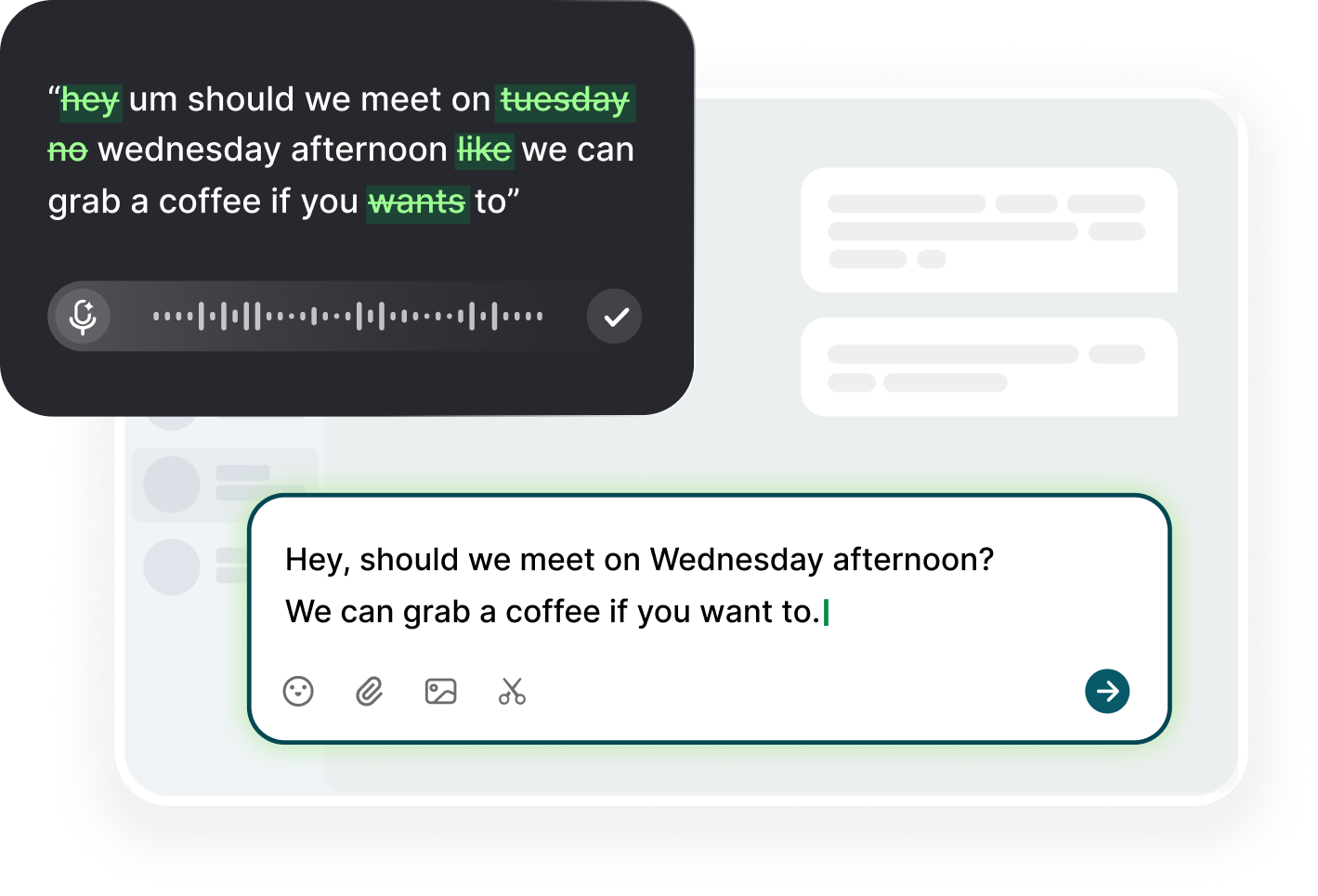
The straightforward way to lower the running total is to make fewer keystrokes in the first place, and the easiest way to do that is to speak more of your work. You talk at roughly 220 words a minute, so saying a paragraph takes a fraction of the hand movement of typing it. Voiskey turns your speech into clean text directly in the apps you already use, so a large share of your daily output can happen with your hands resting instead of tapping. Fewer presses today is simply a lighter load carried forward.
Where Your Keystrokes Hide
If you want to avoid a typist injury by typing less, it helps to know where your keystrokes actually pile up, because the biggest sources are rarely the ones that feel like real writing. The long document you labor over is obvious, but it is often the steady drip of small things, replies, status updates, quick notes, that quietly makes up most of a day's tapping. Those are also the easiest tasks to move to voice, because a stray imperfection in a quick message costs nothing.
The practical move is to find your highest-volume habits and switch those first, so the biggest reduction comes with the least effort. Email usually tops the list, followed by routine documents and the long transcription-style drafting that fills reports and notes. Hand those to your voice and the sheer number of presses in your day drops before you have changed anything that feels important.
The categories below are where most people's keystrokes hide, with the reason each one is worth speaking instead.
Where keystrokes quietly pile up:
- Email and repliesThe biggest daily keystroke source
- Status updates and chatDozens of small messages add up fast
- Documents and reportsLong drafts, spoken in a fraction of the taps
- Notes and logsRoutine entries you can simply say
How to Type Less, Step by Step
Cutting your keystrokes does not require a dramatic overhaul of how you work, and it should not start with a long setup that has you typing for an hour just to begin typing less. The approach that sticks is to change one habit at a time, picking your highest-volume task first so the payoff is immediate, and letting the new routine spread naturally as you notice how much lighter the day feels. The goal is a steady, permanent reduction in presses, not a one-off burst of effort.
Keep the keyboard for the few things it genuinely does better, like a quick single-word fix, and let your voice take everything else. Every message you speak is a message your hands did not type, and because the strain of a typist injury is cumulative, each saved keystroke is a small deposit against a problem you are trying to never have. Over weeks, that lower daily volume is the whole prevention strategy, quietly working in the background.
A simple plan to cut your daily keystrokes:
- Install Voiskey and open the app where you type the most, which for most people is email.
- Speak your next several replies in full sentences instead of typing them, exactly as you would say them aloud.
- Reread each one and make only the rare small correction by hand, keeping edits to a minimum.
- The next day, add your document editor and dictate your longer drafts there in one continuous pass.
- Adopt a rule of thumb: if a thought runs longer than a few words, say it rather than tap it out.
- Each week, glance at how much of your writing now happens by voice and nudge a little more of it across.
Text Clean Enough to Keep
A dictation tool only reduces strain if what it produces does not need a heavy round of keyboard fixing afterward, because corrections are keystrokes too. Voiskey writes clean, punctuated sentences from the way you naturally speak, so most emails and documents are ready after a quick read rather than a long edit. That is what makes typing less actually mean typing less, instead of simply shifting the effort from writing to repairing.
It also adapts to your work rather than forcing you to adapt to it. Voiskey learns names and the field-specific vocabulary you use most, so client names, product terms, and the jargon of your role come out correct instead of sending you back to retype them. Say an unusual word clearly once, check it, and it settles into place over the next few uses. For the rare symbol or format that is awkward to speak, type that one character and dictate everything around it, so the keyboard handles the exception while your voice carries the volume.
Fits the Tools You Already Use
Voiskey is a voice keyboard, so it works anywhere you can type, with no integration to install and nothing to configure. There is no new system to learn and no migration, which matters because a prevention habit only works if it is effortless enough to keep. You open the same inbox, the same documents, and the same chat windows you already use, and you simply speak into them. The only thing that changes is how many times your hands move.
That lets you keep every tool your job depends on and just type into them less. Draft in Gmail or Outlook, write in Google Docs, Word, or Notion, keep a team posted in Slack, and record notes in your CRM, all by voice. It runs on Mac, iPhone, iPad, and Android, so you can shift from laptop to phone whenever you want a change of posture. And because it picks up softer speech, including a whisper, you can dictate in a shared office or a quiet room without raising your voice.
Everyday tools you can speak into:
- Email in Gmail or OutlookCut the day's biggest keystroke load
- Docs in Word, Google Docs, NotionLong drafts without the tapping
- Team chat in SlackStay in the loop, hands at rest
- Notes and records in your CRMLog details by speaking
Getting Started Is Free
The best time to start typing less is before anything hurts, and you can begin today at no cost. Everyone gets the same generous start: one month of Pro free when you create an account, up to two more months when you invite friends, and 2,000 words a week on the free plan after that, with no expiry date. That free weekly allowance already covers a solid share of everyday email and notes, which is plenty to turn speaking into a habit.
There is no .edu address to supply and no enrolment or employment to verify, so nothing stands between you and a lighter keyboard day. Create an account, open the app where you type the most, and say your next message out loud instead of tapping it out. The strain you are trying to avoid is built one keystroke at a time, and this is how you stop adding to it.
FAQ s
No. This article is informational only and is not medical advice, diagnosis, or treatment, and Voiskey is a typing tool rather than a health product. If you have pain, numbness, or discomfort, please speak with a qualified clinician. All dictation does is lower the number of keystrokes you make each day.
The simple fact is that fewer keystrokes mean less repetitive load on your hands over time. Speaking runs near 220 words a minute against roughly 45 while typing, so moving even your email and long drafts to voice can cut a large share of your daily tapping. We cannot promise a health outcome, but reducing volume is a sensible, low-effort habit.
No. Voiskey works as a voice keyboard anywhere you can type, with no integration to install and nothing to configure. You keep the same inbox, documents, and chat apps, and simply speak into them instead of typing. The change is in the habit, not the toolset.
Yes. Voiskey learns names and field-specific terms you use often, so the words come out right instead of forcing you back to the keyboard to retype them. Say an unusual term clearly once and check it; recognition settles over a few uses. For rare symbols, type the character and dictate the words around it.
Yes. Voiskey picks up softer speech, including a whisper, so you can speak quietly at a desk you share without raising your voice. If a quiet sentence comes out wrong, repeat it a little more clearly and carry on.
You get one month of Pro free when you create an account, up to two more months for inviting friends, and 2,000 words a week on the free plan after that, with no expiry. There is no .edu requirement and nothing to verify, so you can start cutting keystrokes right away.


 Voiskey
Your voice, amplified.
Speak naturally, write effortlessly, and move faster. Turn your voice into polished, ready-to-use text wherever you work.
Use it across macOS, Windows, iOS, and Android