
Business Development
Draft Business Proposals With Your Voice, Not a Blank Page
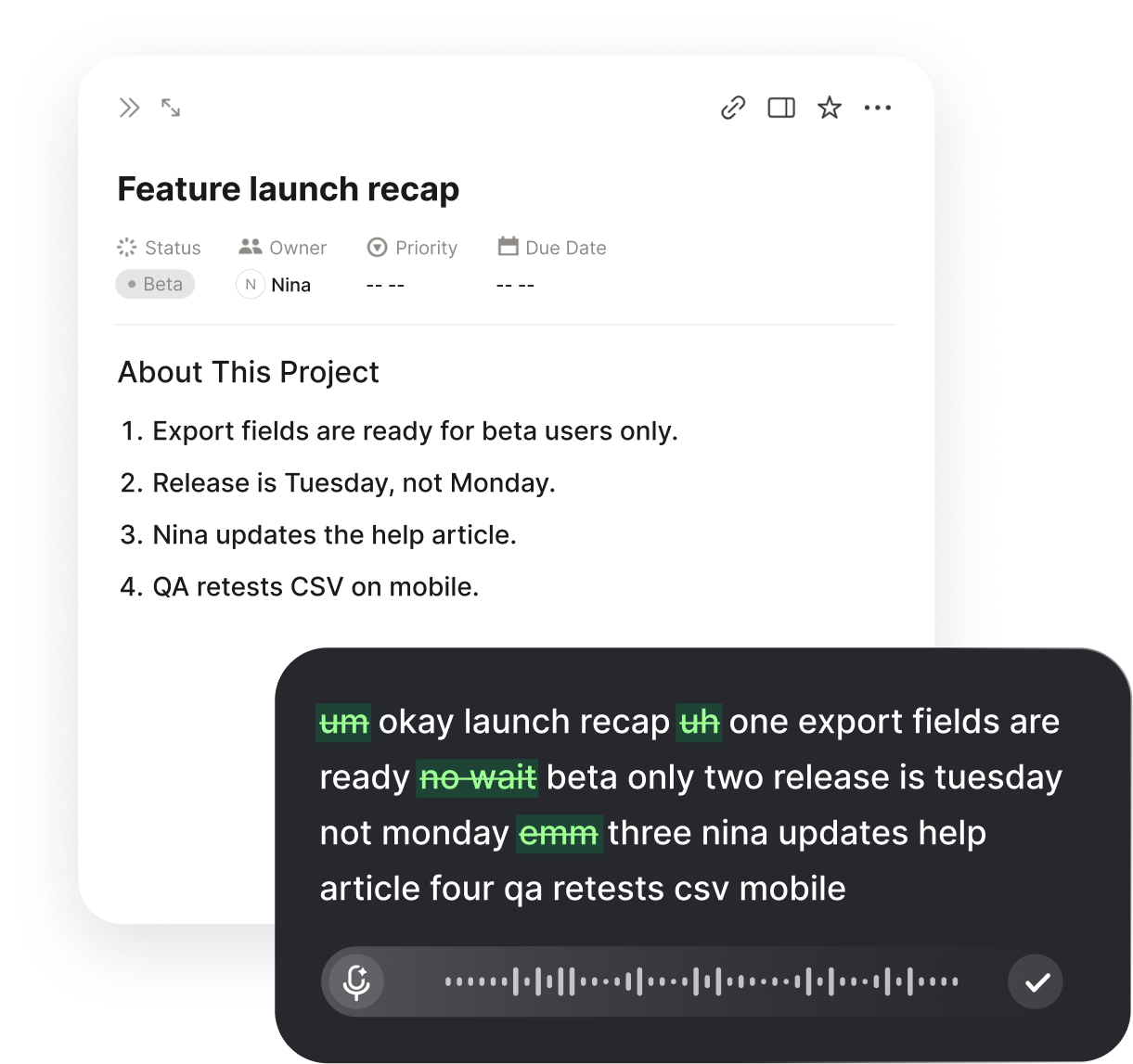
BD work is spoken long before it is typed. Describe the deal, the deliverables, and the tone — with your cursor in the doc, Ask AI hands you a first pass. Free to start.
Why BD Proposals Still Start With Writing
Business development is conversation first — discovery calls, partner intros, renewal talks — and a typed proposal second. Most BD people know the shape of the deal before they open a doc; the delay is turning it into sections a buyer can forward internally.
Speaking runs at around 220 words per minute, typing at around 45. For an executive summary with scope, timeline, and one proof point, that gap is the difference between sending this week and leaving a half-finished draft in your downloads folder.
An AI proposal generator in search results usually means a web form that outputs generic copy. Voiskey is different: you describe the client, the deliverables, and the tone you want — by voice — and Ask AI hands you text at your cursor so you can edit before it goes out.
Ask AI for a Proposal Draft
Ask AI works two ways. From a blank section, say what you need: an executive summary for a logistics company, three-month implementation, emphasize cost savings and phased rollout, confident but not salesy.
Already have context on screen? Select it — an RFP paragraph, call notes, a prior statement of work, or a pasted client brief — then ask by voice: turn this into a scope section with milestones and assumptions called out. Ask AI uses your selection as the brief.
Open the doc you already use, click where the section should go, and speak your request. The draft appears at your cursor — no copy-paste step from a separate tool. If the pricing narrative is too long, select just that block and ask again: make this two short paragraphs and lead with ROI.
What to Say Before You Send
Client and Outcome
Name the buyer, their pain, and the result you are promising — so the opener reads specific, not like a template.
Scope and Deliverables
Talk through what is in, what is out, and what success looks like. Speaking keeps you from burying assumptions in paragraph four.
Timeline and Milestones
Say the phases the way you would explain them on a call. Ask AI can turn a spoken walkthrough into a clean timeline block.
Proof and Differentiation
One case type, one metric, or one reason you win this deal. Speaking stops you from stacking three logos into the same sentence.
Commercial Frame
Describe pricing logic without typing every caveat. Select the draft and ask for clearer payment terms or a softer close.
Internal Handoff
The note to delivery or legal on what you promised. Context is the value of a handoff, and the first thing people skip when they are rushing.
Works Where You Write Proposals
Voiskey works anywhere you can type — Word, Google Docs, Notion, Confluence, PowerPoint speaker notes, HubSpot deal fields, and browser-based portals. Put your cursor where the section belongs and dictate; the text appears on screen where you are writing. Revise in place the same way you would type.
If you already use Voiskey for meeting recaps or CRM notes, proposal drafting is the same habit: cursor in the doc, speak, text lands in the field. Ask AI adds a structured first pass when you are staring at a blank heading.
Typical BD proposal workflow:
- Executive summary from a spoken briefAsk AI proposal draft
- Scope from selected RFP or call notesSelect text, then ask by voice
- Shorten or sharpen a selected sectionSelect, then ask by voice
- Final polish in your docVoice typing for work
- Log what you sent in CRMVoice typing for notes
FAQ s
No. Voiskey does not host templates, e-sign, or pricing tables. It helps you produce text at your cursor — in Word, Google Docs, Notion, a CRM note field, or a slide outline — using voice and Ask AI.
Yes — two ways. Select context first — a call recap, RFP excerpt, prior SOW, or client email — then ask by voice: write an executive summary for this scope, professional but direct. Or select one section of a draft and ask to shorten, add a timeline, or rewrite just that block.
No. You supply the client, the offer, and the tone. Voiskey turns what you say into clean text; it does not replace your judgment about what is worth promising.
Yes. Add company names, product tiers, and spellings you prefer to your vocabulary once, and Voiskey stops guessing on the next draft. That list syncs across macOS, Windows, iOS, and Android.
For short sections and revisions, often yes. Two thousand words a week covers many executive summaries and scope paragraphs. Full multi-page proposals use more; the free month up front is enough to see your pace.


 Voiskey
Your voice, amplified.
Speak the brief with your cursor in the doc — the draft appears where you write. Turn your voice into polished, ready-to-use text wherever you work.
Use it across macOS, Windows, iOS, and Android