
Voice to Text for AI Coding Prompts
Dictate the Prompt Without Losing the Thread
The best AI coding prompts are specific—and slow to type. Speak the goal, constraints, and context into Voiskey. Free to start.
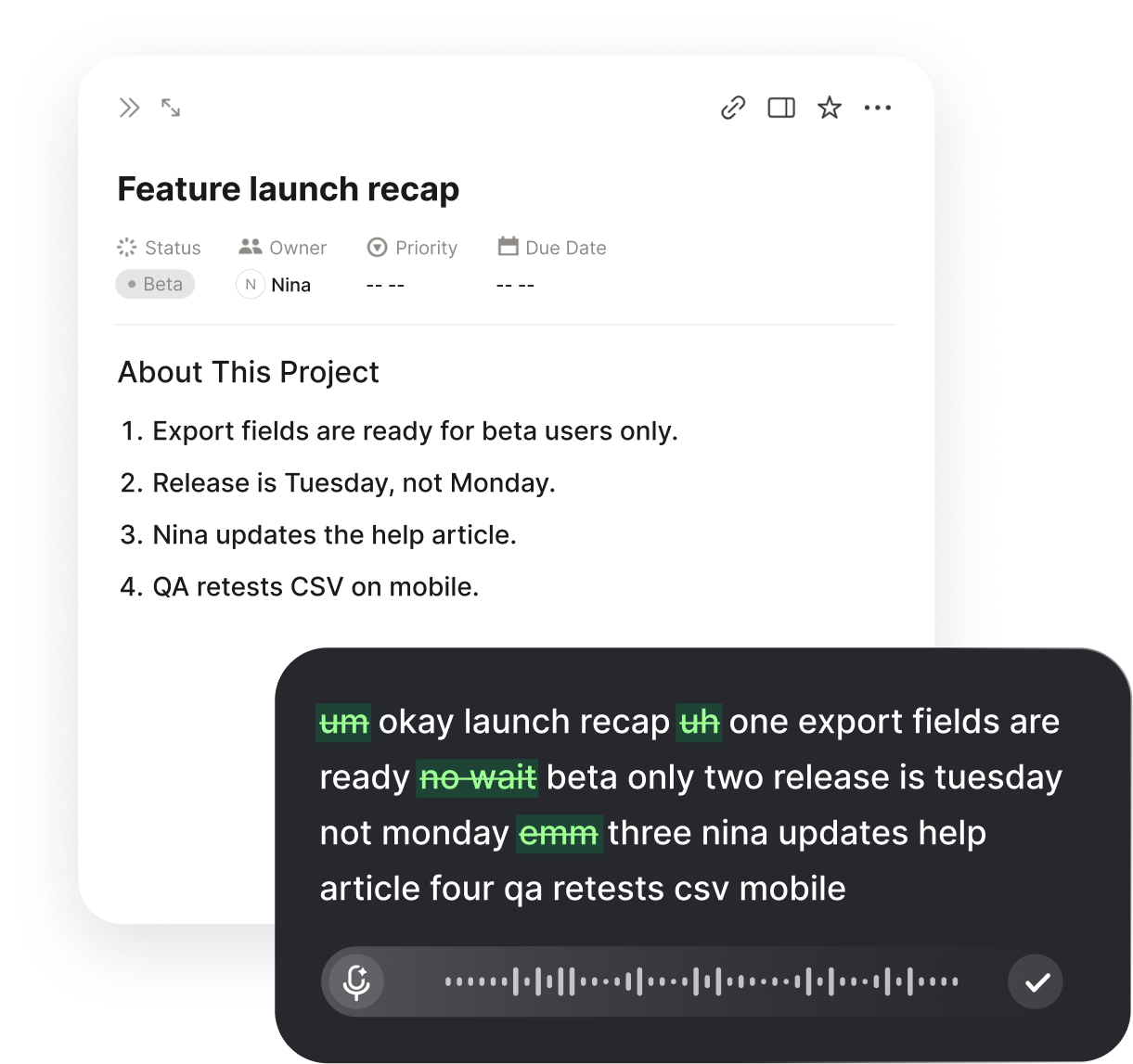
Why Prompts Break Vibe Coding
You know what you want the model to do. Typing it into a neat paragraph is the tax that resets your focus.
Vague prompts waste a generation. Over-typed prompts take longer than the fix. Speaking lets you dump constraints while they are still sharp.
A Prompt Structure You Can Speak
Say it in four beats: goal, constraints, relevant files or APIs, and what good looks like. Keep each beat short enough to scan before you hit send.
If the model drifted, select the weak section and dictate a tighter replacement instead of rewriting the whole prompt.
Speak this spine:
- What you want built or fixed
- Hard constraints (stack, style, no-gos)
- Files, endpoints, or errors that matter
- Acceptance check in one sentence
Prompts Worth Dictating
Feature Scaffold Prompts
Describe the user path and edge cases before the model invents them.
Refactor Briefs
Say what must not change while you ask for a cleaner shape.
Debug Prompts
Symptoms, recent changes, and hypotheses—out loud, then paste.
Test Generation Asks
Name the behaviors that must pass, not just "add tests".
Migration Prompts
Speak source, target, and rollback rules in one pass.
Follow-Up Tightening
Select a weak answer and dictate: shorter, safer, match our patterns.
Dictate Where You Already Prompt
Use Voiskey in Cursor chat, VS Code, ChatGPT, Claude, browser IDEs, or a scratch doc you paste from. Same dictation everywhere you can type.
Workflows around prompting:
- Prompt drafts and scratchpadsVoice typing for notes
- Sharing a prompt in SlackVoice typing for messages
- Emailing a debugging briefVoice typing for emails
- Team prompt playbooksVoice typing for teams
- Recap after a design huddleVoice typing for meetings
FAQ s
Speaking can run long if you ramble. Use the four-beat spine, then trim once on screen. Most people still finish faster than typing from a blank box.
Yes. Voiskey supports 100+ languages. Say it in the language you think in; clean text still lands at the cursor.
No. It transcribes and cleans what you said. If you did not name an endpoint, it will not invent one for you.
Whisper works for quiet desks. For rare package names, add them to your vocabulary once so they stop getting mangled.


 Voiskey
Your voice, amplified.
Speak naturally, write effortlessly, and move faster. Turn your voice into polished, ready-to-use text wherever you work.
Use it across macOS, Windows, iOS, and Android