
ADHD
ADHD Typing and Writing: Voice to Text for Notes
The thought is often clear before the sentence is typed. Speak the draft, the reply, or the note — text lands where your cursor is. Free to start.
Why ADHD Writing and Typing Stall
For many people with ADHD, the gap is not ideas — it is getting those ideas typed before attention moves on. The keyboard is often where the stall happens: a clear thought, then a blank field.
Writing with ADHD often means the draft lives in your head while the doc stays empty. Every sentence has to feel perfect before the next one can start — whether you are drafting for work, school, or a message you keep postponing.
Handwriting can add another layer — the hand cannot keep up with the thought, or neatness becomes the focus instead of the message. Adults and students hit the same wall: the blank field feels heavier than the task itself.
Speaking runs at around 220 words per minute, typing at around 45. That speed difference matters when you think in bursts and need the words on screen while the thought is still warm.
Voice to text is not about skipping the work. It removes the slow middle step so you can capture, reply, and organize in the apps you already use.
Voiskey is a writing tool, not an assistive technology device or a medical product. It does not diagnose or treat ADHD.
ADHD Dictation at Your Cursor
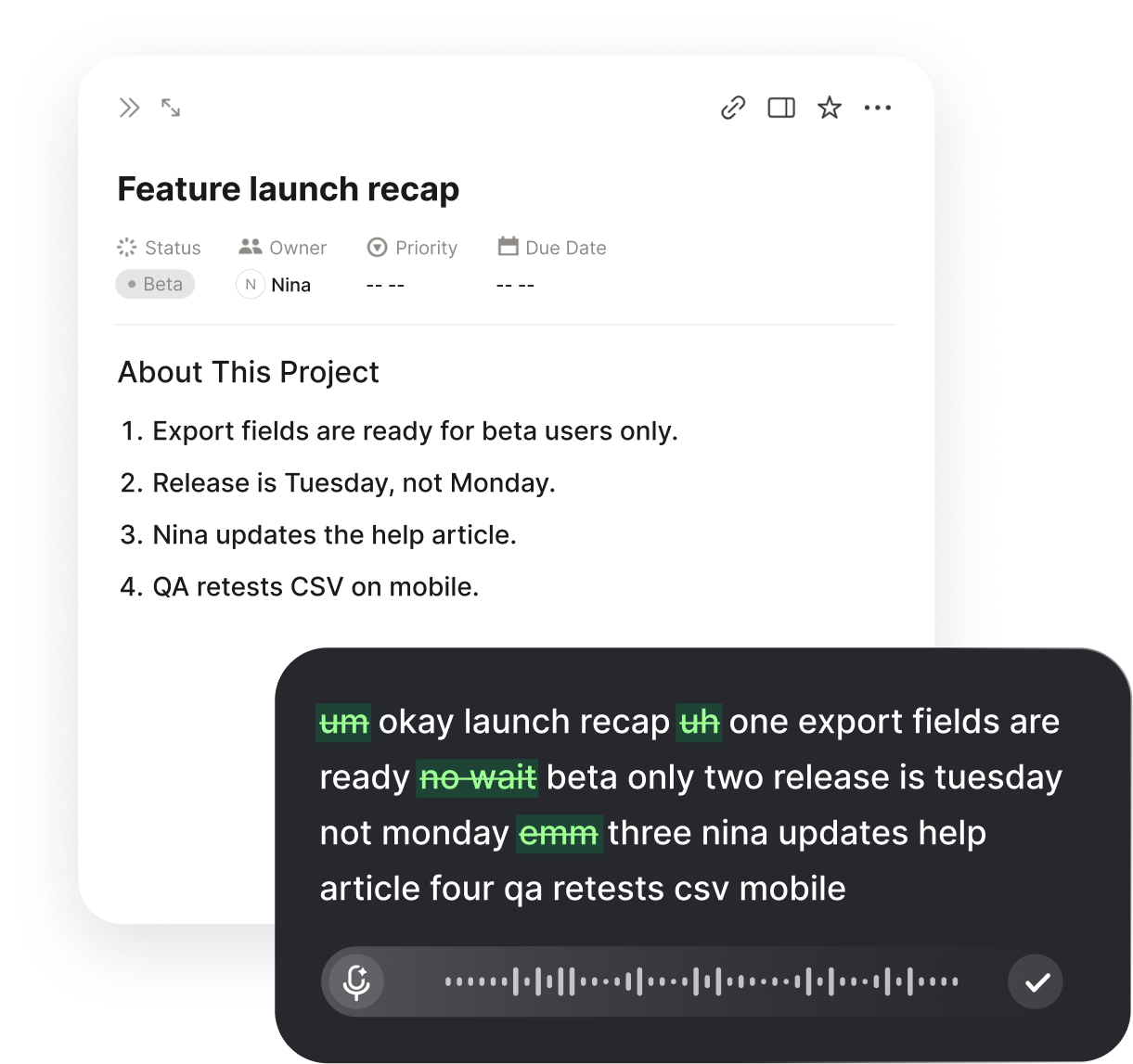
Put your cursor in Google Docs, Slack, Gmail, Notion, or any text field and say what you meant to type. ADHD dictation lands the text where you would have typed it — no copy-paste from a separate tool.
Already have messy bullets or a half-written paragraph? Select them and ask by voice: clean this up, make it shorter, or turn these bullets into one paragraph. You stay in the app you already use.
On mobile, Voiskey works as a keyboard — speak or type in the same place. On desktop, it runs at the input level in any field where you can type.
Get Past Blank Page Stalls
A blank doc and a blinking cursor are often the hardest part. Speaking lowers that first-step friction: open the app, put your cursor in the field, and describe what you need to write before you worry about structure.
Try it out loud: "Okay, I need a short email to the design team. The main points are…" Within seconds you have something to edit — momentum replaces staring at an empty page.
Separate doing from polishing. Brain-dump the rough version by voice, then select sections and ask for a shorter or clearer pass. Talk first, edit second — once words exist on screen, continuing is easier.
The keyboard is often where the stall happens, not the idea. Speak the rough plan first so editing can start after something is already on the page.
What People With ADHD Dictate
Email and Chat Replies
The reply you have been composing in your head since yesterday. Say it once, edit the tone, send.
ADHD Note Taking
Lecture notes, meeting takeaways, and quick captures — speak while the idea is fresh instead of losing it to slow typing.
Meeting and Class Notes
Capture what mattered while you still remember why it mattered — without fighting the keyboard mid-thought.
Essays and Long Drafts
Talk through ADHD essay writing as a first pass — your own ideas out loud, then edit. Not a shortcut around doing the work.
ADHD Writing First Pass
Talk through the argument out loud before you polish. Speaking keeps you moving when writing with ADHD feels stuck.
Work Updates
The Slack message or status note that never got sent because typing felt like the hard part.
Lists and Brain Dumps
Say the tasks, the worries, and the next steps in one pass. Edit the list after it exists on screen.
Messages You Keep Drafting
Open the thread, speak the version you actually want to send, fix one line, done.
Works Where You Already Work
Voiskey works anywhere you can type — Google Docs, Word, Notion, Gmail, Outlook, Slack, Messages, and browser text fields. No new doc app to learn.
ADHD note taking benefits from the same habit: cursor in the field, speak the capture, edit after. Whether it is a class bullet list or a post-meeting summary, the text lands where you already work.
Add names, project terms, and spellings you use often to your vocabulary once. They sync across macOS, Windows, iOS, and Android so the same words come out right on every device.
Typical voice-to-text workflow:
- First draft from speechVoice typing for notes
- Quick replies in chat or emailVoice typing for messages
- Clean up a selected paragraphVoice typing for notes
- Brain dump before you forgetVoice typing for notes
- Log notes after a callVoice typing for meetings
FAQ s
No. Voiskey is a writing tool, not an assistive technology device or a medical product. It does not diagnose, treat, or manage ADHD. It helps you get words on screen when typing is the bottleneck.
Yes — for getting your own ideas into text in Google Docs, Word, Notion, email, or chat. Talk through the first pass when writing feels stuck, then edit.
Yes. Put your cursor in any notes field — Notion, Google Docs, OneNote, or a meeting doc — and speak the capture. You get text to edit, not a separate recording to replay.
Yes — to get your own ideas into text for a first pass you will edit. Speak the argument out loud, then revise structure and wording. Long papers use more of the weekly word budget than chat and short notes.
Yes. Select a rough paragraph or bullet list, then ask by voice: turn this into three clear sentences, or shorten this to one paragraph. Ask AI works on the text you select — it does not read files on your computer.
Speaking lets you restart without deleting. Say the rough version, correct yourself out loud, and Voiskey clears fillers and false starts so you get a readable line to edit.
One month of Pro free when you create an account, up to two more months when you invite friends, and 2,000 words a week on the free plan after that, with no expiry date. Short replies, chat, and quick notes often fit that weekly budget; a long paper draft uses it faster.


 Voiskey
Your voice, amplified.
Say the sentence with your cursor in the field — the text appears where you write. Turn your voice into polished, ready-to-use text wherever you work.
Use it across macOS, Windows, iOS, and Android